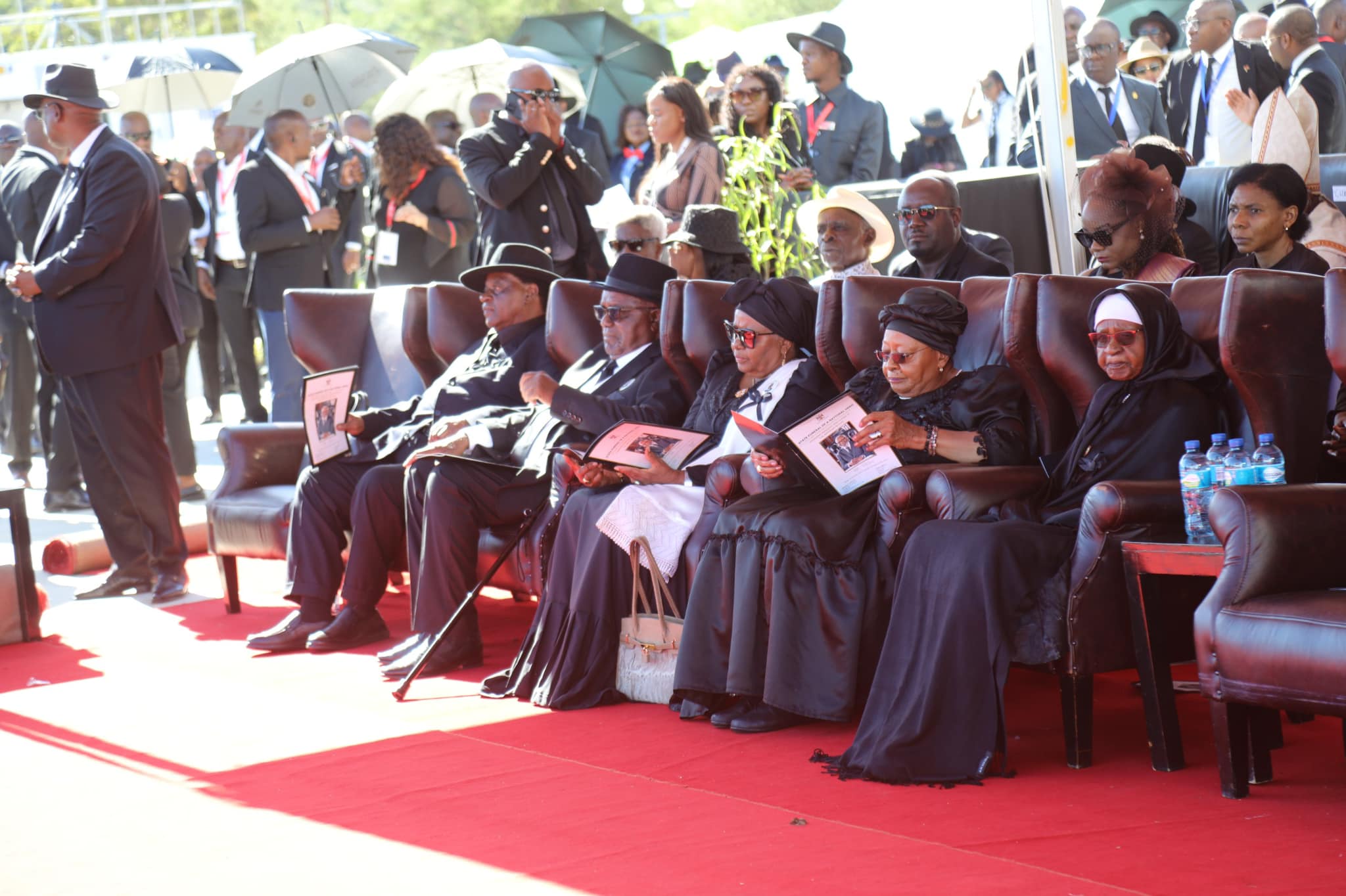

The Namibian house began 2025 on a sombre note, mourning the passing of the country’s liberation icon, Founding Father and first President, Sam Shafiishuna Nujoma.
Although his passing marked the end of an era, it brought the nation together in reflection, remembrance, and unity.
Nujoma, who led Namibia to independence in 1990 and served as President for 15 years, was remembered for his role in the liberation struggle, nation-building, and laying the foundation of a free and sovereign Namibia.
The government declared a period of national mourning, during which Namibians from all walks of life paid tribute to a leader regarded as the Nation’s Father.
As the country mourned, attention also turned to the future. Just weeks later, Namibia entered a new chapter with the inauguration of the country’s first female President, Netumbo Nandi-Ndaitwah, on 21 March 2025, a moment that carried both historical and emotional weight.
Transition
President Nandi-Ndaitwah made history by becoming Namibia’s first female President, taking office at a time when the nation was still grieving the loss of its Founding leader.
Her inauguration symbolised continuity, stability, and renewal, linking the values of the liberation struggle with the demands of a modern Namibia.
In her inaugural address, the Head of State paid tribute to Nujoma and other liberation heroes, while committing herself to serving all Namibians with dedication, discipline, and humility. She stressed unity, peace, and hard work as the pillars of her administration.
During her first year in office, Nandi-Ndaitwah placed strong emphasis on economic growth, job creation, and service delivery. She made it clear that government ministries and agencies must move beyond planning and deliver tangible results for citizens.
Economic recovery and diversification featured prominently in her speeches. The President highlighted agriculture, mining with value addition, tourism, logistics, and green energy as key sectors for growth. She also encouraged both local and foreign investors to view Namibia as a stable and reliable destination for business.
Youth and education
One of the most significant policy announcements of the year was the government’s decision to make tertiary education at public universities and technical colleges free from 2026. The move was widely welcomed, especially by young people and parents, as a step toward improving access to education and skills development.
Nandi-Ndaitwah repeatedly acknowledged that youth unemployment is one of Namibia’s biggest challenges. She called for coordinated efforts among the government, the private sector, and training institutions to ensure that young people are prepared for the labour market and self-employment.
Accountability
Throughout the year, the President sent a strong message about accountability and performance in government. She publicly urged ministers, executive directors, and senior officials to improve service delivery and address delays in implementing projects.
Health, housing, water provision, and infrastructure development received particular attention. The President emphasised that citizens must feel the impact of government programs in their daily lives, especially in rural and underserved communities.
Election
Namibia also held Regional Council and Local Authority elections in November. President Nandi-Ndaitwah praised Namibians for conducting themselves peacefully and respecting democratic processes.
She described the elections as a sign of the country’s political maturity and its commitment to democracy.
She also called on political leaders across party lines to work together in the
national interest, especially on legislation to advance economic development and social progress.
International engagements
On the international stage, President Nandi-Ndaitwah represented Namibia at major global meetings, including the United Nations. She advocated for fair global economic systems, climate justice, and increased support for developing countries affected by climate change.
She also strengthened bilateral relations with regional and international partners, focusing on trade, investment, energy cooperation, and skills transfer.
As the year comes to an end, the President’s first months in office have been marked by stability, clear policy direction, and a firm call to action.
-ljason@nepc.com.na