

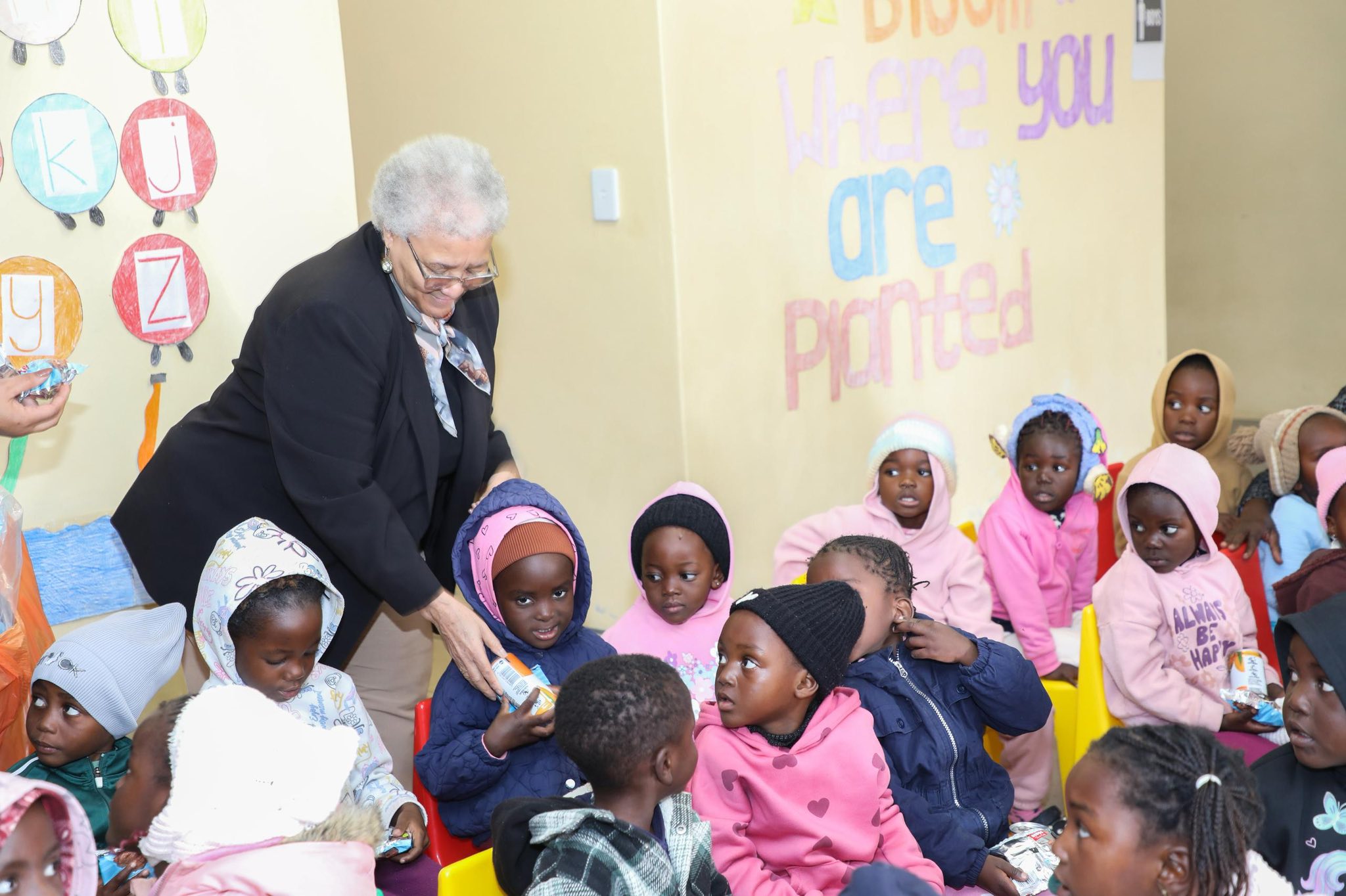

Namibia continues to move in leaps and bounds to address the plight and welfare of children attached to various early childhood development centre programmes countrywide, with the latest statistics showing that over 127 000 children were reached and benefited from the programmes.
According to the latest World Food Programme (WFP) figures, more than 127 000 children under the age of five benefited from feeding programmes and initiatives through the country’s Early Childhood Development Centres (ECDs).
In total, Namibia has over 2 300 ECDs spread across its regions, serving children aged zero to six years and managed by the Ministry of Gender Equality, Poverty Eradication and Social Welfare.
The country’s early childhood development centre setup features a combination of municipal community centres, specialised NGO facilities and private preschools, which all offer structured early learning, socialisation and nutritional care.
The WFP report indicates that despite recurring climate shock-related hazards, including floods, severe drought, and outbreaks of African migratory locusts, Namibia’s humanitarian and food security situation significantly improved in 2026.
“This is reflected in previous analysis, with projections through to June 2026, which estimated 456 000 people in need, down from 1.15 million during the same period the previous year. “The improvement is driven by the combined effects of WFP’s El Niño drought response, government-led drought relief, support from development partners, and favourable rainfall. Impact of multi shocks continues to strain vulnerable households, with food security needs remaining high even after the national drought response programme ended,” reads the WFP report.
Extra interventions
Other WFP interventions saw the convention of a broad multi-sectoral national inception workshop aimed at strengthening Namibia’s Home Grown School Feeding Programme (HGSFP) and advancing the HGSFP scale-up strategy. The workshop brought together over 20 participants from the education ministry, including key line ministries, regional programme implementers, UN agencies and development partners.
Implementation experiences from 29 pilot schools across seven regions were reviewed; good practices, lessons learned, and operational challenges were consolidated.
Through the EU-Namibia Education Sector Reform Contract, a N$320 million budget support programme was launched. Of this, N$57.4 million has already built 48 new additional centres and renovated 42 others across all 14 regions.
-ohembapu@nepc.com.na