

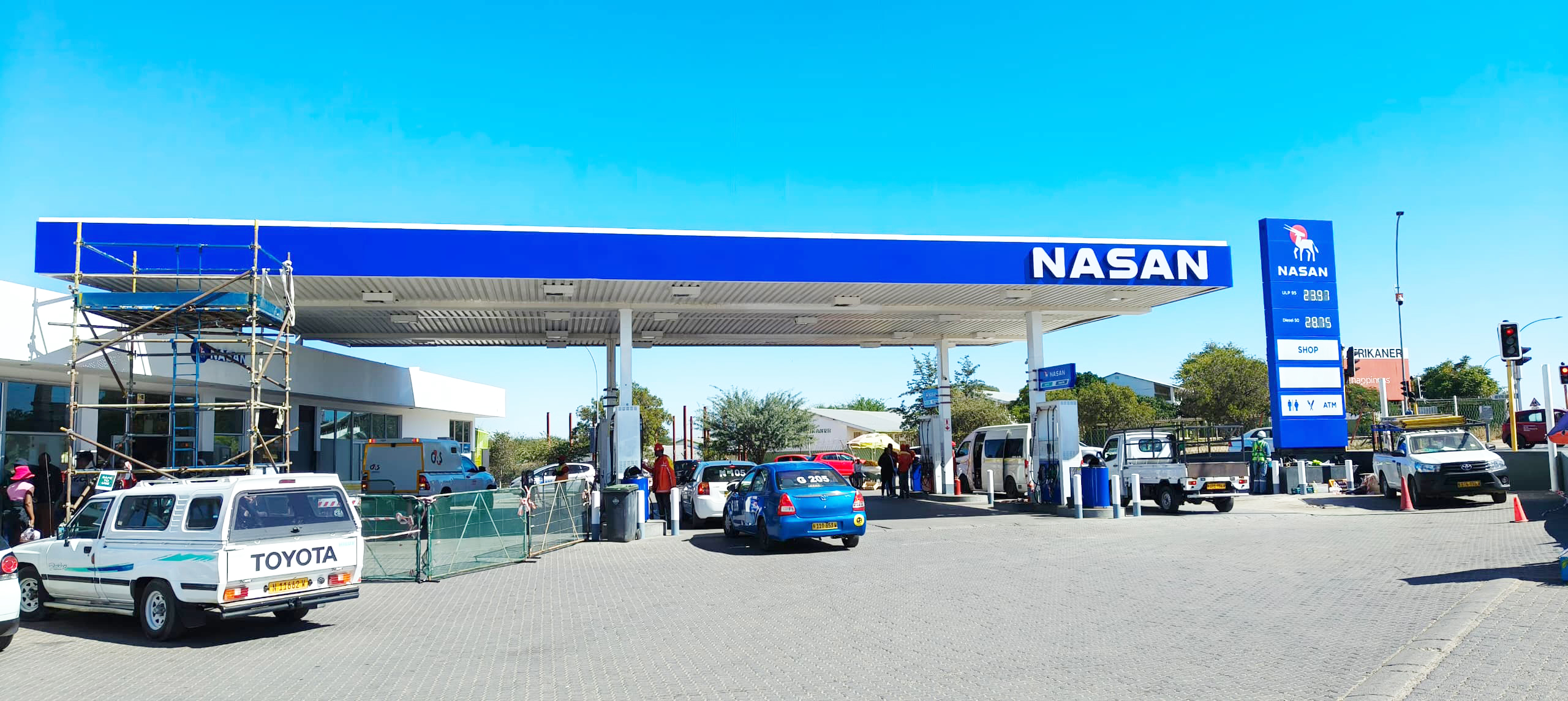
Namibia’s fuel retail landscape is heading for one of its biggest branding overhauls in years after Vivo Energy Namibia officially handed over a portfolio of several Engen and Shell service stations to locally owned Nasan Energies.
The development positions Nasan Energies as one of the most significant indigenous players ever to emerge in Namibia’s fuel industry.
The transformation is expected to reshape fuel station branding across Namibia’s highways and urban centres over the coming months, creating a new competitive era in which a locally-founded company takes direct aim at multinational dominance in one of the country’s most strategically important industries.
The service station handover after approval by regulatory authorities has triggered the gradual replacement of some of the country’s most recognisable service station brands.
The transaction, completed this week following approval by the Namibian Competition Commission, marks the final phase of regulatory conditions attached to Vivo Energy’s acquisition of Engen Limited from Petronas in 2024.
But beyond the regulatory compliance, the deal signals a dramatic restructuring of Namibia’s petroleum retail market that could fundamentally alter the dominance of multinational fuel giants in the country.
Under the agreement, Shell-branded service stations in the divested portfolio are being debranded immediately, while Engen-branded sites will continue operating under the Engen identity only temporarily before ultimately being converted to the Nasan brand.
The rebranding process means Namibian motorists will soon begin seeing the Nasan identity replacing globally recognised Shell and Engen signage across multiple service stations nationwide.
“Nasan Energies is proud to stand as one of Namibia’s first privately owned, locally founded major oil marketing companies,” said Nasan Energies co-founder Miguel Hamutenya.
“We have taken full ownership and operational responsibility for these service stations and are committed to delivering the highest standards of service and reliability to our customers from day one,” he said. The company now becomes the third-largest fuel retail operator in Namibia by number of service stations, behind Vivo Energy and Puma Energy.
The shift is particularly significant because Namibia’s downstream petroleum sector has historically been dominated by foreign-owned multinational operators with established global brands and supply chains. Industry observers say the transition could mark the beginning of a broader localisation trend within Namibia’s energy sector, especially as government and regulators continue pushing for increased local participation in strategic industries.
The immediate removal of Shell branding is expected to be among the most visible changes for consumers.
Shell has long maintained strong brand recognition in Namibia and across southern Africa, with its forecourts associated with premium fuels, lubricants and convenience retail offerings. The disappearance of the Shell identity from the divested sites represents more than a cosmetic adjustment as it signals the end of an era in parts of Namibia’s retail fuel market.
Meanwhile, the phased removal of Engen branding suggests a more gradual transition aimed at ensuring operational continuity while Nasan Energies builds its own market identity.
Meanwhile, during the transition period, the stations will continue displaying Engen branding even though they are now fully owned, supplied and operated by Nasan Energies.
Vivo Energy Namibia managing director Johan Grobbelaar described the completion of the transaction as the fulfilment of the company’s regulatory obligations to the Namibian Competition Commission.
“We have worked closely and collaboratively with the Nasan Energies team over recent months to ensure the smoothest possible transition at these sites,” said Grobbelaar. The Competition Commission’s conditions forcing the divestment were designed to prevent excessive market concentration following Vivo Energy’s acquisition of Engen’s African business interests.
Without the divestment, Vivo Energy’s control over both Shell and Engen-branded assets would likely have raised major competition concerns in Namibia’s relatively concentrated fuel retail market.
Analysts say the emergence of Nasan Energies as a stronger local competitor could intensify competition in fuel pricing, customer service and retail offerings.
The transaction also carries broader economic implications.
Control over fuel retail infrastructure is strategically important in Namibia because petroleum products underpin mining, logistics, agriculture, fisheries, aviation and transport, which are all sectors that collectively drive a large share of the domestic economy. Nasan’s expansion therefore gives a local company increased influence within a critical supply chain network traditionally controlled by foreign operators.
Moreover, the company said it intends to focus on long-term growth, financial discipline and building brand equity as it scales operations nationally.
For consumers, the most immediate impact will be visual.
Shell signage will disappear from affected sites almost immediately, while Engen branding will gradually fade as Nasan Energies rolls out its own identity across the network. – ebrandt@nepc.com.na