

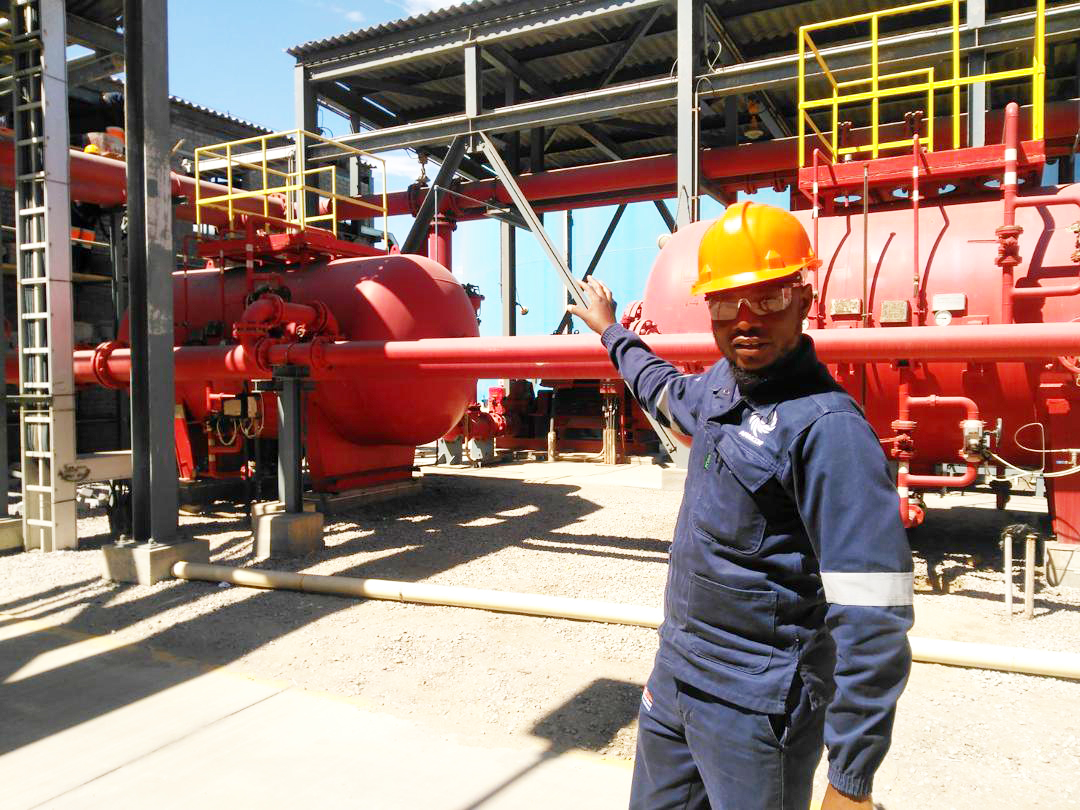
Namibia’s flagship fuel infrastructure, the National Oil Storage Facility, is generating an estimated N$3 billion in annual revenue, but the single biggest cost to ensure its operational and long-term efficiency is not supply, logistics, or demand, but relentless and complex maintenance.
Five years after becoming operational, the strategic reserve, designed to secure Namibia’s fuel supply and stabilise national energy security, continues to face multiple operational challenges stemming from ageing equipment, harsh environmental conditions, and reliance on foreign technical expertise. At the heart of the challenge is the facility’s high-maintenance design. Built by Chinese contractors at a cost of about N$6.5 billion, much of the infrastructure requires specialised servicing from original equipment manufacturers (OEMs) based in China.
This has created logistical and financial bottlenecks, particularly when critical systems fail.
One such example is the facility’s heating, ventilation, and air conditioning system. Unlike conventional air conditioning, the advanced Heating, Ventilation, and Air Conditioning (HVAC) system regulates temperature and air quality across sensitive operational zones.
It is currently non-functional, which during an unprecedented heatwave at the coast made the facility unbearable for both staff, visitors and contractors. However, repairs cannot proceed without sourcing the original manufacturer from China, a process that is both costly and time-consuming.
NOSF officials said this underscores a broader structural issue, namely Namibia’s limited local capacity to service highly specialised industrial systems.
Without in-country expertise or service agreements in place, even routine breakdowns can escalate into major operational risks.
“Maintenance is actually the highest of our expenses here,” said Dr Victoria Nepembe, acting NOSF Terminal Manager, pointing to the cumulative cost of repairs, inspections, and preventative servicing required to keep the site operational.
To mitigate risks, multiple maintenance contractors are deployed on-site. A dedicated maintenance contractor is responsible for daily technical operations, including inspections, lubrication, and preventative care.
That contract is set to expire at the end of March, with a new contractor already appointed to take over.
In parallel, another contractor handles cleaning and environmental management, a task that extends beyond routine sanitation. Bird droppings, dust accumulation, and other environmental contaminants pose real risks to fuel and vapour sensitive equipment, further intensifying the maintenance burden.
Despite these challenges, officials insist operations remain stable and under control. However, the behind-the-scenes reality reveals a facility that demands constant attention and significant financial input just to remain operational.
The scale of the NOSF’s upkeep is vast. The facility operates in a highly corrosive coastal environment, where the ocean’s salt-laden air rapidly degrades metal infrastructure. Components that are designed to function automatically, such as valves and control systems operated remotely from a central control room, are particularly vulnerable.
“When corrosion sets in, automated systems fail,” Nepembe explained. “That means manual intervention is required, sending personnel into the field to operate equipment that should be controlled remotely.”
This not only increases NOSF labour demands but also introduces additional safety and efficiency concerns, especially in a facility handling large volumes of fuel.
For larger issues, Nepembe pointed out that equipment requiring full replacement or major overhauls must defer to government oversight. As a state-owned asset, major capital expenditures are coordinated with the Ministry of Mines, Industries and Energy, which allocates budget provisions for critical upgrades and replacements. This layered process, while necessary for accountability, can also slow response times in urgent situations, adding another layer of complexity to an already demanding operational environment. The financial paradox is stark: the facility is a major revenue generator, contributing more than N$3 billion annually, and a substantial portion of that income is effectively reinvested to keep the infrastructure running. In other words, profitability is closely tied to the ability to manage and contain spiralling maintenance costs.
Energy analysts have cautioned that this dynamic is not unique to Namibia, but is particularly acute in large-scale infrastructure projects built with foreign technology. Without long-term maintenance agreements, local skills transfer, and sustainable servicing models, countries risk becoming dependent on external providers for critical operations. For Namibia, the stakes are especially high. The NOSF is a cornerstone of Namibia’s energy security strategy, ensuring consistent fuel availability and insulating the economy from supply shocks.
However, its future sustainability may hinge less on market forces and more on engineering resilience and the ability to control the very maintenance costs that now define its operational reality.