
Lahja Nashuuta
Residents of Omitara are calling for the reintroduction of the Basic Income Grant (BIG) to rescue their community from worsening poverty, unemployment and social decay.
They argue that since the BIG pilot project ended more than a decade ago, life in the settlement has deteriorated, with young people increasingly turning to alcohol and drugs.
The pilot project was first launched in Otjivero-Omitara in 2008, when all residents below the age of 60 received N$100 per person per month. For many families, the grant was a lifeline.
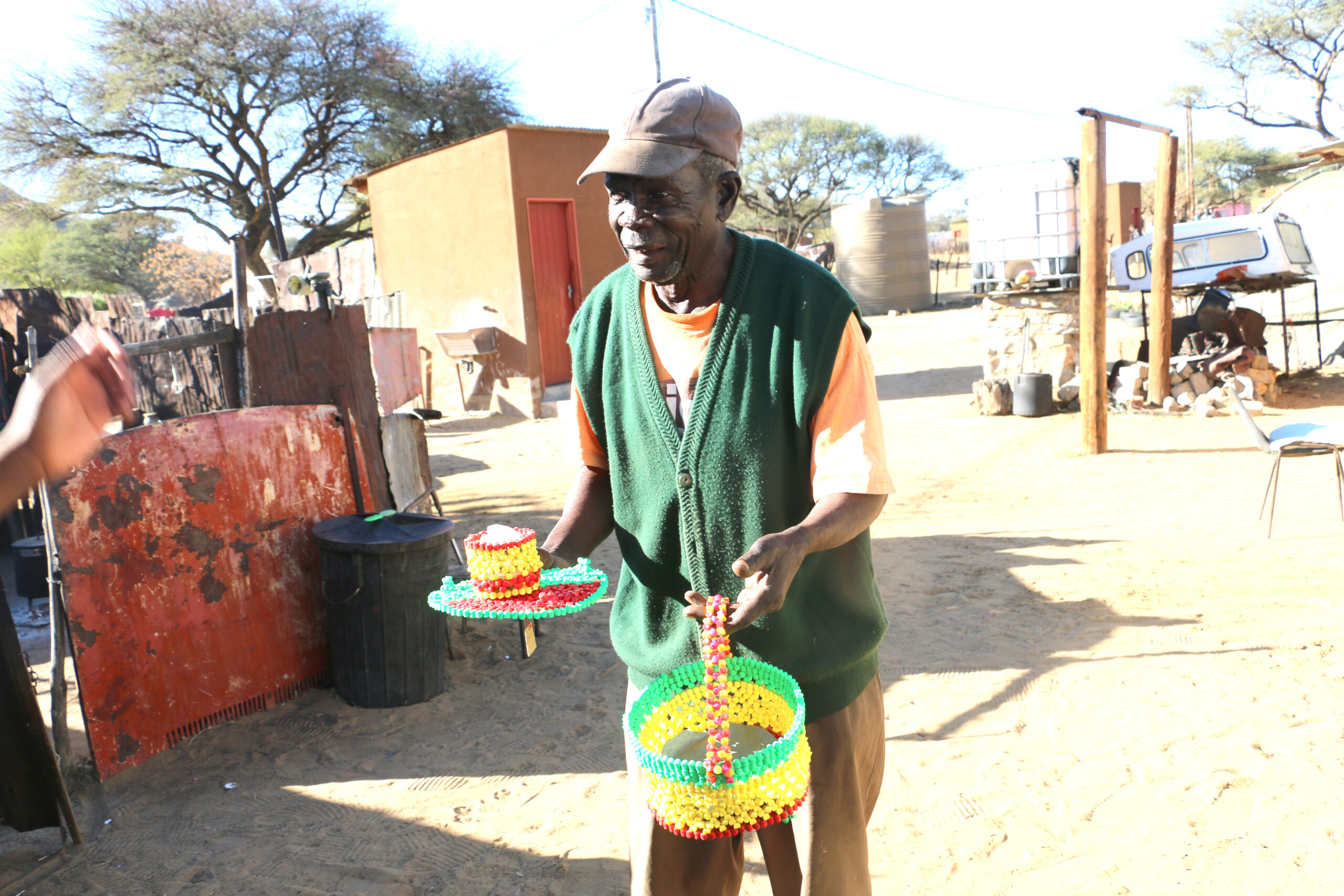
Local pensioner Joseph Ganeb, who benefited from the programme with his family of seven, recalled how the initiative transformed their lives.
“Omitara was slowly recovering from poverty during the BIG pilot programme. People invested their money in small businesses, like selling airtime, eggs, or running little shops. Crime went down, and many youth were no longer roaming the streets. But since the project stopped, everything faded. We are back to struggling,” he said.
Ganeb explained that his household of eight received N$800 a month during the pilot.
“With that, I could pay for water and electricity, buy school uniforms for my grandchildren, and put food on the table. Now life is back to normal and most children go to school hungry and without uniforms. Parents are really struggling to survive,” he said.
Ganeb added that although government continues to provide food vouchers to vulnerable families, this assistance often arrives late or runs out before everyone benefits.
“We appreciate the government’s efforts, but what we are pleading for is a small grant that can help our youth print CVs, make copies, or travel to nearby towns to look for work,” he said.
Ganeb believes that if government re-introduces a universal BIG, even at N$500 per person, families would be able to meet their basic needs and young people would regain hope.
BIG as a developmental tool
Labour researcher Herbert Jauch, who was part of the initial BIG pilot study, emphasised that the project had proven to be a powerful anti-poverty measure and an economic stimulator.
“The idea was always that BIG must be a national policy. In Otjivero-Omitara, we saw poverty being broken with just N$100 a month. But that amount cannot be the same today. To have the same impact, we need around N$500 to N$600 per person,” he said.
Jauch stressed that BIG is more than just social security but can be a developmental tool as well.
“It lifts people out of poverty, yes, but it also creates a local economy that can survive and thrive. Wherever you are in Namibia, there will be money in circulation for basic goods and needs. That helps small businesses grow, which is impossible in deeply impoverished communities,” he noted.
He further pointed out that Namibia’s unemployment rate has soared to 54%, with youth being the worst affected.
“Government has rightly declared job creation a priority. But it is not a question of choosing between jobs or BIG. The two must go together. BIG creates a market for small businesses, while jobs give young people a future. That is how we can break the shackles of poverty,” Jauch said.
According to Jauch, the cost of introducing BIG should not be seen as a financial burden but as an investment with long-term benefits.
“The Planning Commission once estimated that the cost of stunting alone in Namibia is about N$10 billion. BIG would reduce these social and economic costs. It pays itself back through improved education outcomes and healthier lives,” he explained.
He also cited international examples in Kenya and India, where similar programmes showed positive results.
“If we want to break the impasse of mass unemployment and poverty, BIG remains the best and simplest option. It is administratively easy and benefits everyone. The wealthy will pay it back through taxes, while the majority will see their lives improve significantly,” Jauch maintained.
Sharing similar sentiments, political scientist and Vice Chairperson of the Economic and Social Justice Trust, Maano Hamukoshi, stressed that poverty remains a harsh daily reality in Namibia despite the country’s wealth in natural resources.
“Despite our nation’s wealth and the indomitable spirit of our people, the economic divide has widened. Many Namibians still lack decent roofs over their heads, clean water, sanitation and adequate salaries. A BIG has the potential to provide immediate relief and ensure that every Namibian has the means to access food, healthcare and education. This is not merely a financial handout; it is a pathway to dignity and self-sufficiency,” she said.
Hamukoshi added that the Covid-19 pandemic made the case for BIG even stronger.
“The crisis pushed many families deeper into poverty and unemployment.
The N$750 once-off Emergency Income Grant at the start of the pandemic helped tremendously. We urge government to build on that and implement a permanent BIG, which would act as a buffer, giving people the ability to weather financial storms and invest in their future,” she said.
Hamukoshi further emphasised that the economic benefits of BIG would ripple across society.
“By providing citizens with a guaranteed income, we stimulate local economies. People spend money on essential goods and services, creating demand and helping small businesses thrive. When we uplift individuals, we uplift communities, and ultimately, our entire nation,” she explained.
Recently, the Parliamentary Standing Committee on Health, Social Welfare and Labour Affairs also recommended that government synchronise all social grant programmes to avoid duplication of beneficiaries.