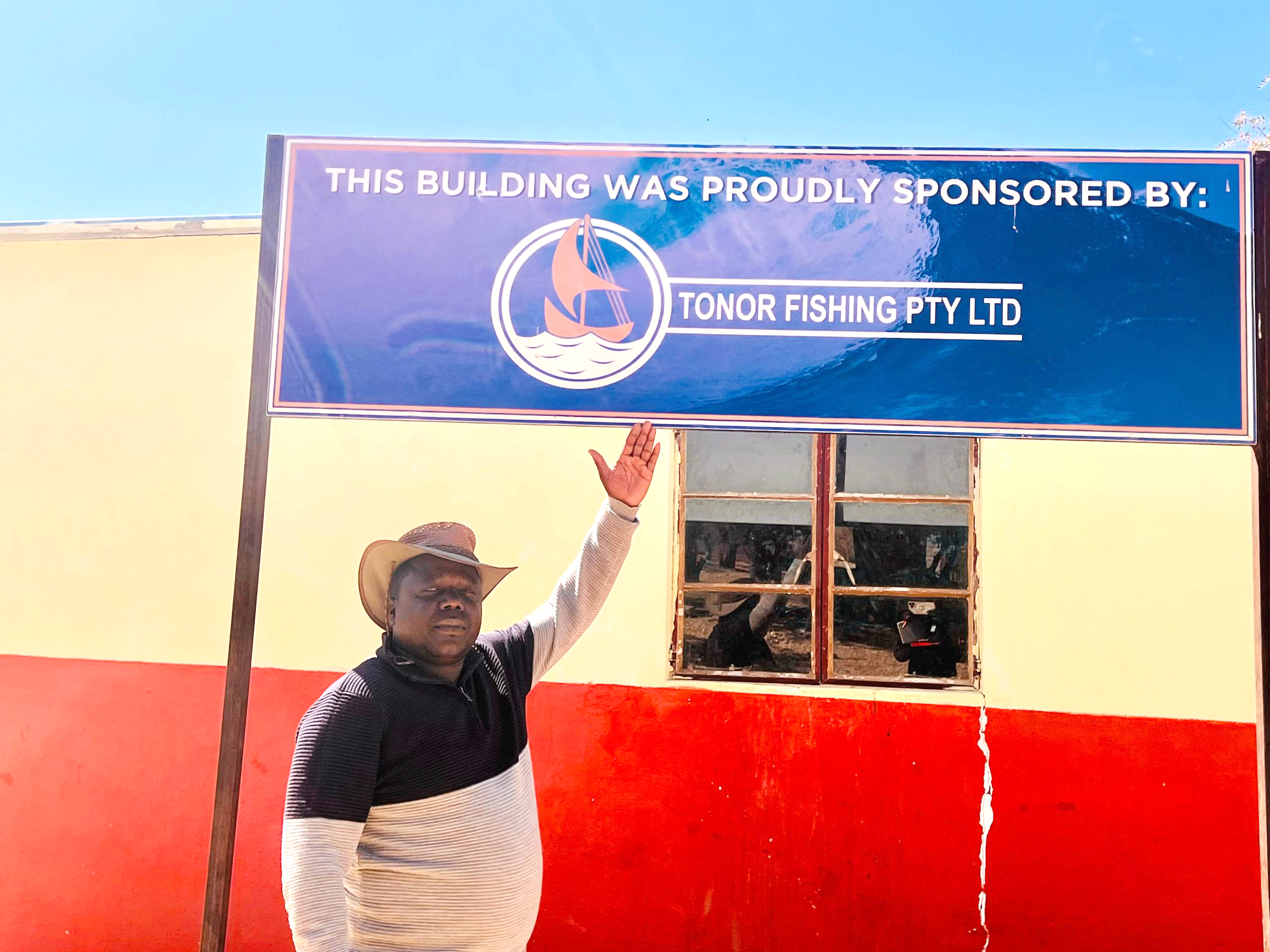

OPUWO – Opuwo Urban constituency councillor Ueutjerevi Ngunaihe walked into office five years ago full of hope, only to discover that his office had “zero budget.” Instead of sitting back, he rolled up his sleeves, knocked on doors, and turned to donors to bring development to his people.
Today, he looks back with pride, saying he has no regrets. All he is left with are dreams still waiting to be realised. He was speaking in an interview with New Era recently as part of the publication’s pre – election coverage.
“We don’ t have a budget at all at my office. We are expected to implement projects, but the re is no money allocated to councillors.
We are just depending on the tax return, maybe N$200000 a year, and even that depends on whether there is a cultural project in the region,” Ngunaihe said.
The councillor said the lack of a constituency development fund has left councillors powerless, despite being the first point of contact for struggling communities.
Turning to donors
Faced with an empty budget, Ngunaihe began writing letters to non-governmental organisations, companies and international projects, asking them to help Opuwo Urban.
One of his first breakthroughs was with the Okaoko project, a German-funded project based in Okangwati.
“When I came in, they were not visible in my constituency. I wrote to them and said, ‘I also have vulnerable and disadvantaged people, but you are not visible here.’ Since then, they started coming forth.
They have put up kindergartens and schools in my constituency. We are very thankful,” he said.
Another donor, the Danti Precious Project, responded by donating 235 mattresses to Kapimambu School after his request.
The Ombara Fishing Company also stepped in, constructing two hostel rooms in Korothave, painting old structures, and donating 50 mattresses.
“These partners have really made a difference for our community. We just write, and most of them respond positively,” the councillor explained.
Doing more with less
Ngunaihe also used the little money available from tax returns to support education and local businesses.
Over 50 students from various institutions received financial assistance through his office. Small business owners, including seamstresses and welders, were given sewing machines, welding equipment and grinders to help them generate income.
“They are struggling, but at least you can see they are doing much better than before,” he said.
The ministry of environment also came in through the Namibia Integrated Landscape for Enhancing Livelihood and Environmental Governance to Eradicate Poverty (NILALEG) project, supporting nursery gardens and rehabilitating tents for students.
His office distributed water tanks and helped communities with garden sinks to ease the water burden.
Yet, despite these efforts, the councillor said the lack of funds remains the single biggest obstacle. “The challenge is a lack of funds.
We end up using our own money. We become a social grant for our community. Everyone is referred to the councillor’s office, but the office is not empowered at all,” he stressed.
Unfinished dreams
One project weighs heavily on Ngunaihe’s heart – the rehabilitation of the Opo earth dam.
For years, Kunene has been gripped by drought. With underground water scarce, the councillor believed that rehabilitating the dam would help communities harvest rainwater for both people and livestock.
“We thought if we rehabilitate the earth dam during the rainy season, the community could use that water for some time while waiting for the underground water to recover. But it was beyond my reach.
The money was too little, and those who came to assist could not do a proper job,” he said.
He sighed deeply as he added, “That is the only thing I regret – not being able to rehabilitate the earth dam. Because here, when rain comes, water just runs to the sea. There is no catchment area. After one week, even after heavy rain, there is no water left for livestock.”
Hunger
Adding to the challenges, Ngunaihe’s constituency has been hard hit by hunger after the drought relief programme was suspended in June.
About 3,700 people in Opuwo Urban had been registered for food assistance, but supplies stopped after the government announced the end of the programme.
“It was unfair to stop drought relief for everybody without assessing the situation in each region,” he argued. “Here, gardens were destroyed by floods and elephants. People don’t have food. The Prime Minister’s office should have assessed before stopping.”
Confusion in the food distribution system al so worsened the crisis.
According to the councillor, the names of beneficiaries were misplaced between villages, leaving many without food.
“A person registered in one village would find their name written under another. Then the food is left behind because no one knows where those people are. It was a huge confusion,” he said.
Roads and sanitation
Roads in Kunene remain a sore point.
“Roads here are a headache. We were told that gravel roads are supposed to be rehabilitated every five years, but now they cannot do it because of a lack of funds. The roads are destroyed, and people are forced to look for their own routes,” Ngunaihe said.
On sanitation, his office has constructed about 20 latrines over the past two years, mainly for the elderly and people with disabilities in rural areas.
“Most of the time, we divide them among villages because the need is high. You cannot give ten toilets to one village and leave others waiting another year,” he explained.
Looking back at his first term, Ngunaihe said it has been a learning curve, but one that has taught him resilience.
“I will not regret if I do not come back, because I know I did my part. But if I am given a second term, I will do better than this one. The first five years were also a learning process. Now I know how to do it better,” he said.
Despite the many obstacles, he says he is proud of what was achieved with so little.
“At l east when I move around, I can point to schools, kindergartens, water tanks, and small businesses that we supported. These things show that the community is not the same as it was when I started,” he said.
The bigger fight
Ultimately, the councillor believes the real solution lies in empowering constituency offices with proper funding.
“If this office is empowered, then we are good to go.
We are supposed to be the ones driving development in our constituencies. Without funds, we are left struggling,” he said.
For now, Ngunaihe continues to fight – writing letters, following up with donors, and answering community calls, even with limited means.
As election season approaches, his message is clear: Opuwo Urban deserves more.
“We cannot sit and wait. Our people need us. Even without money, we are trying our best to serve them,” he said.