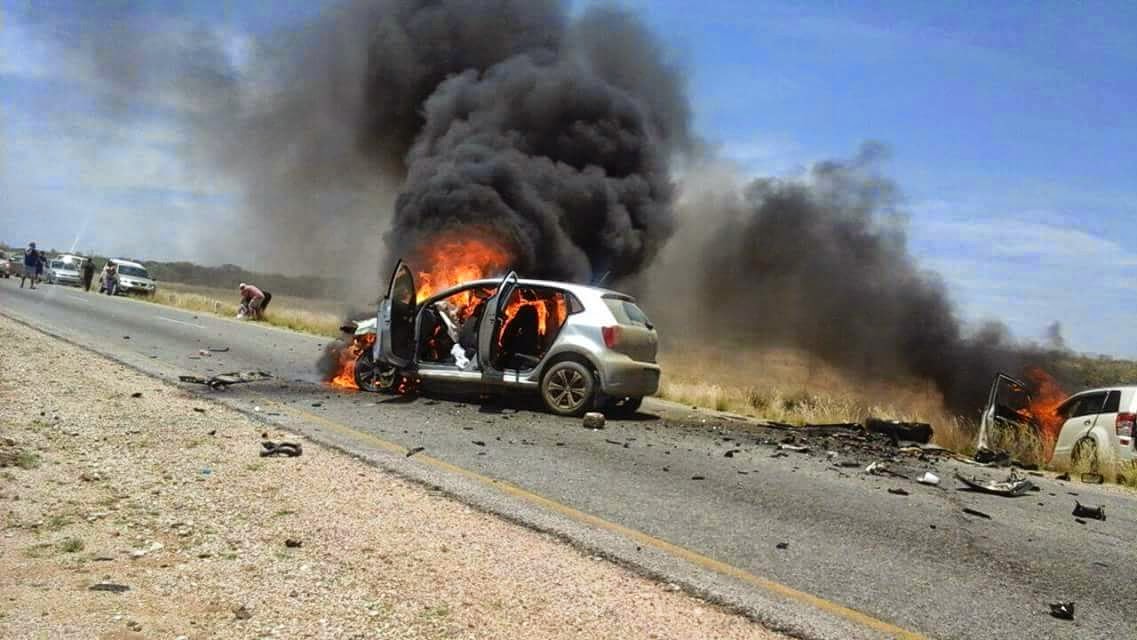

SWAKOPMUND – The Motor Vehicle Accident (MVA) Fund spends at least N$250 million every year to assist victims of road crashes in Namibia, with about N$200 million of that amount going towards medical expenses.
This was revealed by the fund’s chief executive officer, Rosalia Martins-Hausiku, during the 10th Annual Road Safety Conference, which is currently under way in Swakopmund.
The conference brings together various stakeholders to discuss, review and propose actions to reduce road deaths and injuries. It also serves as a platform to share knowledge, exchange best practices and track progress on the country’s road safety strategies.
According to Martins-Hausiku, Namibia has recorded 13.8 road deaths per 100 000 population so far this year, a 12% increase from 11.3 in 2024.
“Injury rates currently stand at 145.2 per 100 000, showing a slight decline from 147.4 last year, but still higher than 133.7 recorded in 2023. The Erongo region remains second to Khomas in terms of the number of road crashes,” she said.
Martins-Hausiku says the statistics are not just numbers but represent the lives of real people whose dreams and aspirations have been cut short by preventable tragedies. Hence, she says that their mandate extends beyond the award of benefits but also focuses on preserving life, restoring dignity and contributing to national development.
“Thousands more are injured, some permanently disabled.
These are not mere statistics – they represent real people, Namibians whose dreams and aspirations are cut short. Each year, Namibia continues to lose hundreds of lives to road traffic crashes,” she said.
She noted that while the fund provides vital financial and medical support, the money spent each year could be used to strengthen Namibia’s public health system if crashes were reduced.
“Some of these funds could instead be directed to capacitating public hospitals with the necessary equipment if we collectively reduce crashes,” she said.
Martins-Hausiku further identified speeding, drunk driving, fatigue and pedestrian negligence as the main causes of road crashes, saying that at least 72% of the accidents recorded involve a moment of poor judgment that can alter lives forever.
“We cannot, and must not, accept this as normal,” she urged.
She added that the road safety should not only be seen as a transport issue but also as a human rights and economic concern that affects families, communities and the country’s productivity.
The fund has also improved post-crash care to ensure that survivors receive quality emergency response, medical treatment and rehabilitation services that will help them regain independence and dignity. It is also embracing digital transformation to simplify access to claims and ensure faster, more transparent service delivery, particularly for those who are unbanked.
“One of our corporate values is ‘We value lives’. Our collective vision is to see a Namibia where families arrive home safely, where the economy is not burdened by preventable injuries and where compassion drives policy and action,” Martins-Hausiku said.
She urged all Namibians to become ambassadors for road safety by changing unsafe behaviour, enforcing the law and protecting life.
The Namibian Police last week reported that a staggering 414 fatalities have been recorded since 1 January 2025, a number that could continue to rise.