
As 2025 comes to an end, it is worth noting that Namibia strategically positioned itself as a key and reliable partner in both multilateral and bilateral relations, continuing shaping its diplomacy to ultimately support national development.
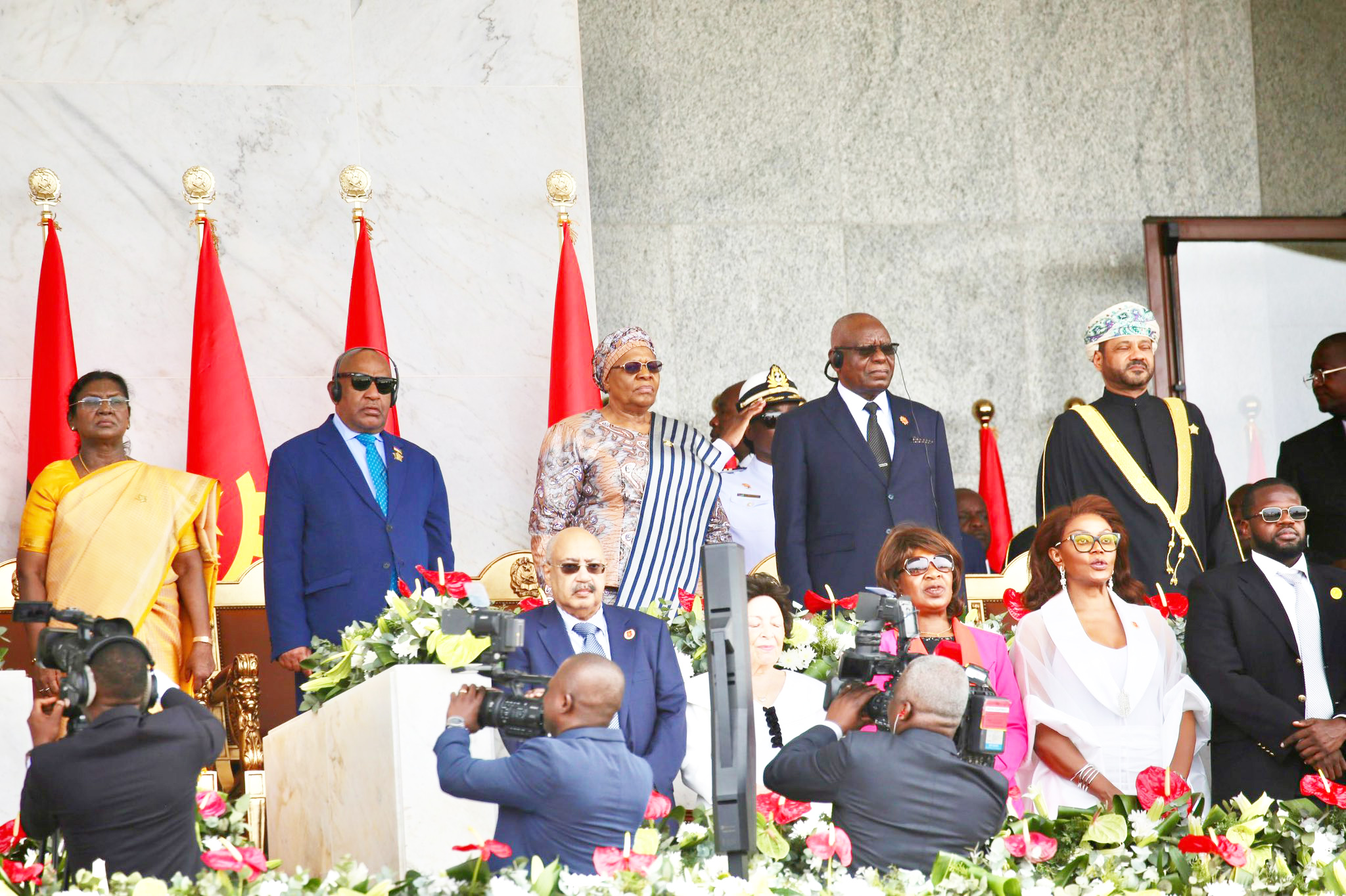
It all started on 21 March 2025, a momentous Friday when Namibia stood still to witness the swearing in of its first female President, Netumbo Nandi-Ndaitwah which coincided with the country’s 35th Independence Day.
The vibrant occasion, graced by leaders from all corners was a powerful testament to the country’s constitutional maturity as well as political stability – music to the ears of potential investors. The peaceful and smooth transfer of leadership drew some international admiration, reaffirming Namibia’s reputation as a beacon of democracy in Africa.
World leaders expressed well wishes
and confidence in Nandi-Ndaitwah’s leadership, looking forward to deepening cooperation with Namibia and strengthening partnerships that are grounded on respect, continuity, and shared development goals.
Having previously served as minister of international relations, Nandi-Ndaitwah ensured that she prioritises the international community in terms of engagement, especially cementing ties within SADC.
“Namibia is a strong proponent of regional integration. Through the Southern Africa Development Community; the Southern Africa Customs Union; and the Africa Continental Free Trade Area, we are committed to building resilient inter-Africa trade system,” she said during an interview with Jendayi Frazer from the council on foreign relations in the USA.
She added that Namibia is a builder for the international community and with the attained freedom, the country finds it appropriate to have a strong international partnership as well as strong bilateral relations.
First foreign mission
Nandi-Ndaitwah undertook her first working visit after becoming President to Angola on 8 May, to reinforce the historic and strategic ties between the two countries. The inaugural foreign mission solidified a commitment to bolster economic cooperation, with a strong focus on job-creation and food security.
“Key sectors identified for intensified collaboration include agriculture, energy, tourism, oil and gas, logistics and infrastructure, with a particular emphasis on water cooperation. These are crucial areas that hold immense potential for creating jobs and driving economic growth in both countries,” said then press cecretary Alfredo Hengari.
Commonly referred to as Mama waSwapo in Tanzania, Nandi-Ndaitwah had a two-day State visit on 20 and 21 May to the east African nation, at the invitation of her counterpart, president Samia Suluhu Hassan.
The two deepened the longstanding diplomatic, political, cultural ties and expanding on trade, boosting investment, and strengthening educational partnerships.
Another trip that tightened Namibia’s ties on the continent was the visit to Zambia, where the discussions between Nandi-Ndaitwah and president Hakainde Hichilema was towards enhancing cooperation to the African nations, with a particular emphasis on the Walvis Bay–Ndola–Lubumbashi Development Corridor.
Both leaders committed to the corridor, realising its significance and the role it can play in boosting trade, reducing transport costs, and improving access to the international markets. The two also caucused on collaborative efforts in sectors such as agriculture, energy, infrastructure development, which are key to job creation, food security.
Nandi-Ndaitwah also made an appearance at the 80th UN General Assembly in New York, USA, giving her maiden speech where she reaffirmed Namibia’s commitment to its international obligations and the multilateral order.
“Respect for international law is not just a legal duty. It is a moral imperative. We must reaffirm our commitment to the principles that unite us: mutual respect, the peaceful resolution of disputes, and solidarity in the face of common challenges,” she stated.
A key engagement that underscored Namibia’s role within the international community was its participation at COP30 in Belém, Brazil. At the global climate summit, the President delivered a firm appeal, calling on “member states, multilateral development banks, and private investors to provide predictable, sustainable, and accessible financing at affordable costs, support technology transfer, and strengthen national and community capacities through grants and highly concessional finance.”
Her intervention reinforced Namibia’s position as a vocal advocate for climate justice and equitable development, especially for a region that doesn’t emit a lot of carbons compared to the rest of the world.
En route to Belém, Nandi-Ndaitwah made a stopover in Dakar, Senegal, where she paid a courtesy call on president Bassirou Diomaye Faye. The brief chat focused on strengthening bilateral relations and exchanging views on regional and global issues of mutual interest, further reflecting Namibia’s commitment to constructive diplomatic engagement beyond formal multilateral platforms.
Other notable visits made were to South Africa’s Cyril Ramaphosa, who gracefully invited her to the G20 Summit, Botswana’s Duma Gideon Boko, and Zimbabwe’s Emmerson Mnagangwa.
Nandi-Ndaitwah also held fruitful discussions with several heads of missions in Namibia. As well as international organisations operating in the country to explore ways of strengthening relations.
Converging in Windhoek
In as much as Nandi-Ndaitwah made the move to strengthen ties by making State visits abroad, others saw the need to personally come to her. One of the prominent world leaders who did that was India’s prime minister (PM), Narendra Modi in May.
=This was the first Indian PM’s visit in nearly three decades, marking it as a major diplomatic engagement that focused on trade, energy, healthcare, and economic cooperation.
The visit also focused on Namibia’s wealth, including uranium, diamonds, lithium, cobalt, rare earth, copper, and more. India’s Memorandum of Understandings aimed to facilitate joint exploration, mining, and technology transfer partnerships. The visit revived long-stalemated supply agreement negotiations, offering Namibia a stable export market while fortifying India’s nuclear fuel chain.
Nigerian oil magnate, Aliko Dangote came to Namibia in June, yearning to initiate investment interest following his group’s record-breaking energy and industrial expansion across 12 African countries, including a newly completed oil refinery.
Nandi-Ndaitwah applauded the plan, stating that Namibia is ready to partner with business leaders who create long-term value on the continent.
Additionally, a European Union (EU) delegation led by commissioner for international partnerships Jozef Síkela, visited Namibia, and held talks with the President to unlock opportunities through investments in infrastructure, skills development, and social projects.
The EU and Namibia mark 35 years of bilateral relations this year, with the EU remaining Namibia’s largest trade and development partner.
Recently, Namibia became the talk in the international community when it successfully redeemed its second Eurobond, valued at US$750 million (over N$13 billion), marking the largest single debt maturity in the country’s history.
Finance minister Ericah Shafudah said the second Eurobond was used for important investments such as road networks, energy infrastructure, education, and healthcare which aided in strengthening connectivity, productivity, and social equity in the country.
Namibia to the world
Nandi-Ndaitwah further strengthened Namibia’s diplomatic standing by appointing a team of experts in their respective fields to serve as ambassadors across key countries in the world. She highlighted that these appointments are aimed at enhancing the effective implementation of Namibia’s foreign policy and deepening bilateral and multilateral engagement.
“Your work must remain grounded in safeguarding our national interests, protecting our sovereignty, and advancing sustainable development. Namibia’s foreign policy is anchored in building a positive image abroad, promoting economic growth and ensuring the protection of citizens globally,” she said.