


The 2019/20 Asset Declaration Register is a frightening display of politicians’ opulence in the form of numerous shares in various companies, multiple lavish homes and large tracts of farmland.
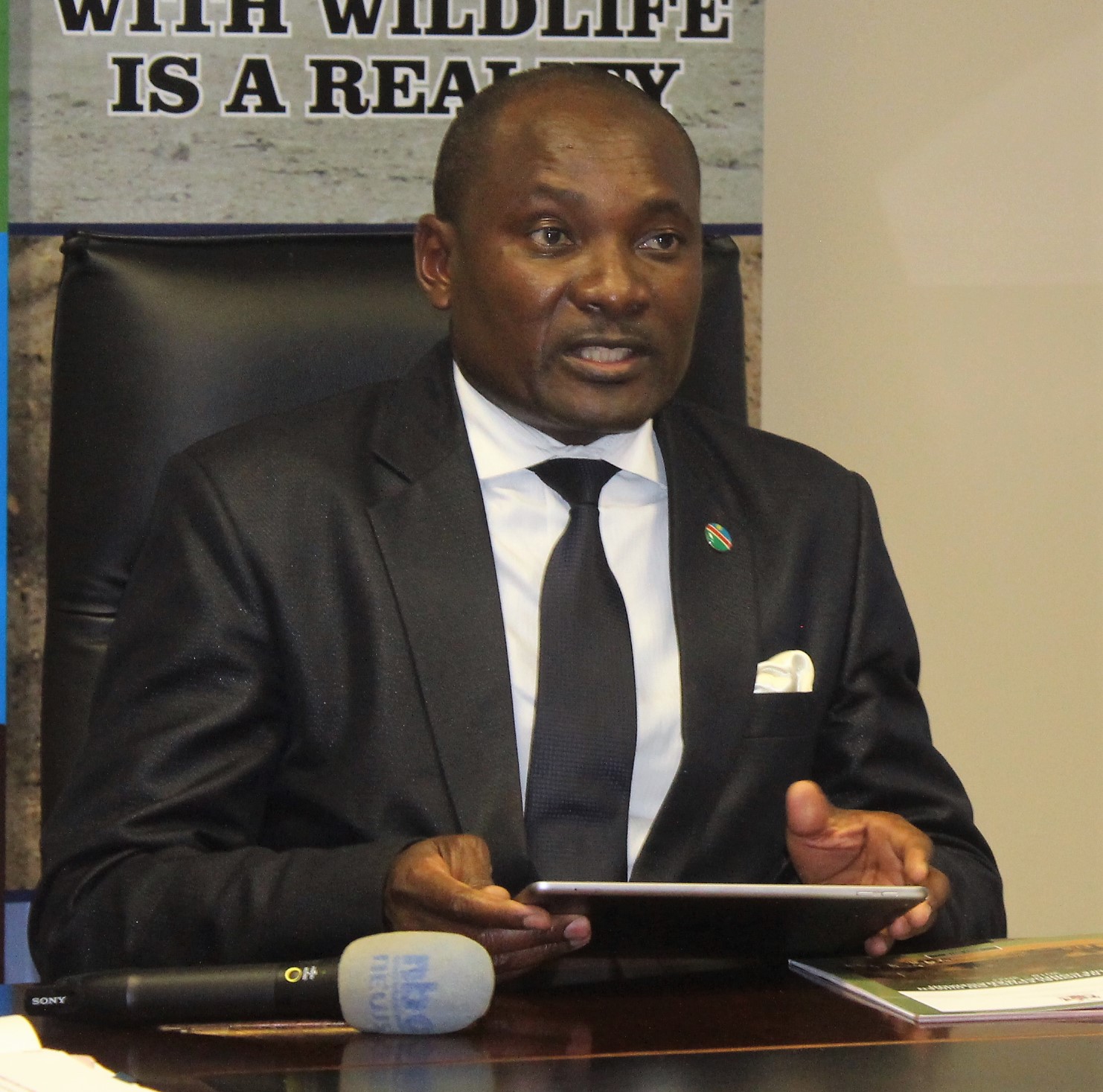
Nampa recently reviewed the asset register and found that Minister of Environment and Tourism, Pohamba Shifeta, owns two houses, one with 12 bedrooms and another with five bedrooms at Ongenga, his home village.
In the dossier, Shifeta also declared that he owns a four-bedroom house in Kleine Kuppe, an affluent suburb in the capital.
He further owns Plot 64 on Herboth’s Blick Nature Estate, which measures 6.7 hectares. The minister has two more plots – one at Eenhana and the other in Henties Bay.
Shifeta also holds 24 000 shares in Bank Windhoek.
The asset portfolio of labour minister Utoni Nujoma – who had at one time publicly stated that he would want the National Assembly to conceal these declarations to protect lawmakers against purported vile attacks – is an interesting one.
Nujoma has 1 200 ordinary shares in Old Mutual and 100 000 shares in FNB Tax-Free.
The register further shows that he has 2 000 shares in Namibia Harvest and 2 500 others in Etosha Fisheries.
The lawmaker also has 175 shares in a company called Namibia Quandaries and 14% of shares in Tsumkwe Gam Trust.
An additional 33% shares in Blue Sea Fishing Trust, 10% in Oshiwana Trust, 50% in Okawa, which has an interest in mining activities, are also all in Nujoma’s name.
In the previous register, Nujoma declared that he owns four residential properties, in Windhoek, Ongwediva and Japan’s Kawasaki.
His predecessor, Erkki Nghimtina has 400 shares in Old Mutual, a house in Windhoek and owns the Helao Nafidi Business Complex in Ohangwena region.
Nghimtina is the owner of a farm near Otavi, measuring 5 400 ha and a traditional home on land measuring 9.8 ha at Omahenge.
The register is further dominated by lawmakers, past and present, who seemingly have amassed wealth over the years.
One such politician is James Sankwasa, who served as deputy works minister in the last parliament.
Sankwasa owns a house valued at N$65 000 and Plot No. 5451 in Katima Mulilo’s Boma settlement. The said plot is valued at N$180 000 according to the former MP.
He also owns another property in Ngweze location in the same town worth N$300 000.
Further, land measuring 1 600 square metres under Sankwasa’s name was being developed at Mafuta in the Zambezi region.
He further owns a house in Windhoek’s upmarket Academia suburb worth N$1.3 million.
Sankwasa has three vehicles to his name, a Mercedes Benz ML 500 with a retail value of N$550 000. He bought this car in 2012. A Toyota Hilux bakkie and Camry bought in 2013 and 2005 respectively are the other cars on Sankwasa’s name.
Additionally, Sankwasa owns three tractors which he uses for agricultural purpose with a combined value of N$805 000.
Disgraced former fisheries minister Bernhard Esau declared 600 shares in Old Mutual and a further 50 shares in Agra. At the time of the declaration, he served as director in three companies – Nafau Holding Company, Namibia Meat Producers CC and Born Africa Investment (Pty) Ltd.
The records show that Esau owns a house in Hochland Park, farm Dakota 35 in the Gobabis area, a plot at Onamutenya in Oshikoto and Erf 2970 in Henties Bay’s Extension 12.
His co-accused, Sacky Shanghala, who served as justice minister until his arrest in November 2019, declared that he has fenced off some land in communal areas in Oshikoto and Kunene regions.
Although recent reports by the local media suggest that Shanghala owns multiple properties in Namibia and South Africa, they do not feature in the asset register.
Shanghala owns 50% of Olea Investment 9 CC, which is alleged to have been used as a conduit to launder money out of Namibia in what is now known as the Fishrot scandal.
Meanwhile, he also owns 50% of Erf 3485 Ongwediva CC.
He is a trustee in Omholo, Cambadara and Aaron Mushimba Family trusts.
Former Swapo lawmaker Pendukeni Iivula-Ithana owns 100% of Omuthiya service station. She did not declare any other properties.
Leader of the official opposition party, the Popular Democratic Movement (PDM) McHenry Venaani owns two farms, farm Jurfan 340 measuring 4 000 ha and farm Olitii 1 243, which has a 1 900 ha landmass. Venaani also owns a property in Otjituuo. He further owns 100% of Otjohima Investment, which has an interest in property development and farming.
Rally for Democracy and Progress (RDP) leader Mike Kavekotora is a director at Ozohi Fishing (Pty) Ltd, in which he has a 10% stake. He is also a director at Tunacor Fishing.
Kavekotora owns farm Hopewell 240 in the Outjo area measuring 4 500 ha and is a trustee of the Vita Thom Scholarship Fund.
Agriculture minister, Calle Schlettwein, has no business interests. He owns a one-bedroom flat in Swakopmund and a house in Windhoek, the register shows.
Vipuakuje Muharukua of PDM is a partner in Swartbooi and Muharukua Attorneys, a law firm he co-owns with Landless People’s Movement (LPM) leader Bernadus Swartbooi. He also owns a house in Ondangwa.
Works and transport minister John Mutorwa owns Mukindiro farm measuring 5 000 ha and two houses, one in Windhoek and another in Rundu.
The minister owns two other erven in the Kavango East’s capital.
National Assembly Speaker Peter Katjavivi owns 50% of Katjavivi Enterprises CC, which owns a house in Windhoek.
The speaker owns another 50% of Aquarius 15 Investment CC and 35% of Monteleone 14 CC that each own flats in Windhoek.
Katjavivi has a farm in the Okahandja district and a townhouse in Windhoek.
Bishop Zephania Kameeta, who served as poverty eradication minister between 2015 and 2019, owns 5% of Moria Fishing and farm Schadek No. 1, which has a 10 000 ha landmass.
He also owns three other erven in Mariental, each valued at N$108 000.
The above are some of the declarations that Nampa came across, with many other politicians similarly owning multiple fishing quotas and companies, land, agri-business ventures and mining concessions. Several politicians claimed they had nothing to declare.
Chief among those who under-declared their assets or failed to declare at all are former defence minister Penda Ya Ndakolo who claims in the register that his only asset is a mahangu field.
MPs are required to declare their shareholding and financial interest in companies, remunerative work outside of parliament, directorships, partnerships, sponsorships, gifts and discounts, property ownership, the value of their pensions, trusts and their spouses and children’s interests where the members benefit directly or indirectly.
For the last two weeks, efforts to get comment from National Assembly Speaker Peter Katjavivi on how his office intends to address the reluctance of MPs to participate in this accountability exercise proved fruitless.
His office has always shifted the buck to the assembly’s secretary, Lydia Kandetu.
“All my office does is publish what the members declare. We cannot force them to declare or hold them accountable. They declare to the speaker and only the speaker can hold them accountable,” Kandetu said in a recent interview with Nampa.
This agency also spoke to a political analyst – Ndumba Kamwanyah – to gauge his perspective on what it means to be led by politicians with opulent resources or who conceal their wealth.
“It is very dangerous to be led by rich politicians. When you mix business with politics, conflict of interest arises and that’s where corruption comes in,” he said.
According to him, Namibians must be concerned as most politicians have vested interests in key industries such as fishing and mining, two main economic drivers.
“Because of their political statuses and access to information, they use the resources to help themselves. That is insider trading.
“They are helping themselves instead of educating ordinary members of the society,” he added.
In hindsight, the political scientist acknowledged that the importance of asset declaration by those entrusted with public office cannot be overemphasised.
However, it is not sufficient for politicians to simply list what they own.
“It is time that lifestyle audits are carried out. They must tell us what the source of their wealth is,” he concluded.
– Nampa