

TotalEnergies is ramping up its global energy exploration, investing about US$1 billion (more than N$16 billion at current rates) each year.
This is as new offshore discoveries position Namibia as one of the world’s most promising oil and gas frontiers. Senior Vice President for Africa Mike Sangster this week said the company’s success depends not only on money, but also on trust, strong partnerships and long-term commitment.
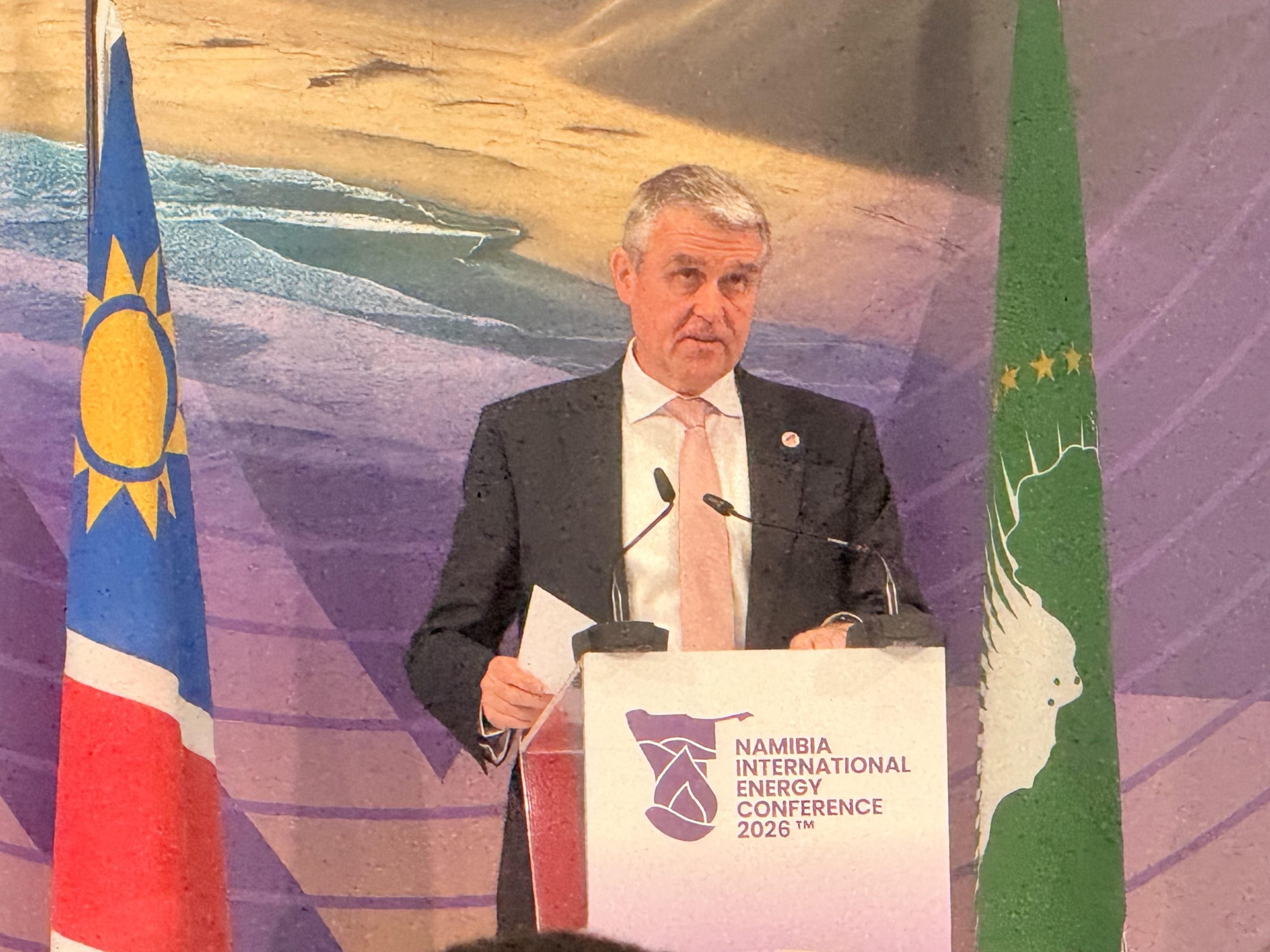
Speaking at the Namibia International Energy Conference in Windhoek, Sangster said governments, companies and communities must work together for projects to succeed.
He stated that big energy projects take time and require trust between all partners. “We are on a journey together. Open communication has helped the company grow its work in Namibia since 2017,” he said. TotalEnergies has worked in Africa for many years and sees the continent as a key part of its future.
The company continues to invest in finding and producing energy across the region.
He noted that projects in Uganda, where large oil developments are underway.
These projects aim to create jobs, build skills and support local communities.
“In Namibia, the company is part of the Venus oil discovery offshore. This project could help turn the country into a major oil producer. Sangster said it is a complex project but could bring economic growth, jobs and more income for the government,” he said.
He added that the company is already running training programmes to help local people prepare for jobs in the energy sector.
TotalEnergies plans to make a final decision on its Namibia projects by mid-2026.
If approved, development could start soon after.
Sangster said it is important to keep projects competitive and fair, with clear rules so both investors and local people benefit.
“This is the beginning of an important chapter,” he said.
Meanwhile, the French oil and gas giant TotalEnergies last week stated that its production in the first quarter of the year was expected to have remained stable despite the Middle East war hitting its output in the region.
The war triggered by United States and Israeli bombing of Iran at the end of February sent energy prices soaring, as transit through the Strait of Hormuz was cut off, stranding a fifth of the world’s oil and liquefied natural gas (LNG) supplies.
While the conflict shut roughly 15% of TotalEnergies’s production, the firm said it was able to compensate by launching production at sites in Brazil and Libya.
It had even managed to increase LNG production by 10 percent from the last quarter of 2025.
Given the sharp rise in oil prices, the benchmark international oil contract Brent jumped from under US$70 per barrel in February to over US$100 for much of March.
The company said it expected to report improved cash flow and earnings in its first-quarter results on 29 April.
Market volatility also provided the company with trading opportunities.
In early April, the Financial Times reported that TotalEnergies had made more than billion dollars by buying up almost all exportable oil cargoes in the Middle East that that do not pass through the Strait of Hormuz.
The company declined to confirm or deny to AFP that it had carried out such a highly unusual operation.
It said only that it had to secure supplies for itself as well as its customers.