


Bravery Kabula
Namibia’s progress will not merely be counted by academic credentials, but by the strength, reliability and creativity of its workforce.
This summation best captures the essence of Namibia Training Authority (NTA) CEO Erick Nenghwanya’s message while addressing the Technical and Vocational Education and Training (TVET) official opening for the year.
The sector officially launched its 2026 academic calendar on Wednesday with a renewed commitment to expanding access, strengthening quality and positioning skills development at the centre of Namibia’s economic transformation.
“TVET stands at the centre of our national development vision. It directly supports NDP6’s focus on economic diversification, youth employability, industrialisation and skills-driven productivity growth. Through modernised facilities, strengthened curricula and broader access, TVET will continue to be the engine that powers Namibia’s industrialisation and sustainable economic expansion,” he said.
Nenghwanya revealed that trainee enrolment has reached 13 512 so far this year, reflecting sustained growth in the sector.
“We have recorded a trainee enrolment number of thirteen thousand five hundred and twelve to date. What is particularly encouraging is that 55% of these trainees are female, demonstrating progress in gender inclusion within technical and vocational education,” Nenghwanya said.
He noted that Namibia currently has 71 registered training providers operating under the TVET system, offering programmes in a wide range of trades and disciplines across the country.
“This growth speaks to the increasing confidence in vocational education as a credible pathway for skills development and employment,” he said.
On the day, education deputy minister Dino Balloti underscored the government’s commitment to strengthening technical skills as a response to youth unemployment and economic diversification.
“Technical and vocational education is central to our national development agenda. We cannot industrialise, grow emerging sectors or create sustainable employment without a skilled and capable workforce,” Balloti said.
He called on stronger collaboration between training providers and industry to ensure programmes remain demand-driven and responsive to national priorities.
“We must deepen partnerships with the private sector, particularly in apprenticeships and workplace-based training. Our young people deserve training that leads to real opportunities and tangible economic participation,” he said.
Balloti also welcomed the fact that women now make up 55% of enrolled trainees in a traditionally male-dominated sector.
“This is a clear sign that barriers are being broken. We must continue creating inclusive spaces where all Namibians, regardless of gender, can acquire technical skills and thrive,” he said.
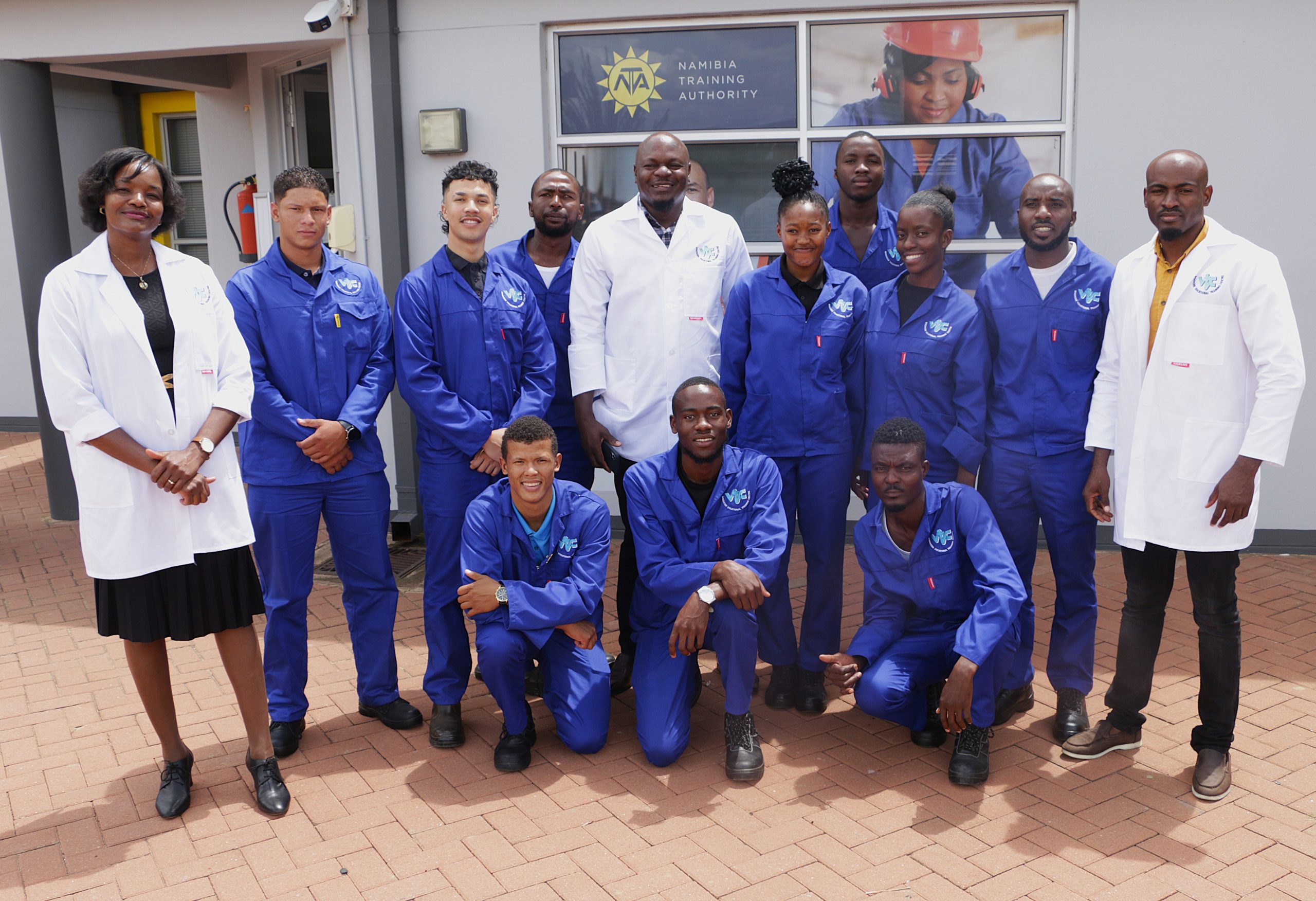
Speaking on behalf of trainees, Rebekka Neumbo expressed appreciation for the opportunities provided through the TVET system, while urging continued investment in modern equipment and improved training facilities.
“As trainees, we are grateful for the opportunity to acquire practical skills that empower us to become self-reliant. We look forward to a year of growth, hands-on learning and innovation,” she said.
She added that trainees are determined to make the most of the opportunities available to them and to contribute positively to national development.
“We understand that skills are the foundation of independence and economic participation. We are ready to work hard and apply what we learn to build our future,” she said.
Photo: Heather Erdmann