

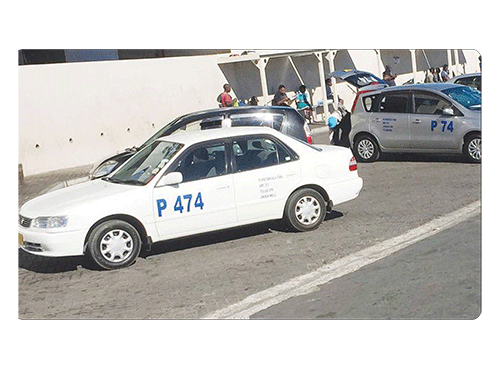
Unregistered taxi drivers at Nkurenkuru have rejected a fare increase limited to registered operators, telling the Namibia Public Passenger Transport Association (NPPTA) that poor roads and delayed permits push them into informal work.
During the meeting held here on Sunday, NPPTA’s Fernando Simunga noted that formal taxis in the Kavango West region declined after 2020 due to poor infrastructure and delays in the licensing system.
“The road infrastructure is very bad. That’s one reason why most of the legal or formal buses are not operating anymore,” he said.
He added that permits had also expired, and applicants waited for documents for lengthy periods.
Simunga said NPPTA is trying to reduce illegal, unregulated transport activity without depriving people of their means of earning a living.
“Specifically, by registering informal operators as members, the association can supervise them rather than push them out into fully illegal operations,” he said.
He said taxis must have passengers-and-goods (PG) licenses so that commuters can be assisted properly after accidents or road incidents.
“Any trip under the local authority boundary should be counted at N$13, with the current price moving to N$15. Trips beyond town are charged double if the drivers are off their route,” Simunga said on fares.
He reported that Nkurenkuru currently has 34 legal taxis operating and 27 illegal taxis, all competing in the same small market.
Legal taxi driver Severinus Haimbanga said legal operators are losing customers to cheaper, informal cars.
“They have been saying N$13 is too much already because they are only paying N$10 to informal cars. What will happen when the fare increases to N$15. Will we make enough,” he asked.
He made a point that unregistered vehicles make it hard to trace lost property.
Illegal taxi driver Moses Kandjimi said cars fail roadworthy tests because of the poor gravel roads to settlements.
“Once we go to register, our cars don’t pass the roadworthy test, unless they must fix the road,” he said.
Kandjimi argued that drivers “are suffering with the roads and even tyres and dust”, and that a fare increase only for registered taxis is unfair when “we are using the same amount of petrol”.
-Nampa