
Heather Erdmann
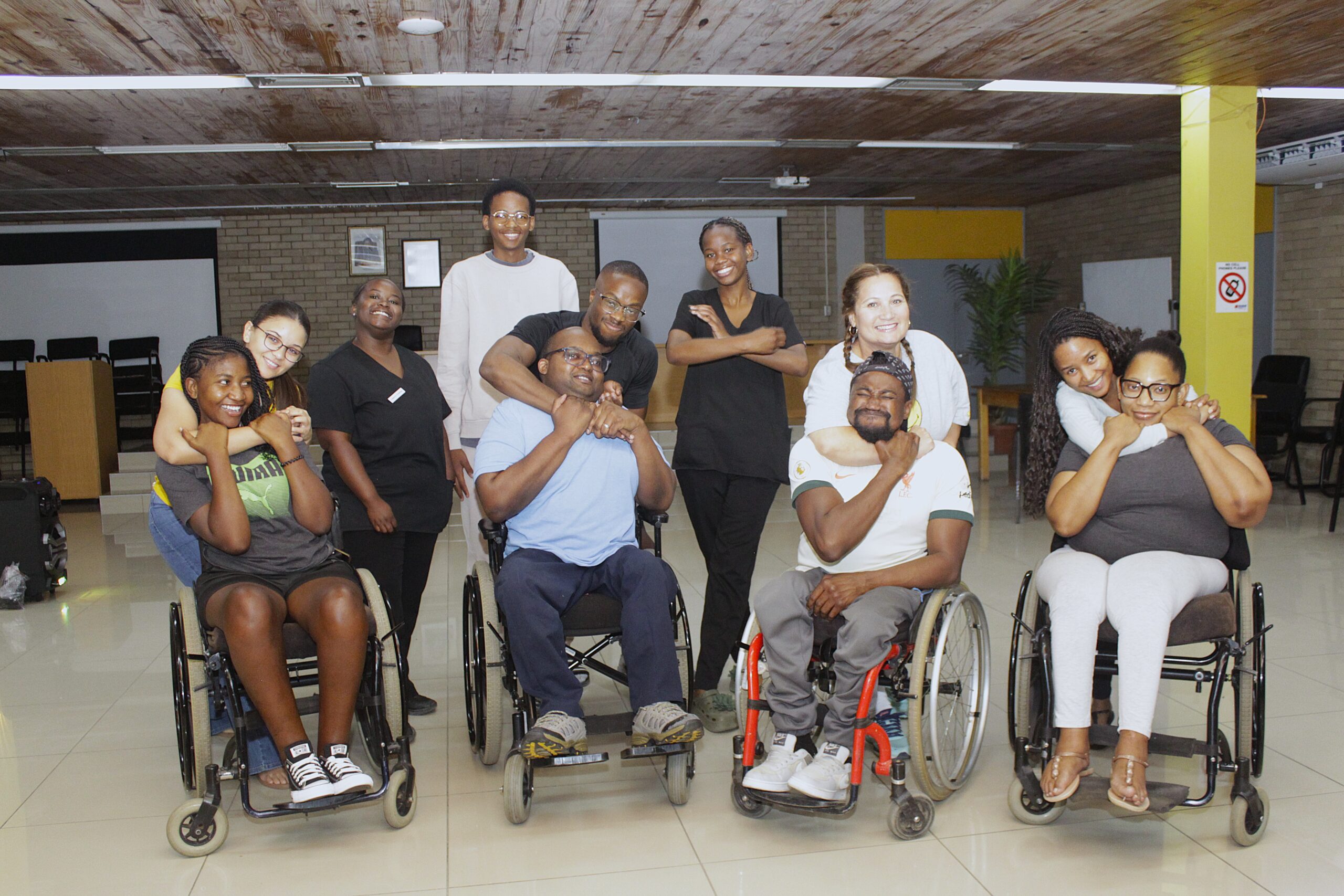
Wheelchair users in Windhoek embraced a first-of-its-kind self-defence programme this September, rolling out of the Windhoek Central Hospital chapel with sharpened awareness, renewed confidence and the power to fight back.
The initiative was the brainchild of Patricia Pretorius, a senior occupational therapist at Windhoek Central Hospital, who oversees spinal cord rehabilitation and wheelchair prescription. She obtained her degree in Occupational Therapy from Stellenbosch University, South Africa, in 2020 and is currently pursuing her Master’s in Human Rehabilitation at the same institution. Pretorius was inspired after seeing an American wheelchair user on social media speak about the struggle of finding inclusive self-defence classes.
She highlighted the broader impact: “Programmes like this are about mental health as much as physical safety. When people feel capable and aware, it reduces anxiety and increases their participation in daily life. It also builds community, as participants share experiences and learn from each other.”
“A wheelchair is part of who they are. Just as we can’t run in heels, they can’t simply ‘get out and run’. That’s why it’s vital to adapt safety skills to their lived realities,” she explained. “The goal is empowerment, freedom, and for them to teach these techniques to their peers too. No one should be left out.”
With reports of wheelchair users feeling unsafe—some describing incidents of being mugged or nearly attacked—Pretorius reached out to Veja Hinda, a two-time IMMAF African Champion with 11 years of mixed martial arts (MMA) experience. Hinda not only agreed but also researched strategies before the first class.
“I wanted to focus on practical, simple techniques,” Hinda said. “We mainly covered the basics: strikes, hammer fists, breaking grips and how to escape when someone grabs you from behind. There are no rules when defending yourself; you just need to survive.”
The programme ran on two Saturdays, 6 and 20 September, deliberately placed near payday to ease transport costs for participants from marginalised communities. While organisers hoped for 25 attendees per session, a total of 15 turned up, mostly individuals with spinal cord injuries.
Far from a setback, participants said the smaller group allowed them to connect deeply. Many belong to a WhatsApp community, the Association of Wheelchair Users (AWCU), where they share advice and struggles. For some, this was their first opportunity to meet in person, trade stories and learn new approaches to daily challenges.For Sebastian Josef, a professional wheelchair racer and basketball player, the biggest revelation was his own stability.
“I always worried that if I fought back, I’d fall out of my chair. But this class showed me I won’t. That knowledge alone gave me the confidence to use my strength,” he said.
Annemarie Johnson said the class was about dignity as much as safety.
“Before, I would just let things go out of fear. Now I feel empowered to be vocal, to stand up for myself and to let people know my safety matters,” she said.
Silas Ndakolo, who has been exploring biokinetics as part of his rehabilitation, praised the balance between physical and mental empowerment.
“I’ve always been cautious in public spaces,” he said, recalling a past incident where he lost his phone at a crowded festival. “For me, this was about awareness, learning how to manoeuvre my chair and anticipate risks. It has touched on my fears and given me confidence.”
While participants rated the programme highly, some suggested the instructor could, at times, place himself in their position to make techniques even more practical. Still, all agreed the sessions were empowering and necessary.
Pretorius sees this as the beginning of something much bigger.
“This was about planting a seed,” she said. “Our hope is to expand, to bring in more people with different types of disabilities, and to eventually create a ‘training-of-trainers’ model so wheelchair users themselves become instructors.”
In the end, the programme wasn’t just about punches or grips. It was about breaking barriers, building community and reclaiming dignity. For wheelchair users in Windhoek, the streets just became a little less daunting—and a lot more empowering.
As Namibia takes steps toward inclusivity, initiatives like this serve as a reminder: empowerment comes in many forms, and resilience often starts with a single session.
-herdmann@nepc.com.na
Photo: Heather Erdmann