

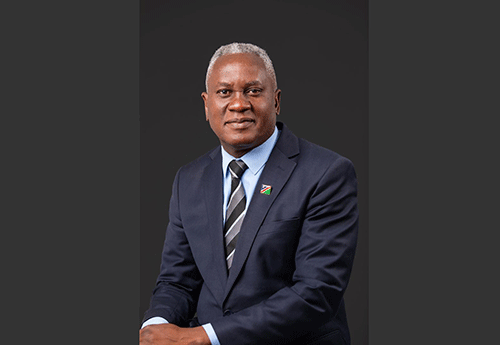

Adolf Kaure
Health executive director Penda Ithindi said the ministry is still managing the second outbreak of cholera in Namibia.
The outbreak was declared in the Grootfontein district during November 2025.
This follows the first outbreak in the Kunene region declared in August 2025.
“Regarding the status of this current outbreak in Grootfontein, as of 12 January 2026, we have recorded 99 suspected cases. Of these, 32 are confirmed cholera cases. The good news is that we have recorded zero fatalities,” he said.
The executive director attributed this to the early detection, appropriate management by health workers and early intervention.
“Currently, the outbreak remains small, with about 0 to 2 cases reported daily, but transmission is still ongoing. The ministry is fighting this aggressively. We have taken a whole-of-government and whole-of-society approach to address this outbreak,” Ithindi added.
Ministry of health deployed a national multi-sectoral response team to the Otjozondjupa region to intensify not only surveillance and testing but also case management.
Because the outbreak is driven by challenges with water, sanitation and hygiene, the health ministry is working with partners to provide safe water, improve sanitation and manage waste removal appropriately.
With schools having recently re-opened, ministry of health has also partnered with the education ministry to ensure that schools are safe and informed.
“Cholera is often an indicator of social development challenges. Therefore, addressing it requires ‘whole-of-government’ and ‘whole-of-society’ approaches. We need government sectors, non-governmental organisations, community leaders as well as the media to work together to address this outbreak,” he said.
The common symptoms of cholera include sudden watery diarrhoea and vomiting, which can lead to severe dehydration if left untreated. Namibians experiencing any cholera symptoms have been urged to visit their nearest health facility immediately. Preventative measures to mitigate cholera include always using safe, treated or boiled water for drinking and food preparation, eating food immediately after preparation (served hot), hand hygiene, seeking immediate medical care and staying hydrated.