

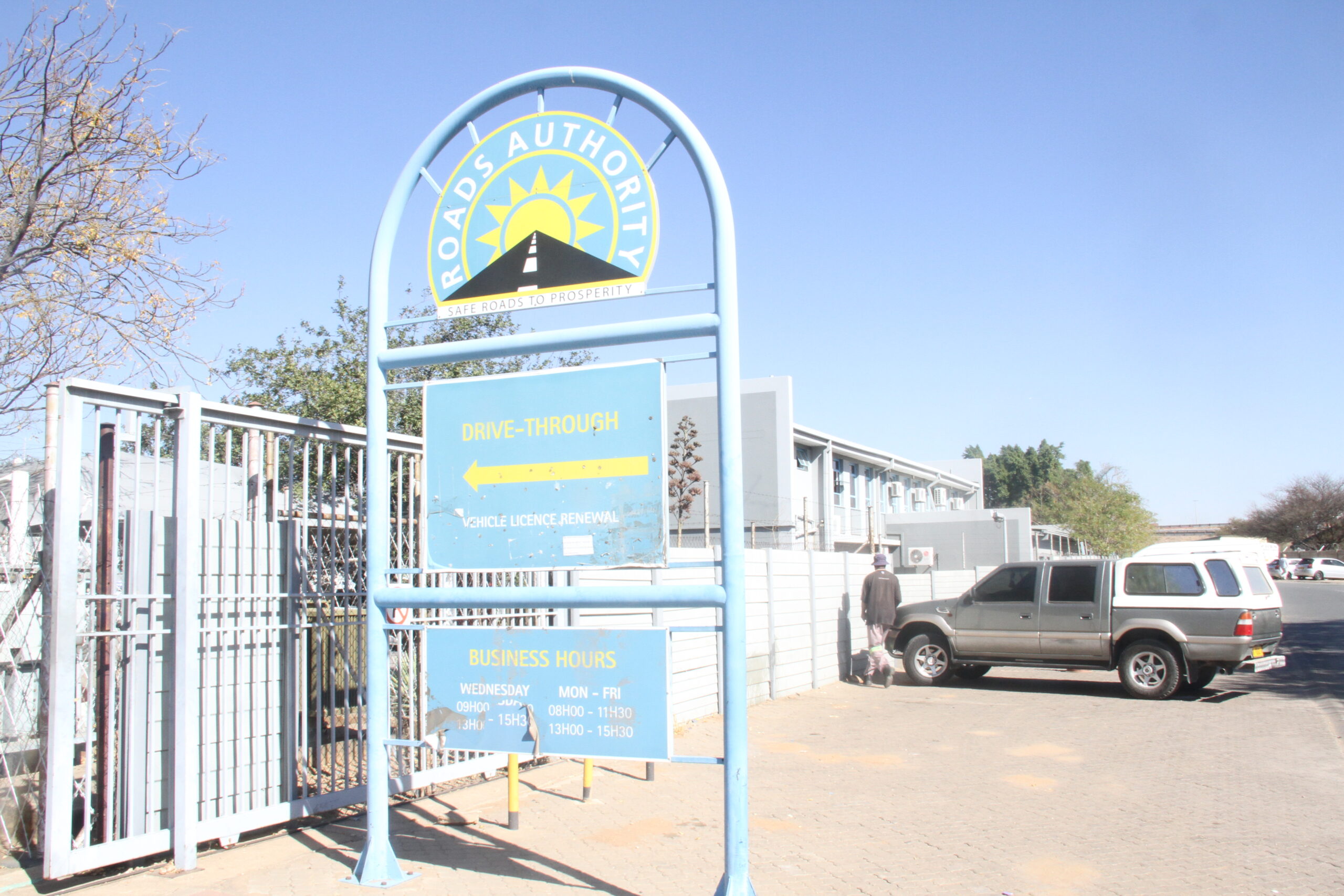

In a bid to relief congestion and bring services closer to people, the Ministry of Works and Transport (MWT) has acquired land in Wanaheda for the construction of new Namibia Traffic Information System (NaTIS) offices.
Making the announcement in Parliament on Wednesday, works and transport minister Veikko Nekundi said the new facility has already been designed.
He expects ground working equipment on site.
“We are cognizant of the high Windhoek population and the demand for NaTIS services thereto. The Windhoek NaTIS services are highly congested. In addition, we are alive to the downtrodden population, particularly in areas such as Havana, Hakahana, Goreangab and many others in the surrounding areas that deserve NaTIS services closer,” said the minister.
The works and transport minister continued that current NaTIS services are acquired through the pain of long queues, long waiting periods, avoidable travelling costs, frustrations, corruption, scammers and real or perceived intentional acts to fail clients.
“Therefore, the MWT and its agency, NaTIS, is undertaking a transformational process to address and mitigate the prior outlined pains to receive the NaTIS service,” said Nekundi.
The immediate transformational programmes underway to upgrade NaTIS service delivery include an Automated Driving Testing System (ADTS), a book and pay module to provide more convenience, computerised learner license testing (CLLT), as well as electronic driver’s licenses (E-licenses).
The pilot phases of these upgrades are expected to commence as of December 2025, while some will commence during the next financial year.
Ministry officials estimate that the upgrades will constitute an investment of over N$150 million.
“The upgrade and modernisation to the book and pay module will enable clients to book and pay from the comfort of their houses utilising digital technologies. This upgrade will assist with the elimination of unnecessary long queues and the costs associated with the physical walk-ins. However, we are cognizant that some members of our communities might still prefer the current practice. Therefore, the walk-in services will still be available to such customers,” said Nekundi.
The minister said that currently, customers physically write the theoretical test with a manual supplied by NaTIS for the learner license tests. “This current practice is associated with purposeful failure of customers and associated corruption. Therefore, we have embarked on computerised learner’s license testing, enabling our customers to complete a test in just 30 minutes. This change will also eliminate the human marking and distribution of question papers, which are associated with corruption. The test will be automatically evaluated and the results instantly available by a mere click of a button,” Nekundi said.
The pilot phase for the computerised learner testing is expected to commence at the Okahandja NaTIS centre and via the NaTIS mobile testing truck by December 2025.
The upgrade aims to migrate from the current manual to the automated driving testing system.
The pilot phase for this upgrade is expected to commence during the next financial year.
“The gist is that sensors and satellites will be installed in the testing vehicles as well as around the test yard. To ease the burden of the upgrade, NaTIS will explore avenues to have customers utilise NaTIS vehicles for the test and evaluation instead of the current practice of using their own respective vehicles.
Meanwhile, NaTIS is exploring the migration from the current hard identification card-sized licenses, which are prone to being either lost or forgotten.
They can subject drivers to unnecessary traffic fines, leading to congestion and corruption in magistrate courts.
Nekundi shared that, as of September 2025, Namibia’s vehicle population stands at over 419 000 while the country’s driver population surpassed 379 000.
In addition, approximately 140 000 NaTIS transactions are conducted monthly, generating revenue of about N$87 million.
-ebrandt@nepc.com.na