


Matheus David
The Ministry of International Relations and Trade (MIRT) has unveiled its 2025-2030 Strategic
Plan, setting a new course for Namibia’s diplomacy and economic engagement in a rapidly changing global landscape.
The five-year plan, launched in Windhoek on Tuesday, is designed to strengthen Namibia’s presence on the international stage while promoting trade, investment and sustainable development. Speaking at the launch, trade and international relations minister Selma Ashipala-Musavyi described the plan as more than just a policy document.
She called it a “compass” to guide the ministry’s work and a shared commitment to Namibia’s future. “Today’s launch is not just another ceremony. It is a call to collective action,” Ashipala-Musavyi said.
“Every Namibian – from those serving at headquarters and in diplomatic missions to citizens across the country – has a role to play in advancing our national interests,” she
stated. She said the strategic plan was developed during a time of global uncertainty, marked by shifting alliances, technological change and new trade realities.
She added that, for Namibia, these developments present both challenges and opportunities to position the country more strategically at regional, continental and global levels. The 2025-2030 Strategic Plan expands MIRT’s mandate to include international trade and investment, further solidifying Namibia’s commitment to economic diplomacy.
It is closely aligned with Vision 2030, marking the final phase of the nation’s long-term development aspirations.
The minister noted that the plan aims to promote peace, security, prosperity and sustainability while prioritising the empowerment of youth and women, environmental protection and the
preservation of Namibia’s cultural heritage.
MIRT executive director Ndiitah Nghipondoka-Robiati said the strategy is anchored in Namibia’s national and regional development frameworks, including the Sixth National Development Plan (NDP6), the African Union’s Agenda 2063 and the United Nations Sustainable Development Goals (SDGs).
“This plan is built on three key pillars – international relations, economic cooperation and stakeholder engagement,” she stated.
“It reflects our belief that no strategy can succeed in isolation. Partnerships across government, the private sector, civil society and the Namibian diaspora are essential,” Nghipondoka-Robiati added.
She said a new monitoring and evaluation framework would ensure accountability and measurable progress in implementing the plan. Deputy Minister of International Relations and Trade Jenelly Matundu expressed gratitude to the strategic planning team and all partners who contributed to shaping the plan.
“Today, we reaffirmed our shared vision for Namibia,” she said. “The next five years will challenge us to deliver excellence, accountability and innovation as we promote Namibia’s interests globally,” she added.
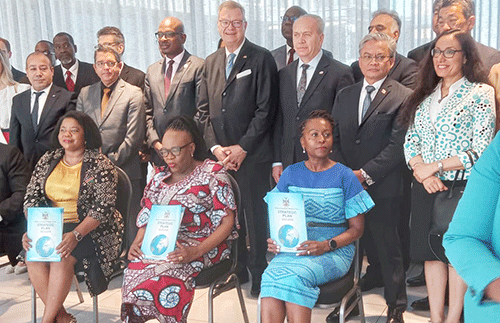
The launch was attended by diplomats, senior government officials, development partners and representatives of the private sector, all united in their support for Namibia’s continued growth through effective diplomacy and trade.
The MIRT Strategic Plan 2025-2030 is not just about goals and policies, but it is about Namibia’s determination to stand tall in the world, driven by unity, professionalism and a shared vision for a more prosperous future.