


Adolf Kaure
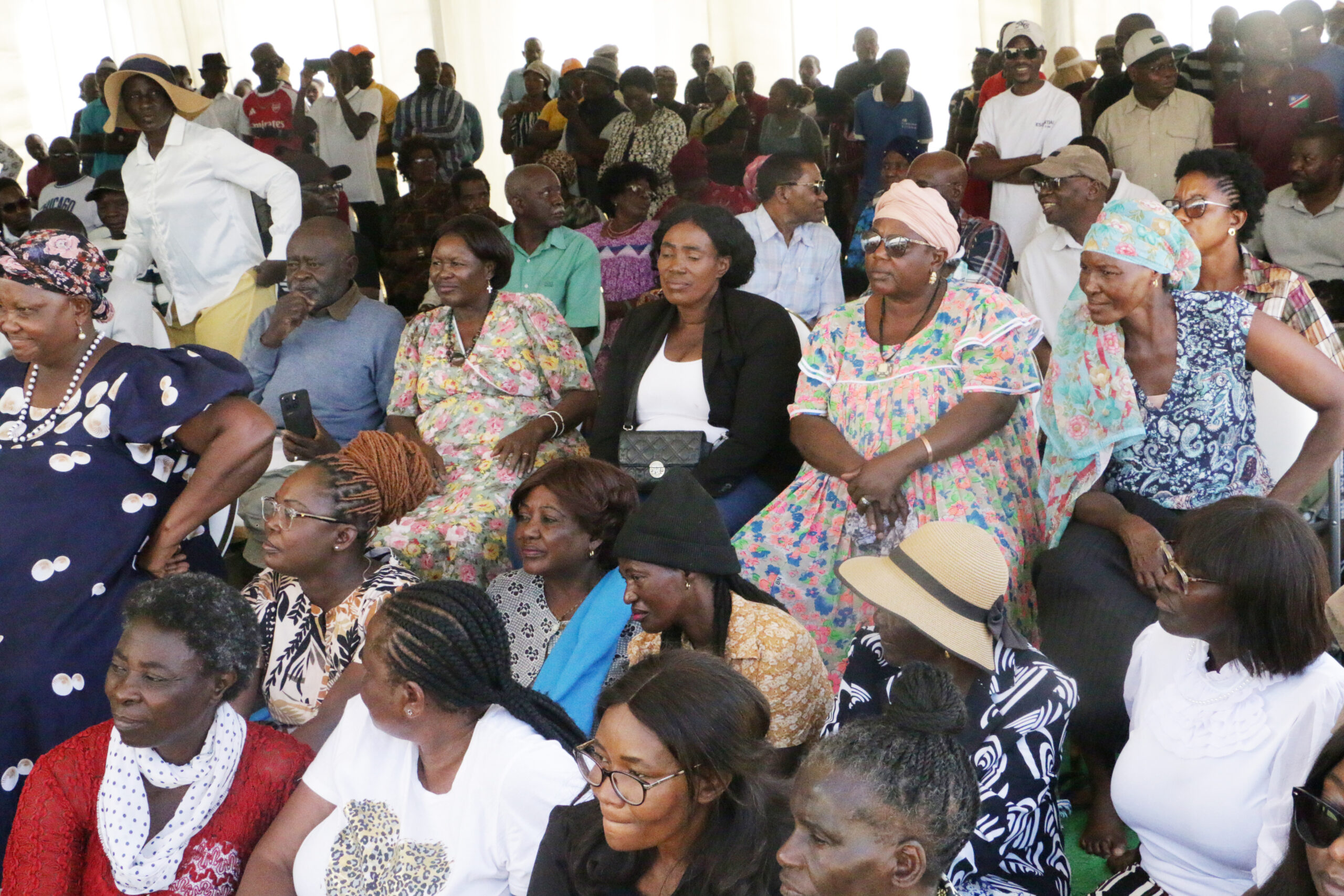
Hundreds of demonstrators gathered outside the Swapo Party national headquarters on Saturday in Windhoek, seeking clarity about the use of the funds allegedly allocated to Swapo by the United Nations (UN) for further distribution to them.
The demonstrators are Namibian veterans who were in exile during the national liberation struggle and returned in 1989 as former refugees.
They have been camping at the Swapo Party national headquarters since 2025, demanding answers for their grievances.
Speaking at the occasion, Swapo secretary general, Sophia Shaningwa, emphasised the importance of dialogue in resolving delicate matters.
“I wish to highlight that as a Swapo Party, we have always recognised the importance of dialogue. This meeting, therefore, represents an opportunity for an open and constructive engagement on matters of historic significance to our nation’s liberation veterans,” Shaningwa said.
Speaking on behalf of the United Nations High Commissioner for Refugees (UNHCR), the organisation’s representative, Kavita Belani, said that there were no post-repatriation funds earmarked by UNHCR that are undistributed or available for any claim now.
“Any basic assistance support provided at that time was accounted for, and the case is closed… UNHCR therefore confirms that the 1989 Namibia repatriation was voluntary and that all available donor funds were fully utilised and accounted for and earmarked funds were retained,” she said.
“Any unspent funds would have been returned to the UN headquarters in line with established UN financial rules. This position has been consistently maintained in all formal dialogues since 2016, and the position remains unchanged,” she added.
Speaking on behalf of the former exiled veterans and refugees, Aina Angula demanded answers on the rehabilitation and resettlement of the refugees. In response, Belani maintained that the UNHCR also provided basic assistance to support initial reintegration while maintaining that the responsibility for the rehabilitation of the returnees rests with the government of the country of origin.
“The UNHCR provided returning repatriation through transport, food rations and other basic assistance. In terms of rehabilitation, returnees were granted citizenship by the government of Namibia, and targeted rehabilitation support is the responsibility of the country of origin. As we clarified, all assistance made available by donors at that time to support the return and repatriation of the refugees from Namibia and all the funds provided to the UN, including the UNHCR, have been accounted for,” said Belani. Angula also requested the end of the programme report as well as documentation on behalf of the refugees.
“During the repatriation process, we signed two documents, namely the repatriation form and another document. Unfortunately, we only got copies of the repatriation form.
The question is, what about the other documents on which we put our signatures?” Angula implored.
Responding to the request, Belani told the group to make a written request to the United Nations Archives and Records Management Unit.