

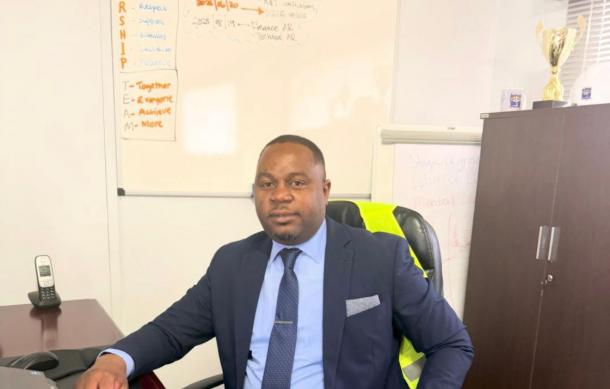

The Rundu Town Council (RTC) recently came under fire from its line ministry, the Ministry of Urban and Rural Development, over service delivery.
In addition, the line minister James Sankasa rejected the Council’s proposed five-year contract extension for the current CEO, Olavi Nathanael (ON).
He cited poor performance and recommended to the Council to advertise the position to ensure a transparent and competitive recruitment process.
Nathanael’s contract comes to an end in May 2026.
New Era journalist John Muyamba (JM) engaged the CEO to shed light on these issues and more.
JM: The Minister of Urban and Rural Development emphasised the need for a renewal grounded in ‘provable work performance’. Specifically, what are the three most significant, measurable achievements from your previous five-year term, according to the Performance Management System (PMS)?
ON: Since taking office in May 2021, we have stabilised the town’s once inconsistent water supply by removing the Bulk prepaid meter, restoring conventional metering and drilling 21 boreholes to address over 500 cubic metres per hour demand shortage.
We have also procured elevated water towers. Previously, poor road conditions and protests prompted us to negotiate a tripartite agreement to upgrade roads, resulting in over 11 kilometre of gravel roads being improved.
Infrastructure construction in Rundu Extension 8 is ongoing, enabling property development with services.
Upgrades in informal settlements, such as Kaisosi, Kehemu, Ndama and Kasote aim to improve access to municipal services and gradually phase out informal settlements.
JM: Rundu has been noted for poor service delivery, cleanliness issues and bad roads. What targeted interventions did your administration implement to tackle these problems, and what measurable improvements have been achieved in road infrastructure?
ON: In terms of service delivery, the October 2023 NSA report describes Rundu as Namibia’s second largest town with a population of 118 632, close to our previous estimate, given a 5% annual growth. In July 2022, the Council approved creating a Job Evaluation and Grading Committee to analyse current and future structures. By early 2023, the committee studied and recommended changes, which Council approved in July and communicated to the ministry, which is forming a task team to review the structures of Part II municipalities. We have received no further communication. Using a 2000 structure cannot meet today’s demands, especially with Rundu’s growth. I can only propose, while decisions rest with higher authorities, which explains issues like inadequate waste collection, especially in overcrowded informal settlements.
Despite limited resources, waste is generally collected on time, delays occur due to diesel shortages, and we sometimes outsource waste removal using aging trucks. We plan to acquire new trucks, especially for peri-urban areas. Roads have been rehabilitated: Dr Sam Nujoma Street (over 5 km), Elizabeth Nepemba and Maria Mwengere Streets (over 2 km), John Mutorwa Street, Dr Samuel Kaveto Mbambo (2.9 km) and Haingura Mise Phase 1 (800 m). Currently, we’re upgrading Sitentu Mpasi Street and working on more access roads. More projects are planned, but funding remains a challenge.
JM: The Minister advised advertising the position to promote transparency. Why then does the Council and your office consider a direct renewal to be in Rundu’s best interest? Additionally, how will you respond to concerns about resembling a ‘banana republic’ style of governance?
ON: Section 27(3)(a) states that a CEO of a Local Authority Council shall serve for five years from appointment, with possible extensions as per paragraph (b). The council must notify the CEO at least three months before the end of the term about extending or not.
Section 29 discusses conditions for discharging a CEO and staff, based on performance and other criteria. My performance, rated as competitive by the council, was limited by financial resources. In Local Authorities, power dynamics often influence employment decisions, where those in power may dismiss someone not because of performance but to replace them with someone who conforms to their expectations, reflecting the ironic challenges of being a CEO in such settings.
JM: Infrastructure crisis (sinkholes/roads): What comprehensive, long-term strategies do you have to definitively address the infrastructure deterioration, particularly the stormwater drainage systems and sinkholes, instead of depending on short-term patches?
ON: The matter could have been addressed seven years ago, and it would have been cheaper by then. As of 2020, the matter was declared a disaster by the Regional Disaster Risk Management Committee. It was submitted to the Office of the Prime Minister, which turned it down. It was resubmitted several times to several offices, but no luck. We have conducted several studies and costed them. The most recent was a stormwater master plan for the town to address matters surrounding drainage systems. Given the financial shortages, we were unable to implement the plan. However, we have tried to solicit and mobilise financial resources. To this end, we have submitted to the ministry for funding on the immediate, which will include stormwater drainage and roads. The costs have escalated to over N$300 million to address the issues if we don’t allow it to erode further.
JM: Given the proposed N$28 million construction of a new council building in 2025/26, what measures will you take to ensure the project finishes on time, within budget and free from corruption?
ON: The project has four components to ensure manageability: consultants who do the designs and costing, our technical department verifying these costs and certifying payment certificates on behalf of the contractor, the contractor who ensures quality and the funder who verifies invoiced work against submitted rates. The contractor typically provides a work programme with timelines, although external factors like weather or material availability can affect it. The other three components have oversight functions. Section 2 of the Procurement Act emphasises objectives like transparency, competitiveness and value for money, which we must uphold.
JM: Given the financial constraints cited in previous years, what is your strategy to increase own-source revenue and reduce reliance on central government transfers?
ON: We aimed to reduce residents’ debts through various methods, but we encountered challenges with community representatives, disconnections and accusations of sabotage. We remind political office bearers that they are both part of the council and community. Interference in revenue collection efforts has been problematic. We’ve hired the Information Trust Corporation to blacklist overdue clients and plan to create a debt collection section. The prepaid metering system now includes a debt management module to sustain debts while providing services. Long-term, we aim to commercialise some services through RTC Commercial Services (Pty) Ltd. We are still refining ideas and will seek consultation when appropriate.
JM: Regarding land delivery and urban planning, what specific 12-month and five-year plans do you have to address the backlog and formalise informal settlements? Also, given the current shortage of technical staff, such as engineers, what are your concrete recruitment and retention plans for the next term?
ON: We have started the formalisation project in surveyed areas, where activities are ongoing. However, illegal land sales by the community have caused extensive sprawl, complicating greenfield planning and Mahangu field claims. We’ve signed agreements with GIZ under the Inclusive Sustainable Development programme to address sprawl, conduct land surveys and improve access to services. Another agreement with Development Workshop Namibia (DWN) involves creating over 500 erven with limited services and establishing a reception area for orderly settlement during land servicing.
We also cooperate with Shack Dwellers to formalise areas, though community encroachments require frequent layout amendments. Some land has been subdivided for residential and mixed-use development. Skilled personnel are discouraged by current offers, but amendments will align with the new standardised structure. For now, we rely on external engineers and planners as well as twinning agreements with the Windhoek and Swakopmund municipalities, which are willing to assist.
JM: What is your strategic vision if your term extends until May 2031? What are your top three priorities to transform Rundu? Besides central government transfers, what new revenue streams or partnerships will you pursue to overcome the town’s financial constraints?
ON: I have always said Rundu is your investment destination, aiming to attract investors, visitors and tourists, focusing on three priorities:
land delivery – establishing and servicing townships for residents and businesses to ensure land access and improve quality of life.
Local economic development – encouraging sustainable economic activities to create jobs, boost income and enhance living standards, including land for industries, incentives for investors, tourism support, small and medium enterprises and youth organisations.
Financial prudence – ensuring sufficient funds and managing them wisely for continuous operations are our primary goals.
JM: Why was senior leadership not present at key stakeholder consultation meetings, like the January 2026 parliamentary housing session? What steps will you take to enhance visibility and communication with the public?
ON: We have noticed some invitations are short notice despite our planned schedule. To meet our objectives, we must sometimes improvise to ensure activities are carried out. The council’s absence is usually circumstantial, not intentional.
JM: Capacity building is essential for maintaining a productive institution. What strategies do you have in place to enhance the human resources department at Rundu, aiming to improve employee productivity and performance?
ON: One of our strategic themes in the council is ‘Learning and Growth’, which includes employee training, coaching and mentoring. This is our initial priority: train employees to improve processes, satisfy stakeholders and encourage investment to achieve our vision. We’ve developed a training needs analysis to create an annual training plan guiding access to learning opportunities. Additionally, we have a training and development policy as well as policies on study loans and grants for further education, supported by an annual budget. We continually review these initiatives.
-jmuyamba@nepc.com.na