


Rudolf Gaiseb
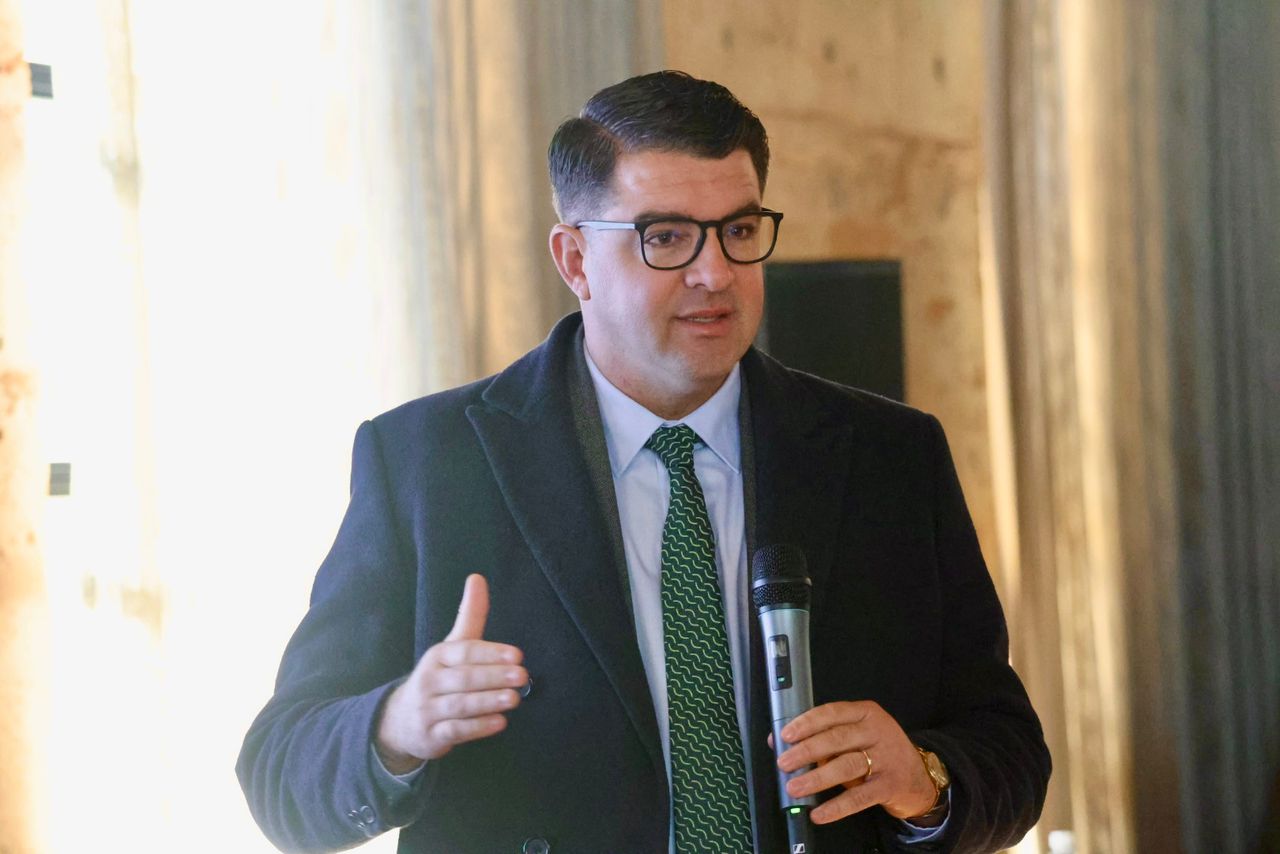
Deputy Minister of Education, Innovation, Youth, Sports, Arts and Culture, Dino Ballotti, said the government will start to ‘name and shame’ local authorities that are demanding compensation for land intended to build schools.
Speaking in parliament recently, Ballotti said the government is still in a bind, negotiating with some local authorities for land to build public schools.
He said while most capital project sites are at advanced construction stages and are expected to reach practical completion by May 2026. The Marmer and Oranjemund sites, in the Hardap and //Karas regions, outstanding land-related matters between the directorate of education and the local authorities are delaying progress.
“This can not be accepted, and I will personally name and shame any local authority which is demanding a fee for land where the intention is to build schools to cater for their very own youth constituents,” he said.
Balloti noted that despite education infrastructure remaining satisfactory, it is not where the ministry intends it to be.
“We continue to implement our national decongestion plan, ensuring that schools and communities that are overcrowded receive priority resource allocation,” he added.
The dispute has raised questions about land zoned for government use by local authorities.
MPs debate
Members of parliament (MP), including Affirmative Repositioning leader Job Amupanda, sought clarification on this matter, saying that under the Urban and Regional Planning Act, township establishment should already include land specifically zoned for government use.
He argued that if land is already allocated to the State within local authorities, the need for further negotiation or payment of fees is confusing and should, in theory, be impossible.
Amupanda said that with communal land, that may be understandable, but for local authorities, it raises concern.
“If the government identifies the need for a school in a specific locality, then we have a big problem. We want to understand what is going on so that we can perhaps see what we can do. Even in cases of land donation, all donations require ministerial approval. I do not see a situation where a government wants to build a school and is somehow unable to do so,” he indicated.
Other MPs suggested the dispute reflects a failure of communication within the government.
Popular Democratic Movement lawmaker Inna Hengari said the ministry of education should have consulted with the Ministry of Urban and Rural Development to find solutions before bringing the complaint to Parliament.
“When we come to this house, we become experts at diagnosing problems. It’s always nice to hear that ministers from the same cabinet have sat down and actually agreed on a solution and then come to us with those solutions,” she said.
The MPs recommended that the ministry improve coordination among education, works, and finance to resolve bottlenecks.
Capital projects
The education ministry reported that as of February 2026, 508 capital projects are underway across the country under budget vote 40.
There are 29 large projects, at least one per region, with up to three in regions like //Karas, Erongo, Kavango West, Khomas, and Ohangwena. About 300 classrooms are being built, mostly in Ohangwena, followed by Otjozondjupa and Erongo.
Additionally, 168 pre-primary classrooms are under construction across 14 regions, with regional variations.
A National Decongestion Plan aims to reduce overcrowding in regions like Kavango East and Khomas, with one project in Erongo, six in Kavango East, two in Khomas, and one each in Zambezi and Otjozondjupa.