


Auleria Wakudumo
In a fast-changing modern world filled with machines and factory-made products, craftwork continues to hold deep meaning in many communities.
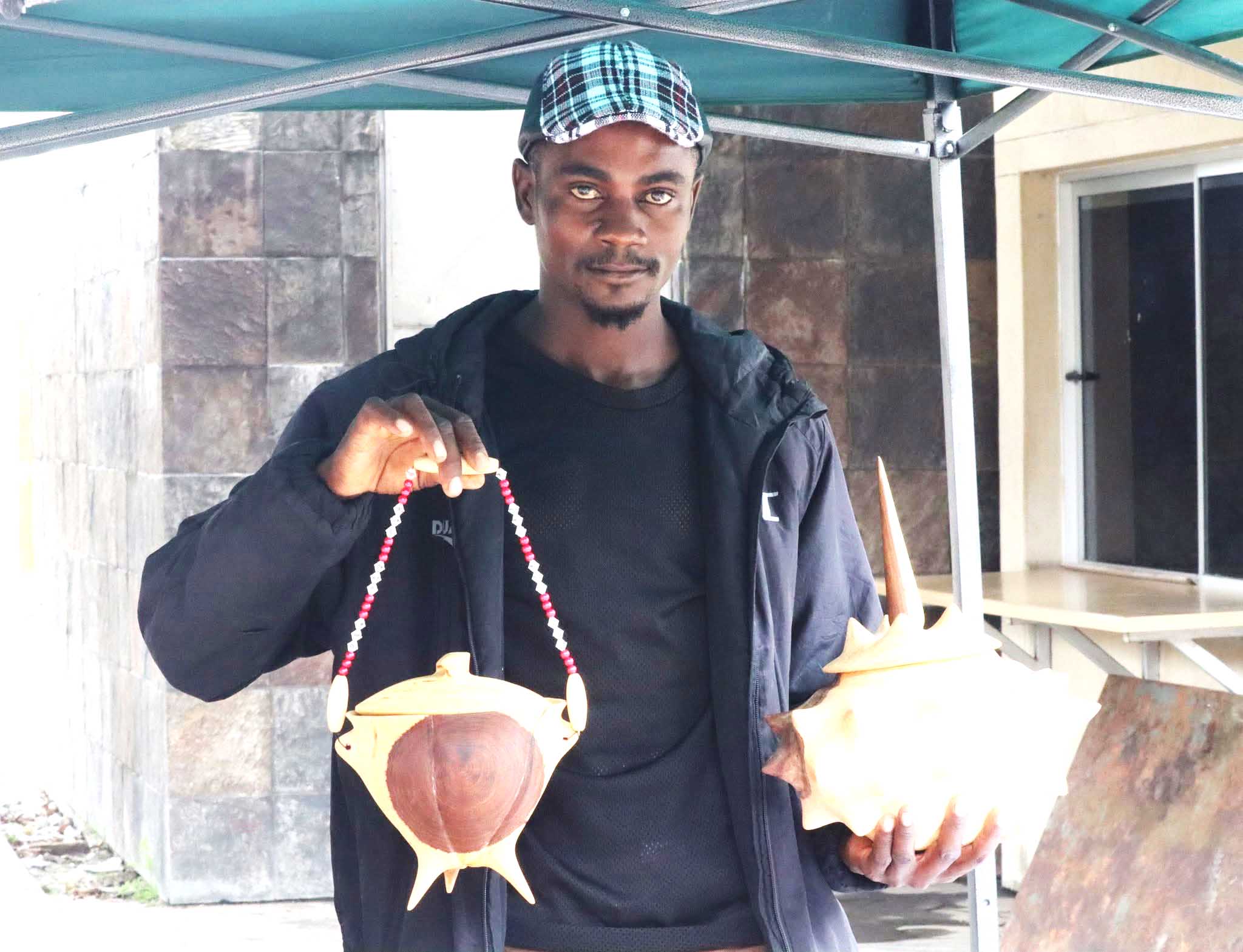
In northern Namibia, Martin Angula (30) is proving that handmade wooden products still have value and purpose.
Angula, who comes from Uuhahe village in the Ohangwena region, began his woodcraft journey in 2016 while staying at a cattle post in the Oshikoto region after failing grade 12.
Today, many shops are filled with plastic and imported goods made by machines.
These products are often cheap and quick to produce, but they lack uniqueness and personal touch.
Angula believes wooden products offer something different. They are eco-friendly, durable and naturally beautiful. Wooden bowls, spoons and cups are safe for food use and do not harm the environment like plastic does. Each item he creates carries its own character, shaped carefully by hand.
Despite his passion, the journey has not been easy. Angula experienced a painful setback when he was attacked and robbed at his workshop in 2021. His tools and equipment were stolen, leaving him heartbroken.
Despite everything taken away from him, he refused to give up. He reminded himself that he had started with nothing before, and he could start again. With faith and determination, he slowly rebuilt his work.
Over the years, he has showcased his products at local exhibitions, including the Ongwediva Annual Trade Fair, where his work received positive attention. Through training opportunities such as Cosdef and the OYETU Project, he gained technical and business management skills that helped him grow professionally.
He also received support through the government’s Micro Finance Programme, which enabled him to build his own workshop in Omwifi village.
Although he began with hand tools, Angula understands that modern times require modern equipment.
To increase production, improve quality and reach bigger clients such as hotels and museums, he now needs tools like a petrol chainsaw and a lathe machine.
Access to such equipment would allow him to expand his business, create jobs and contribute more to the local creative industry. For Angula, woodworking is more than just earning an income.
“It is a path to inspire young people, promote sustainability and encourage communities to value handmade products,” he said.
He sees craftwork as a powerful tool for economic empowerment and creativity.
-awakudumo@nepc.com.na