


Uakutura Kambaekua
The anticipated future of uranium mining in the Omaheke region depends on an independent assessment from the International Atomic Energy Agency (IAEA), environmental commissioner Timoteus Mufeti said.
He made this statement while addressing the media on Wednesday regarding the pilot project for on-site leaching uranium mining in the Omaheke region.
Mufeti pointed out that the issuance and approval of the Exclusive Prospecting License (EPL) have not yet been completed.
He highlighted the need for careful, science-based decision-making that balances national economic interests with environmental protection and community rights.
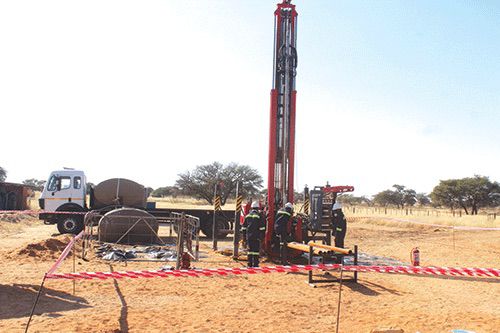
“On the other hand, it would also evaluate whether this methodology has a significant impact or not. The test we are currently discussing is part of this application. I want to clarify that it does not involve mining. Headspring has not been granted a mining licence. They only possess an exploration licence,” he said.
Wednesday’s briefing followed a recent technical review mission by the IAEA to evaluate the proposed uranium in-situ leach mining opportunities in the Leonardville area. The IAEA was invited to assess Headspring Investments’ application for an Environmental Clearance Certificate to conduct four years of test mining using in situ leaching, focusing on underground aquifer testing.
Mufeti reiterated that, given concerns regarding potential groundwater, public health and environmental impacts, particularly within the Stampriet Transboundary Aquifer Systems, the government sought independent internationally recognised expertise [IAEA] before considering any further authorisation.
“The IAEA technical expert team assessed environmental protection measures, groundwater management, public health and radiation safeguards and regulatory oversight framework to provide independent, science-based evidence to inform the government’s decision-making,” he remarked.
Mufeti said the IAEA will submit a technical report that will undergo further inter-ministerial review before the government determines the way forward.
During the same briefing, Axel Tibinyane, the director of the Atomic Energy and Radiation Protection Authority at the Ministry of Health and Social Services, clarified that the IAEA can only provide advice, while the government will make the final decisions regarding the uranium projects. The decisions will prioritise environmental impacts, particularly concerning water management related to shared aquifers.
He added that the process includes reviewing technical reports, collecting stakeholder input and awaiting final recommendations anticipated in March.
He continued: “Regulators from various ministries will decide based on scientific data, ensuring transparency and stakeholder engagement”. Tibinyane said the final decision will be based on scientific findings rather than ‘politics’, and it may require additional testing or result in the project being halted. -Nampa