

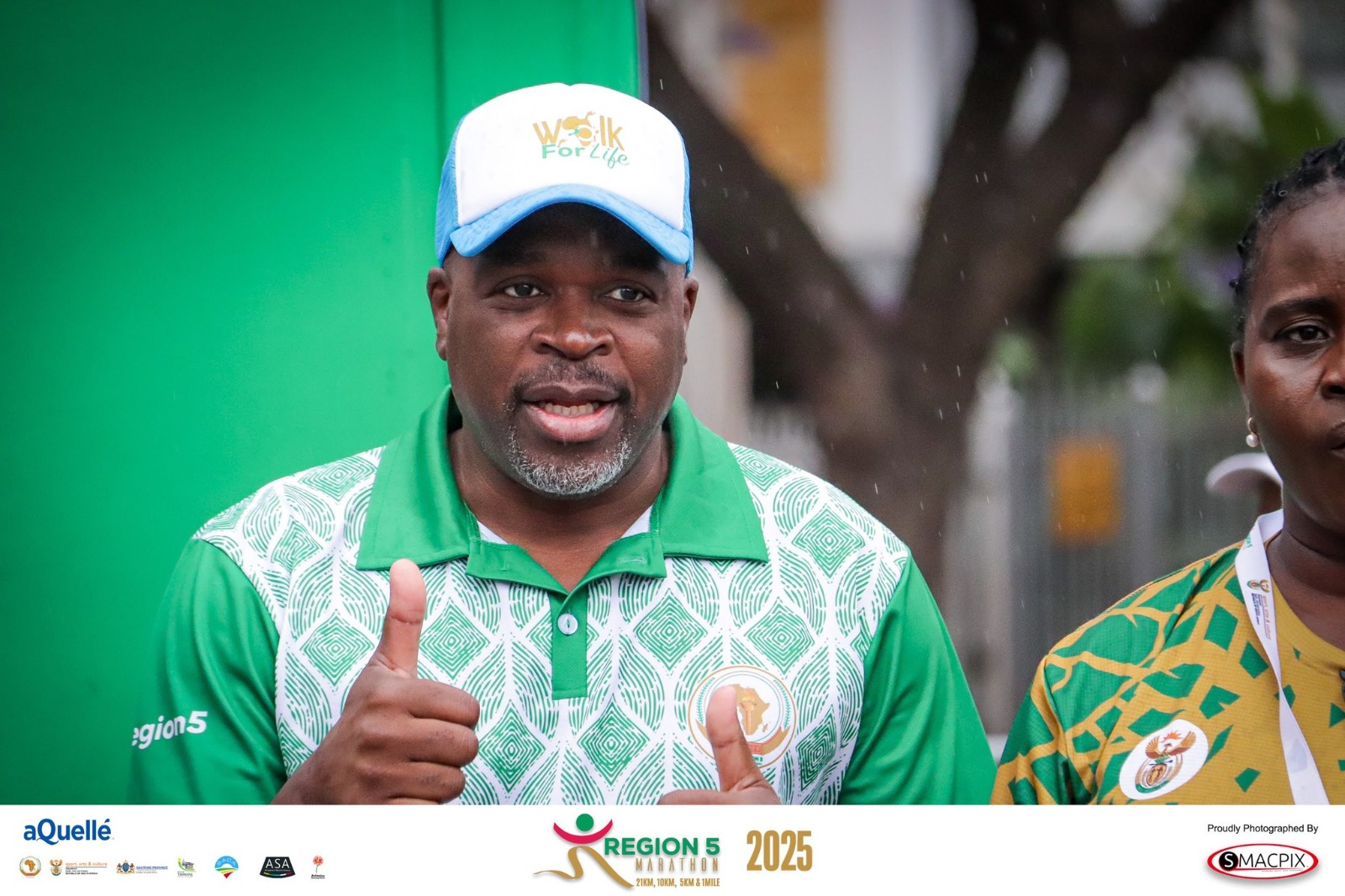

The Chief Executive Officer of the African Union Sports Council Region 5 Games, Stanley Mutoya, is a busy man, ensuring that the upcoming Region 5 Games in Mozambique are a success.
New Era engaged Mutoya to gauge his thoughts on what the Games mean for sport development in Southern Africa and how preparations are unfolding.
Mutoya describes the Region 5 Youth Games as one of Southern Africa’s most important youth high-performance platforms, bringing together under-20 athletes in a structured, multi-sport environment. He explains that the Games accelerate talent development, strengthen regional benchmarking, and deepen cooperation among the 10 Member Countries.
They are positioned as pathway events that support the region’s broader athlete development objectives while strengthening the overall sport system, including coaching, officiating, sport science, administration, and governance.
On Mozambique’s readiness, Mutoya confirmed that the country has been officially confirmed as host, with a Protocol Agreement signed with AUSC Region 5 marking a key governance milestone.
Region 5 has been engaging Mozambique through technical meetings and venue-focused preparation activities, including structured sessions in Maputo to ensure full readiness. Feedback from these engagements typically focuses on venue readiness timelines; operational planning for transport, accommodation, and accreditation; and medical services, safety, and competition delivery standards, with action trackers in place to keep preparations on schedule.
Participation
Mutoya anticipates strong participation from all 10 Member Countries, including Angola, Botswana, Eswatini, Lesotho, Malawi, Mozambique, Namibia, South Africa, Zambia, and Zimbabwe. Competition is expected to be intense, as the Games are widely treated as a selection and performance benchmark for emerging elite athletes.
Countries are increasingly investing in structured preparation programmes to ensure their athletes are ready to compete at the highest level.
The Games provide a practical, high-stakes platform for early identification of high-potential athletes, allowing talent verification under pressure against top peers in Southern Africa.
They strengthen performance pathways into national high-performance programmes and build athlete readiness for international multi-sport environments, including village life, accreditation procedures, anti-doping education, media interactions, and competition pressure. Mutoya notes that the Games have a proven legacy as a launchpad for elite careers, with many athletes progressing to global stages.
Infrastructure improvements in Mozambique are well underway, with a focus on venue upgrades and compliance across competition and training sites. Preparations also include athlete accommodation planning, transport route and fleet management, medical and emergency readiness, and competition overlay elements such as field-of-play, timing and scoring systems, branding, and accreditation.
Rehabilitation
The Regional Organising Committee has approved a rehabilitation plan for the identified venues, with readiness milestones expected to progress steadily leading up to the Games, scheduled from 4–13 December 2026 in Maputo.
Mutoya emphasises that legacy is central to the philosophy of the Region 5 Games.
“For Mozambique, the Games will leave behind improved sport infrastructure, enhanced venue capabilities, stronger systems in event hosting, officiating, sport medicine, and governance, as well as an improved tourism profile and environmental sustainability infrastructure,” he said.
For the broader region, Mutoya said the Games create a stronger, repeatable hosting model, deepen the talent pool, and promote long-term cooperation that supports sport development beyond the event itself.
The funding model for the Games is a blended approach, combining host government support formalised through the Protocol Agreement, participation fees from member countries, commercial sponsorships, and strategic partners aligned to youth development, safeguarding, and sustainability.
Sponsors contribute not only financially but also technically, helping to improve the quality of the event and the athlete experience.
Governments and sports ministries play a crucial role in preparing national teams, providing policy support and inter-ministerial coordination, enabling participation through youth development structures, safeguarding athlete welfare, and supporting national sports structures in delivering competitive teams. At the regional level, ministerial leadership strengthens unity of purpose and aligns the Games with broader development agendas.
Evolution
Mutoya reflected on the evolution of the Region 5 Youth Games, which have grown into a highly competitive biennial under-20 multi-sport programme since their adoption in 1997. The Games are now recognised as a high-performance pathway platform and a valuable environment for scouting and benchmarking emerging athletes.
Looking ahead, the long-term vision of AUSC Region 5 is to build a complete youth-to-elite athlete pathway for Southern Africa, ensuring early talent identification, structured progression, strengthened high-performance systems, protected athlete welfare, and regional events that serve as gateways into continental and Olympic-level participation.
The Region 5 Youth Games promise to be a defining moment for youth sport development in Southern Africa, and Mutoya is confident that Mozambique will rise to the occasion, delivering a world-class experience for athletes, officials, and fans alike.
-lmupetami@nepc.com.na