

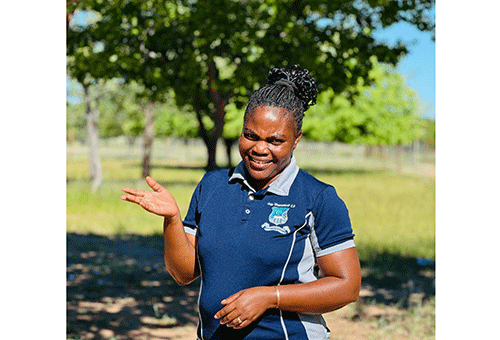

OSHAKATI – Ohangwena Regional Youth Forum chairperson Monica Ndeilenga said young people in the region are reflecting on the progress made since 1990 while confronting the reality that economic opportunities have not kept pace with educational advancement.
Ndeilenga told Nampa on Friday that, although Namibia has achieved political freedom since independence, many young people are questioning how that freedom can translate into economic opportunities.
“Independence gave us the foundations, which are education, freedom and democratic participation. Now, young people are asking, how do we build economic freedom on that foundation? That’s the conversation driving our mood as we celebrate this Independence Day, grateful for the past, but also very focused on creating the future we want to see,” Ndeilenga said.
The chairperson acknowledged that youth inclusion in the national development agenda has improved, citing the N$257 million allocation to the National Youth Development Fund (NYDF) in the 2026/27 budget as a positive indicator. However, she argued that true inclusion requires young people to be integrated into high-level decision-making processes regarding agriculture, infrastructure and macro-economic planning, rather than being consulted solely on “youth issues”.
She added: “Young people want to be partners in development, not just beneficiaries of programmes”.
She noted that young people in the region continue to face high unemployment, a mismatch between education and labour market needs, increased competition in informal trade due to cross-border activity with Angola, and limited access to funding, as many rural youth lack formal employment history or collateral.
To curb rural-to-urban migration, the forum is advocating for the development of regional value chains, specifically in agro-processing and sports infrastructure.
“We must enforce laws fairly, invest in infrastructure to meet population growth and reform funding access by removing bureaucratic hurdles for rural youth. By pairing capital with mentorship and bridging the skills gap through vocational training and industry partnerships, we can create lasting opportunity,” Ndeilenga added.
The chairperson said youth in the region want to see economic diversification, improved access to funding, market-relevant skills development, improved infrastructure and stronger youth participation in governance over the next decade.
“Ohangwena has achieved significant development milestones, particularly in education, health and infrastructure, but these developments haven’t translated into economic opportunities at the scale needed.
We’re better educated but underemployed. We have access to healthcare but struggle to afford it without income. We have roads but limited economic activity to justify using them for business,” said Ndeilenga.
-Nampa