

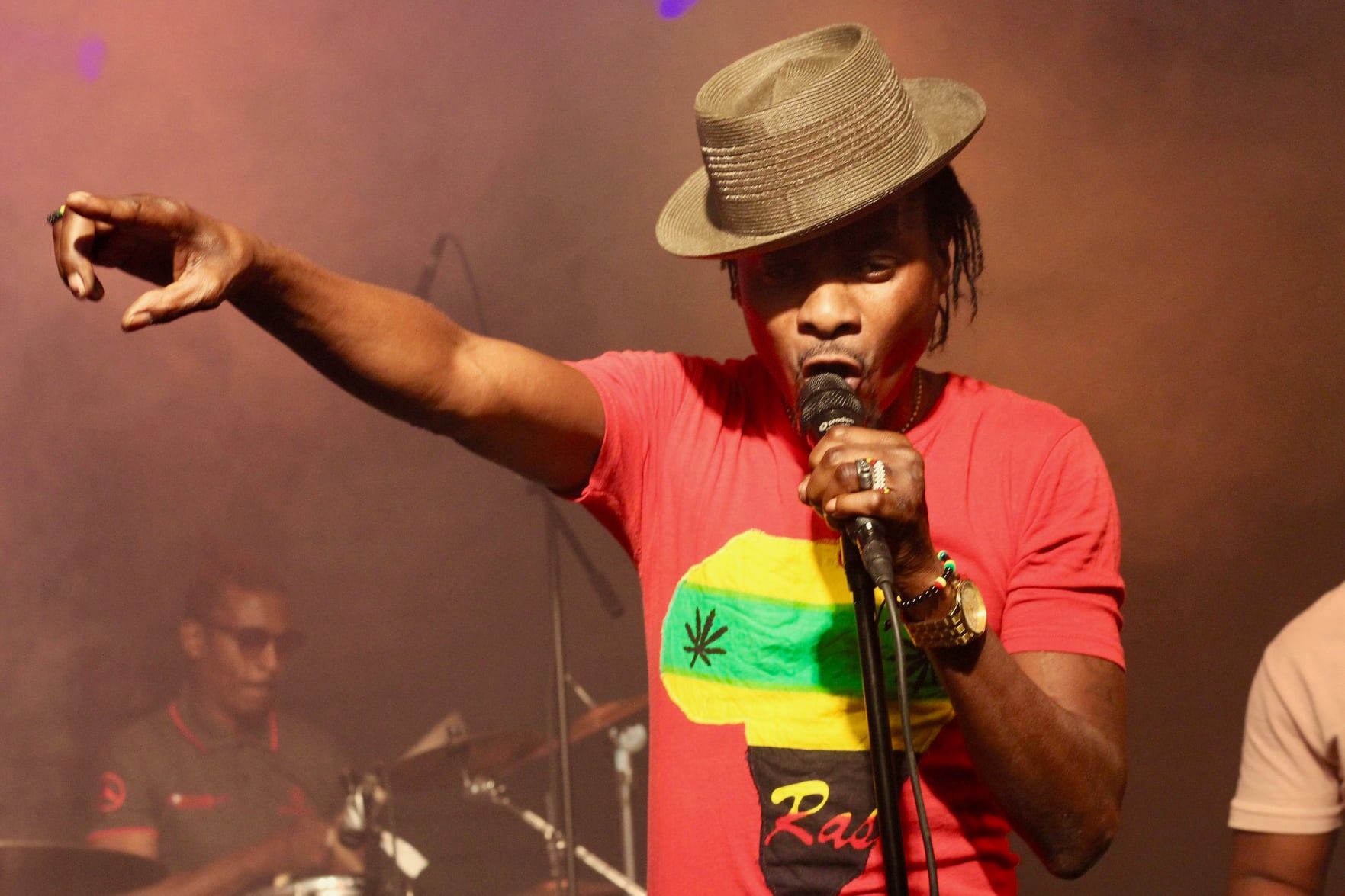

Adolf Kaure
Music is recognised as the universal language which not only unites but also celebrates identity, heritage, and culture.
As Namibia celebrates 36 years of independence, we take a walk down memory lane to some of the notable and iconic musical highlights before and after independence that have remained synonymous with the ‘Land of the Brave’.
On 21 March 1990, as the old orange-and-blue South West Africa flag was lowered and the new, vibrant Namibian flag was raised, a proud founding president, the late Sam Shafiishuna Nujoma, looked on with a smile in the presence of United Nations Secretary-General Javier Pérez de Cuéllar.
After that, an unforgettable concert took place, as the elite in world music gathered at the Independence Stadium, which was packed to capacity.
Jamaica’s Ziggy Marley and the Melody Makers, Lucky Dube and the Slaves gave reggae fans ‘irie’ performances. South Africa’s Sipho ‘Hotstix’ Mabuse’s “Burnout” and “Jive Soweto” got the jazz lovers grooving, while Mango Groove’s rendition of “Lucky Star” and PJ Powers’ “Jabulani” reminded us of the importance of diversity.
All of this was capped off by Brenda Fassie and the Big Dudes, who stole the show, performing in vibrant ANC attire that reminded us of what it really meant to be free.
Musical wind of change
Before Namibia gained independence, it benefited from talented musicians such as the late Willy Mbuende, Ras Sheehama (also known as Ras Boy Hans), Jackson Kaujeua, and bands like M-Connection and Ugly Creatures.
Their music planted seeds of social awareness while offering comfort and hope for the future.
Carlos Kambaekwa of Ugly Creatures emphasised that music has the power to unite people across ethnic and racial divisions.
“We used music as an early form of entertainment. It was the only entity that included all tribes. Like for me, I played in a band which was made up of different tribes, even white people at some point,” Kambaekwa explained.
“Music has no colour. The magic of it is that it is a tool that has the power to unite everyone.”
Although many of these artists were born or lived in exile, their music sparked a revolution and fostered resilience, giving the struggle for independence more courage, resolve, a healing quality, and a unifying effect.
Jackson Kaujeua’s songs like “Winds of Change”, “Reconciliation” and “Kutako’s prayer” became revolutionary anthems, resonating with the new era of a soon-to-be-free Namibia.
Global sounds
Axali Doeseb’s composition of the national anthem, “Land of the Brave”, symbolised our true freedom, a song for all Namibians marking a new era of independence. After this independence, Namibian music continued to develop, with Ndilimani and Ras Sheehama’s reggae style dominating.
Ras Sheehama’s “Cassinga” highlighted that music could be a free form of expression. Despite this newfound freedom, South African musicians still dominated Namibian airwaves and stages, with notable artists like Brenda Fassie, Splash, Yvonne Chaka Chaka, and Chicco, who captivated audiences with their township disco (bubble-gum pop) music.
However, by 1997, People’s Choice got us dancing with “Siwelewele”, and it remains arguably Namibia’s biggest hit to date.
Towards the end of the decade, the reggae and dancehall sound that had dominated in prior years would take a back seat to newer sounds.
Dungeon Family, who would later split into Gal Level and The Kalaharians, brought a fresh sound that excited the youth.
Hip Hop came onto the scene as rappers like Shikololo, Kapital K, and later the Black Market music label’s 061-Crew jumped onto the scene, while Matongo Family is credited with pioneering Namibian kwaito.
Despite kwaito, hip hop, and dancehall being sounds emerging from South Africa, the United States, and Jamaica, artists’ use of vernacular lyrics brought a Namibian identity to these genres.
New wave
The turn of the century brought about a new wave of creative artists who took Namibian music to the next level.
In 2004, Martin Morocky, then known as The Dogg (now known as King Tee Dee), released his debut album titled “Shimaliw’ Osatana”, while Lazarus Shiimi, aka Gazza’s “Tanauka”, went viral with hits like “Shidolodolo” and “Kachu Kachu”. Buti and Janice’s Hopi Hopi (Kana Ka Meme) and Stella’s “Kapepo” became instant fan favourites. Namibia now had certified musical superstars.
According to Gazza, he did not anticipate the success he enjoyed over the years when he released “Tanauka”.
“I honestly did not expect the kind of success that followed. I just know that when I do music, I feel a certain type of peace. At that time in my life, I was juggling many things. I was playing football, I had a full-time job, and at the same time I was pursuing music,” he said.
“So, in many ways, I was still trying to find myself and understand my purpose. Music came from a deep passion inside me. It was about telling our stories and expressing what we were going through as young Namibians. When people embraced the ‘Tanauka’ album the way they did, it showed me that Namibia was ready for its own voice and its own sound.”
In 2005, Stella and Snazzy made history by becoming the first Namibians to be nominated for the KORA All-African Music Awards.
Musical loss
Namibian music lost talented producers, taking to their graves with them precious and irreplaceable skill. Eclipse died in a car accident in 2009, while Arafath Muhuure’s death sent shockwaves through the music fraternity. Another producer, Kanibal and Black Vulcanite rapper, AliTheDude, in 2022 and 2025, respectively.
Saddest of all, the iconic Ras Sheehama also died in 2025, leaving the nation devastated. Furthermore, the deaths of Tunakie and Phura this century were also difficult to take.
According to Shiimi, the loss of producers such as Arafath, Eclipse and Kanibal was extremely painful for him and the entire music industry to comprehend, saying the producers helped shape the sound of Namibian music.
He also highlighted the importance of mental health awareness and the need for governmental support in the Namibian music industry.
“They played an important role in guiding artists and building the industry. But their passing also reminds us about the mental health challenges within the creative industry. As creatives, we think deeply and feel deeply,” he said.
“Many times, in the past, we felt alone, driven purely by passion without proper industry structure or recognition. When creatives do not see returns from their work or when their efforts are not recognised, it can sometimes lead to doubt, depression and other mental health struggles. I think this is why it is important that the creative industry is now beginning to receive recognition and support at the government level.”
Looking towards the future
Music in Namibia has developed, but international artists still largely dominate the airwaves compared to local musicians.
Fans mainly attend stadiums and concerts when South African or other foreign acts perform, and event organisers openly acknowledge and benefit from this trend. With artists in afro-pop, house, amapiano, and afro beats gaining prominence, figures like Yeezir, Shax Champion, Latoya Stella, and Top Cheri have energised the industry, marking a new wave of superstars shaping Namibia’s evolving musical identity.
A notable milestone is Ms Gideon, Namibia’s first artist signed by Sony Music Africa in collaboration with Era Music Group. Thirty-six years after independence, music has reflected our collective emotions, from joy, liberation, and humour to sorrow and mourning. Balancing traditional genres like Oviritje, Shambo, Kwiku, Ma !Gaisa, and Hikwa, with influences like reggae, township disco, and hip hop, Namibian music is a vibrant mosaic of our history, present, and aspirations.
Kambaekwa urged the government to introduce music into the school curriculum, saying it has not done enough to improve musicians’ living standards.
“Some people can naturally play music by ear, but not everyone can do this. That is why it is important for it to be introduced in government schools so they can study music theory and can contribute to their quality of life,” he said.
Meanwhile, Gazza expressed how encouraged he is by the new wave of artists and producers coming into the industry.
“Many of them are inspired by the pioneers and legends who came before them, and they are continuing the work that was started by those producers. At the same time, they now have access to new technologies such as AI and advanced production tools. These tools allow them to improve the quality of their sound and compete internationally. If they remain authentic to our culture while embracing these new technologies, the Namibian sound will continue to grow and strengthen our identity on the global stage,” said the “Holla” hit-maker.
Gazza was recognised as the 2020 Namibia Annual Music Awards Artist of the Decade, adding to his many accolades.
The power in our music lies in our experiences and how they are creatively depicted with every song. Let our 36th Independence Day celebration remind us that no matter what the day brings, music will always be there.