

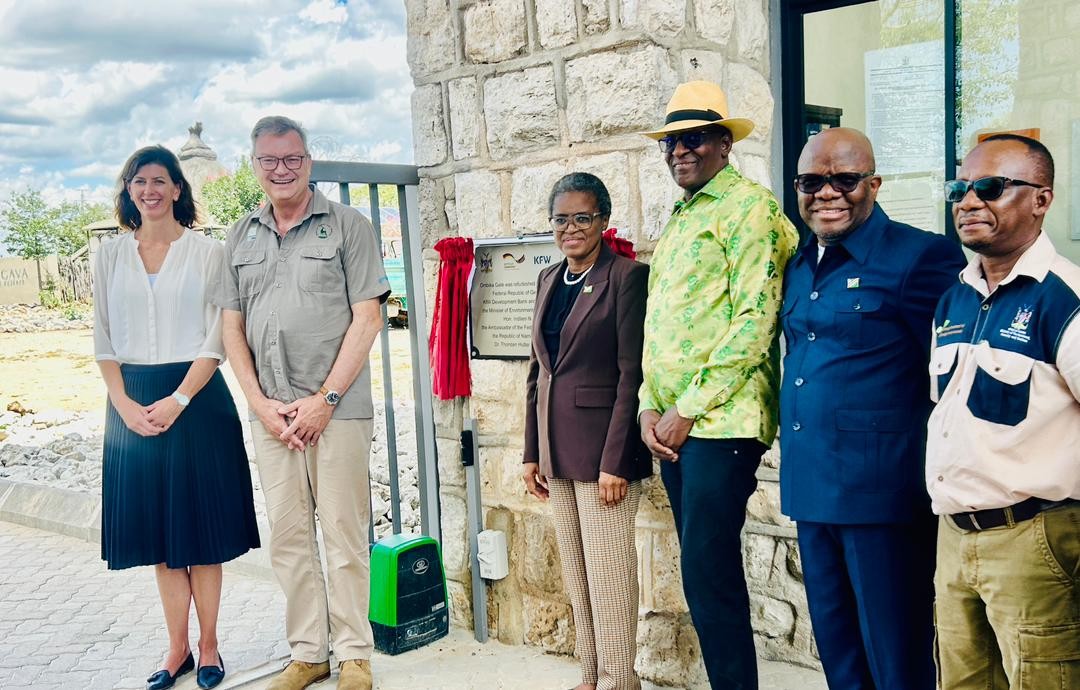

ETOSHA – The environment and tourism (MEFT) inaugurated newly renovated
and constructed infrastructure at Etosha National Park, Hardap National Park and Bwabwata National Park in a project valued at over N$200 million.
The developments were co-funded by the German Federal Ministry for Economic Cooperation and Development through KfW Development Bank and the
Namibian government.
Speaking at the inauguration held at Ombika in Etosha National Park on Saturday, MEFT minister Indileni Daniel said Namibia’s national parks play a critical role in driving tourism and supporting the national economy.
“These places are the backbone of the country, as they attract tourists who contribute significantly to our economy. Therefore, the country needs to be clean and beautified to attract more visitors,” Daniel said.
As she toured the upgraded facilities within Etosha, the minister expressed admiration for the improvements, adding that the development makes Etosha even more attractive to visitors.
“We should apply the behaviour of ‘break it, pay for it’. Some people vandalise infrastructure deliberately, which is unacceptable. Whoever breaks something must fix it. We should only replace things when they have reached their lifespan,” she said.
Meanwhile, Thorsten Hutter, Germany’s ambassador to Namibia, highlighted the importance of strengthening wildlife protection infrastructure.
Hutter said the establishment of the Wildlife Protection Service (WPS) in 2015 was approved by Cabinet following rising poaching threats, with the unit operating under the Directorate of Wildlife and National Parks within MEFT.
“With support from KfW and MEFT, millions were invested in building and upgrading WPS infrastructure, including stations in Bwabwata National Park, Etosha National Park, and the Kunene region. Developments include staff houses, offices, service blocks, storerooms, operations rooms, carports, upgraded water and power systems, fences, sewage systems, and kennels for K9 units to strengthen anti-poaching operations,” he said. Rangers stationed in remote areas, speaking on condition of anonymity as they were not authorised to speak publicly, said the new houses will greatly improve their living conditions. “We were sleeping in very small tents in the middle of the bush. At night you could hear animals moving around and sometimes snakes passing near the tents. It was risky, especially during the rainy season,” one ranger said.
Another ranger added that they have been working there for years protecting wildlife, but they did not have proper places to stay.
“These new houses mean safety and dignity for us and our families. They also motivate us to work even harder to protect wildlife,” he said.
Additionally, Maria Bianchi, a tourist from Italy, expressed her admiration for Etosha National Park during her visit. “Etosha is stunning. The wildlife, the vast open landscapes, and the peaceful environment are what drew me to Namibia. Every moment here feels special, and it’s amazing to see animals in their natural habitat. The park is beautifully maintained, and it makes visiting Namibia an unforgettable experience,” she said.
What is more, tourism remains a key pillar of Namibia’s economy. The sector contributed around 6.9% to Namibia’s GDP between 2022 and 2023, amounting to about N$14.3 billion, and in 2023, Namibia welcomed 863,872 international visitors, an 87.4% increase from 2022. The tourism industry supports over 57 000 direct jobs, or 7.9% of total employment, while continuing to drive investment in sustainable tourism development.