


Despite external economic shocks and unexpected disruptive global political headwinds, the Namibian economy remains resilient and has made notable progress.
This progress has been noticed in sectors of youth empowerment, infrastructure development, health, environmental sustainability and strategic economic diversification.
Notably, President Netumbo Nandi-Ndaitwah indicated that the oil and gas sector, to be overseen directly by the presidency, is progressing with critical policy reviews and negotiations, with Norway providing technical support.
“At my request, the government of Norway has agreed to provide us with technical support. One of the Norwegian delegated officers who was part of the team that drafted the Namibia Petroleum Act of 1992 visited Namibia for a week last month, and they are currently in contact with the Oil Unit. If needed, –the oil unit is ready to engage the relevant parliamentary committee for more information, as negotiations are not conducted in the chamber. Moving forward, the government has completed regional consultations on the local content policy to gather public input and prepare a comprehensive legislative review before presenting it in Parliament,” said Nandi-Ndaitwah.
When oil exploration started in Norway in the 60s, the country had no technical and bureaucratic capacity to optimally utilise the vast reserves under its surface.
However, smart policies and a fierce political will ensure the entire country benefits even today.
More changes over the years to the laws that govern the country’s oil interest ensured Norway is one of the wealthiest and most advanced economies on the planet.
Oil contributed massively to the economic growth and financing of Norway’s welfare state. Since production started in the early 70s, the oil and gas sector has grown into Norway’s largest sector.
Today, it has one of the largest sovereign wealth funds, and oil revenues have been used to bolster other industries, thereby avoiding the paradox of plenty, also known as the resource curse.
Sona
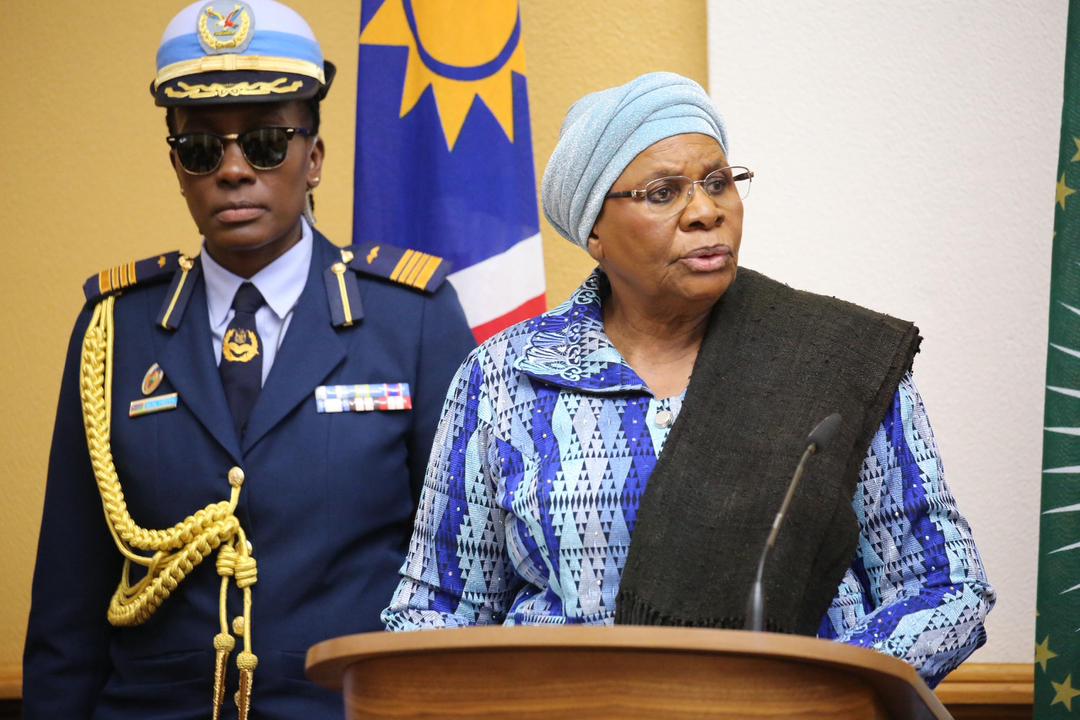
This was the calming message from Nandi-Ndaitwah during her State of the Nation Address (Sona) in the National Assembly yesterday. Nandi-Ndaitwah said amongst the biggest milestones was the launch of NDP6 in July 2025, which marks the final phase of Namibia’s Vision 2030.
The plan is structured around four core pillars: economic growth, human development, environmental sustainability, effective governance and public service delivery. With a total budget of N$106.3 billion allocated for the period, including N$12.8 billion dedicated to development projects, Nandi-Ndaitwah said the government remains well on course to drive transformation in critical sectors such as agriculture, education, health, renewable energy, and institutional capacity-building.
Fiscal management
The Head of State reported that fiscal management and continued consolidation remain at the heart of government efforts to keep the country’s economic engine well-oiled and running, with Namibia’s economic growth projected to rise from 1.7% in 2025 to 3.1% in 2026, although external factors such as the ongoing Middle East conflict pose risks.
She said the country’s fiscal management and discipline are further demonstrated in Namibia’s decision to repay a record N$14.3 billion Eurobond – the country’s largest-ever single-day debt payment, which bolstered its international creditworthiness.
“During the 2025/26 fiscal year, we made significant strides in strengthening the economy, fostering transformation, and building resilience against external shocks. Foreign exchange reserves stand at N$51.9 billion, providing 3.8 months of import cover. For the first time, the government is pursuing gold acquisition to diversify reserves and preserve monetary sovereignty,” she said.
Sectoral growth
The mining sector continues to be a pillar of Namibia’s economy, generating over N$64.7 billion in exports and creating over 580 jobs, which saw uranium and gold exports surpassing diamonds amid shifting global demand.
Nandi-Ndaitwah shared that Namibia becoming a signatory to the Luanda Accord has enhanced its diamond industry’s global marketing efforts, and results look promising.
The country also made great progress in the energy sector, with projects totalling over N$8 billion aimed at increasing electricity capacity from 759 MW to 903 MW, further emphasising sustainable sources like solar and biomass.
Tourism remained vital and equally resilient, with national parks earning N$183 million and conservancies N$109 million. Infrastructure upgrades, including fencing and renovated facilities, continued to support conservation and visitor experiences.
Agricultural
Significant progress was also made in the agriculture sector, with efforts to achieve 80% food self-sufficiency by 2030 well in sight.
Nandi-Ndaitwah reported that export figures show agricultural products worth N$2 billion, predominantly table grapes and tomatoes, reached the global and continental markets, with local production of fruits and vegetables and maize output nearly doubling.
The country’s various green schemes yielded promising results amid natural and technical disruptions, with harvests of maize and wheat generating millions of Namibian dollars. The livestock sector, supporting 70% of the population’s livelihoods, continues to benefit from quality health protocols, including vaccination campaigns against foot-and-mouth disease, maintaining Namibia’s access to critical export markets.
“Namibia exported agricultural products worth N$2 billion, totalling about 90 000 metric tonnes. Of this amount, 62% consisted of table grapes, while 14% were tomatoes. Local fruit production grew from 4% to 6%. Namibia held a 56% market share in vegetables valued at N$323 million, compared to imported vegetables at 44%, valued at N$257 million. The country increased its white maize production from 33 000 metric tonnes to 69 541 metric tonnes by the end of the 2025 marketing season, accounting for 31% of total national consumption,” said Nandi-Ndaitwah.
Sport & youth
In sports, Namibia has embarked on upgrading infrastructure to meet international standards, and to this effect, Nandi-Ndaitwah told the August House that the government has identified and begun development of regional stadiums and community facilities, with progress on major projects like the Katima Mulilo and Opuwo stadiums and ongoing assessments for the iconic Independence Stadium. She said over 500 young people benefited from sustainable livelihood projects, including 104 trained in mushroom cultivation across all 14 regions, with six regions receiving start-up materials. Additionally, 400 youths were trained in biomass production, ready for deployment to operational sites.
The Youth Credit Scheme trained 1 034 youths in business management to enhance entrepreneurial skills, while eleven youth enterprises in regions such as //Kharas, Hardap, Khomas, Erongo, Kunene, Omusati, Oshana, Oshikoto, and Kavango West received financing under the Rural Youth Constituency Enterprises Initiative, which aims to promote rural industrialisation and local economic growth.
Education
In the education sector during the 2025/26 period, infrastructure expansion included the construction of 237 primary classrooms, 172 pre-primary classrooms, science and computer laboratories, libraries, and health facilities, aiming to enhance access and learning conditions.
Higher education saw the implementation of a fully subsidised tertiary funding model and expanded student support through the Namibia Students Financial Assistance Fund (NSFAF), which increased income eligibility limits. This reform was supported by an initial allocation of N$663 million.
The revival of Technical and Vocational Education and Training (TVET) and Science, Technology, Engineering, and Mathematics (STEM) education included new programmes in green hydrogen and renewable energy, supporting employment-ready skills.
She also reported that enrolment in technical training rose to 13 512, driven by new facilities like the Nkurenkuru and Keetmanshoop vocational education centres. The work-integrated learning policy was launched to better align education with industry needs. Academic performance improved notably, with increased numbers qualifying for higher education pathways and achievement rates in certificates and diplomas rising from 53.7% to 60.2%. In the creative industry, Namibia’s film industry attracted 59 international projects and produced 36 local films, generating over N$47 million and creating more than 1 200 temporary jobs. The Namibia Film Commission invested in skills development through partnerships with Nust to further grow the industry and position Namibia as a global film hub.
Health
In the health sector, Nandi-Ndaitwah said through the Vision April 2026, the government aims to upgrade public health facilities to private-sector standards, with seven hospitals, including Windhoek Central and Oshakati Intermediate, having already received upgrades.
Several specialised units, such as neonatal and oncology centres, were completed. The Walvis Bay Oncology Centre was inaugurated as the country’s first outside Windhoek, while procurement of pharmaceuticals from manufacturers increased system-wide medicine availability to 57%, with plans to reach an 80% target. Additionally, 36 ambulances and numerous vehicles were procured to support emergency and outreach services. Human resources expanded with the recruitment of over 3 400 health workers, while the government also restored hot water services at the Windhoek Central Hospital and contained outbreaks of cholera, Mpox, and other diseases.
Land and housing
The government approved new township proclamations and serviced plots, with efforts underway to deliver thousands of serviced erven. The affordable housing programme saw the delivery of over 3 200 housing units, while sanitation facilities in informal settlements improved public health.
Veterans’ welfare received significant investment, with N$1.3 billion allocated to support their well-being, including welfare grants, medical aid, and exhumation projects to honour the country’s fallen heroes.
Disability support and inclusive policies further promote social equity, while security services expanded with the graduation of nearly 1 800 police cadets and the deployment of over 2,400 defence personnel trained in modern combat and operational skills.
Genocide talks
Furthermore, Namibia continues to negotiate with Germany over the decades-long Ovaherero and Nama genocide of 1904/08, with an agreement anticipated to be finalised before year-end, signalling a step towards national reconciliation.