

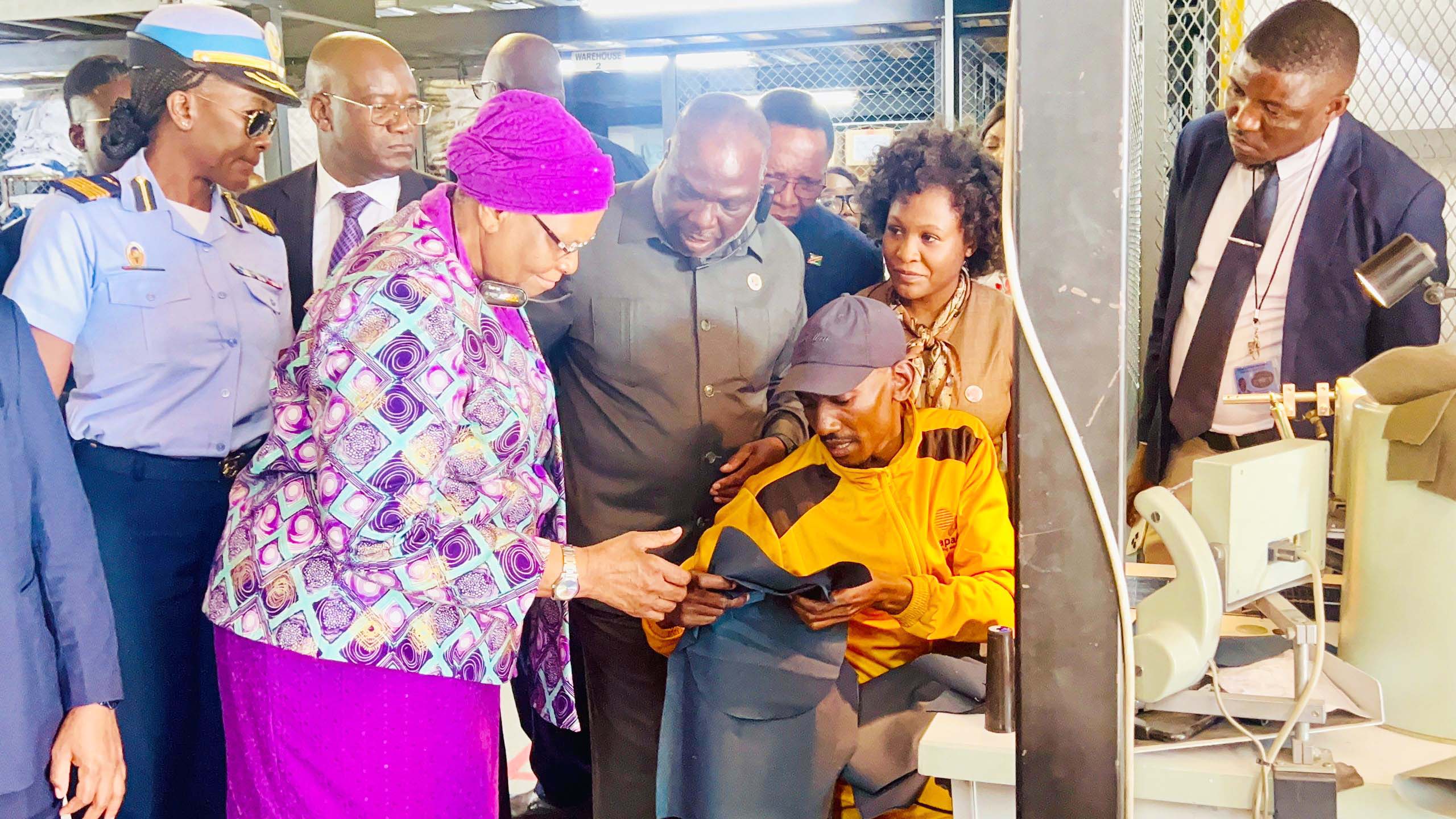

President Netumbo Nandi-Ndaitwah has praised local clothing manufacturer Dinapama as a shining example of job creation and industrial growth.
He called for urgent reforms and a shift in mindset to drive Namibia’s economic transformation. The President visited the Windhoek-based factory on Tuesday, where she toured operations and addressed more than 500 employees currently working at the facility.
“I am so happy to see you, as young Namibians. You are inspiring us as your leaders, with your smile and your passion,” she told workers.
Dinapama, a locally owned company that started with just seven people and five machines, has grown to employ 563 workers.
Nandi-Ndaitwah said the factory represents the kind of growth government wants to see across the country.
“As a country, we are aimed at ensuring that as many Namibians as possible are employed. That can only be done when we increase our factories. Dinapama is one of the shining local-owned factories in the country,” she said.
She urged workers to take pride in their role, saying their efforts contribute directly to national development.
During a closed-door meeting after the tour, Dinapama managing director David Namalenga and other business leaders outlined plans to expand the factory and scale up production.
The company aims to significantly increase output and could potentially create up to 10 000 jobs if fully supported.
“Our goal is to build a resilient, skill-based manufacturing sector. Local production can create more jobs, build long-term capacity and retain economic value within our region,” one presentation noted. However, Namalenga raised concerns about challenges facing local manufacturers, including high costs, delays in sourcing materials and difficult business conditions.
“We need policies that speak to local procurement, make it easy to do business and ensure accountability,” he said.
He highlighted the impact of importing raw materials, which slows production and increases costs.
In one example, a major order took about five months to complete due to delays in sourcing fabric from abroad.
Business leaders further warned that Namibia is losing economic value by exporting raw materials instead of processing them locally.
“For how long should we keep exporting our jobs?” one participant asked.
In response, Nandi-Ndaitwah acknowledged the concerns and said the government is committed to improving the business environment.
“We have to create a conducive environment. The bottlenecks are just too much. Our laws are too cumbersome.
They are not helping,” the President conceded.
She emphasised that economic transformation must go hand in hand with a change in attitude.
“If we cannot transform ourselves mentally, no matter how many policies we have, they will be useless,” she said.
The President also stressed the need for stronger collaboration between the public and private sectors, saying both must align to support industrial growth.
The visit forms part of the President’s broader push to promote value addition and reduce reliance on imports, as Namibia seeks to transition from a raw material exporter to a manufacturing-driven economy.
Nandi-Ndaitwah said the government will continue engaging the private sector to remove barriers and unlock growth.
“We make a commitment that the time invested by the private sector will not be wasted,” she said.