


Auleria Wakudumo
At the 52nd session of the Universal Periodic Review in Geneva, Namibia presented a broader picture of its national development drive, placing emphasis on service delivery, economic resilience and governance reforms.
The country outlined how sustainable investment across key sectors is translating into tangible improvements in people’s lives while acknowledging persistent challenges such as unemployment and inequality.
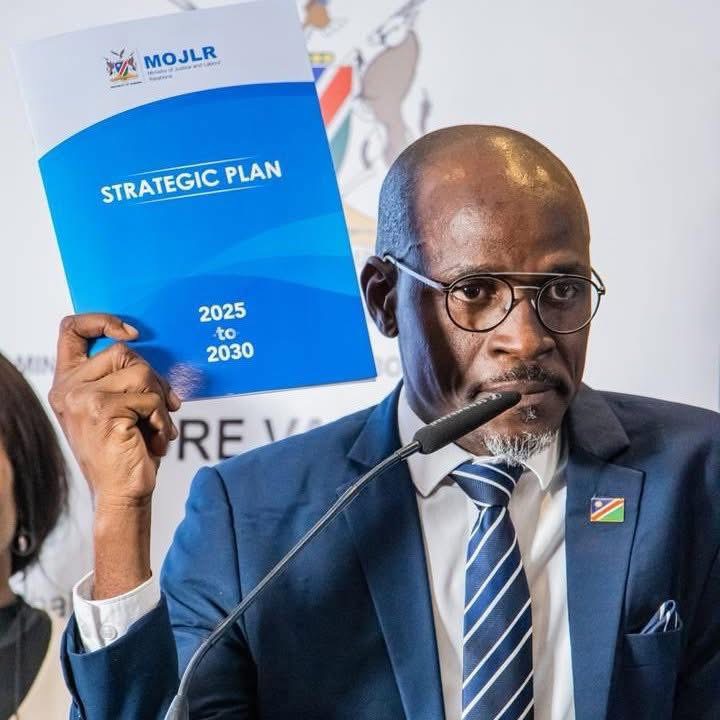
Minister of Justice and Labour Relations, Wise Immanuel, outlined the country’s renewed focus on long-term planning and economic recovery.
He highlighted that through the National Development Plan Six (NDP6), government is steering its agenda around key pillars such as economic recovery, human development, green growth and effective governance.
He noted that the plan is backed by a robust implementation and monitoring framework aimed at strengthening accountability and ensuring measurable outcomes across all sectors.
At the centre of Namibia’s presentation is a renewed focus on poverty eradication, which remains a cross-cutting priority supported by targeted programmes for vulnerable communities nationwide.
Immanuel explained that the country’s expanding social protection system continues to play a critical role in improving livelihoods.
He said the government has broadened its safety nets to include old age pensions, child welfare grants, disability support and income-generating initiatives.
A notable shift is the move from food aid to structured cash-based support. This allowed households greater flexibility and dignity in meeting their needs.
The transition is guided by the Social Protection Policy 2021–2030, which seeks to reduce poverty and inequality while building long-term resilience.
The presentation reveals that Namibia is making steady progress toward Universal Health Coverage. A newly approved national policy aims to ensure that all citizens can access healthcare without financial hardship.
“The country has also strengthened maternal and child health services, with improvements recorded in maternal mortality rates and HIV treatment outcomes. More than 70% of the population now live within 10 kilometres of a health facility. This reflects ongoing efforts to expand access, particularly in rural areas,” it reads.
It further stated that education continues to anchor Namibia’s development ambitions.
With its overall school enrolment rates reaching approximately 95%, government prioritised inclusive education, mobile schooling for remote communities and targeted support for learners with special needs.
Immanuel said Namibia now provides free education at all levels, contributing to high enrolment rates and expanded access to learning opportunities.
The presentation highlighted infrastructure development as a key focus, particularly in housing, water and sanitation.
“Despite increasing pressure from rapid urbanisation, government-backed initiatives have delivered thousands of housing units across the country.”
Programmes led by institutions such as the National Housing Enterprise (NHE) and the Shack Dwellers Federation are helping to address housing shortages, while expanded sanitation and water initiatives aim to improve living conditions in underserved communities.
Governance and justice reforms also feature prominently in Namibia’s development agenda.
Government revealed efforts to improve access to justice. This includes the expansion of legal aid services and the decentralisation of courts through regional magistrates’ systems.
In the correctional sector, Immanuel said community service orders are being used to ease prison overcrowding while promoting rehabilitation. He added that at the same time, increased funding for anti-corruption institutions and the rollout of legislation such as the Access to Information Act are strengthening transparency and accountability.
Another bold development unveiled at the UN was that digital transformation is emerging as a new frontier for service delivery.
Government stated that it is rolling out electronic identification systems to enhance civil registration and streamline public services, while preparing legislation on data protection and cybercrime to safeguard the digital space.
The presentation also noted that Namibia is strengthening its disaster preparedness and response systems.
It further highlighted that the national and regional structures are being enhanced to improve coordination, while climate adaptation strategies are being integrated into broader development planning to protect vulnerable communities from droughts and floods.
Immanuel stated that while challenges remain, the country is focused on practical delivery and sustained progress. He said the government will continue investing in people, infrastructure and governance systems.
“Namibia is positioning itself for long-term, inclusive development,” he said.