

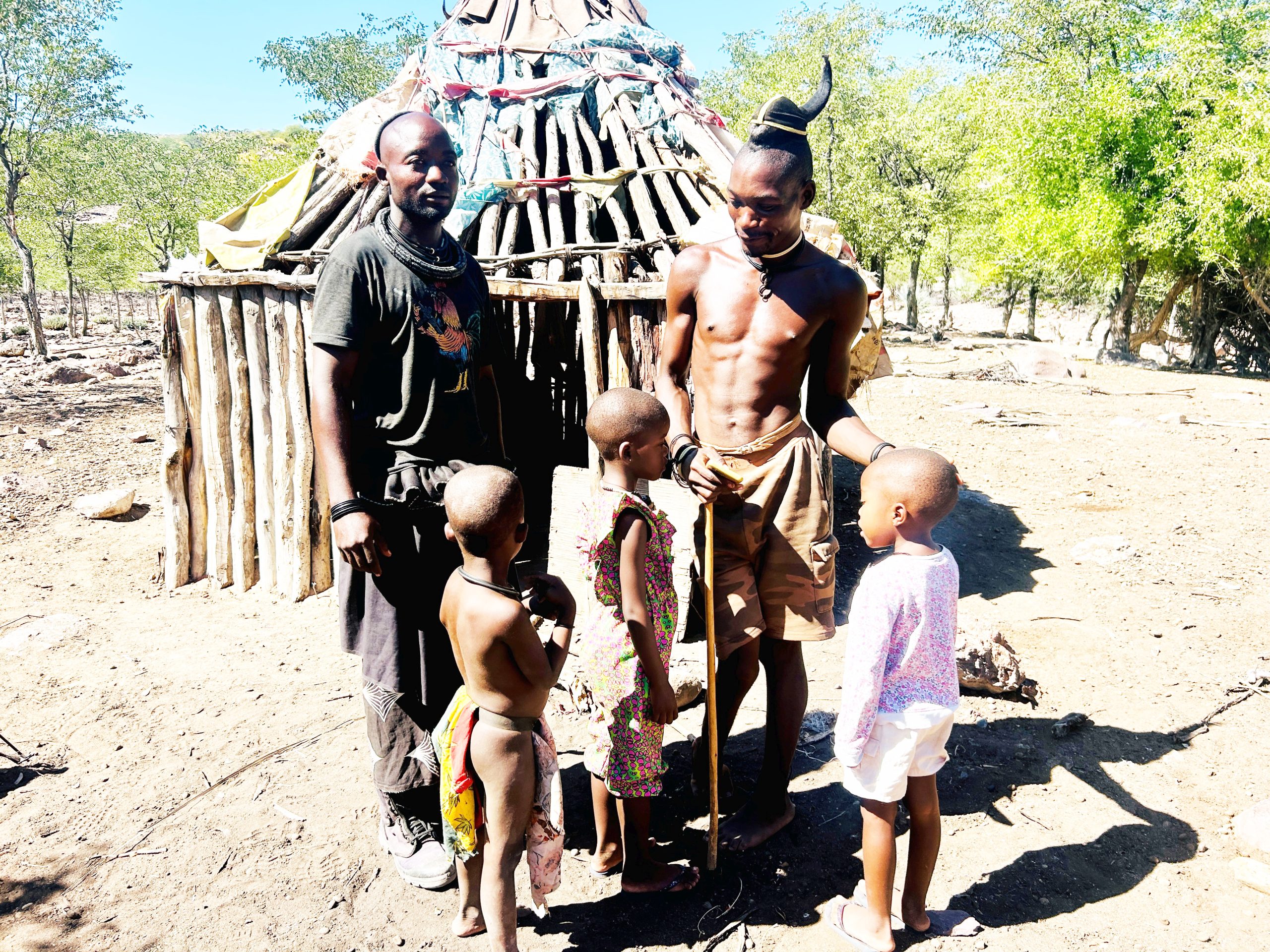

OSHIPAHULILO – In remote Ovahimba communities in the Omusati and Kunene regions, disparities in childhood are apparent, as children of the same age experience life differently – some shaped by education, while others grow up through tradition, livestock herding and the struggles of daily survival.
During the recent school holiday, children attending Onakayale Private School returned to their village homes, where life for many others continues without formal education.
The visit revealed a clear difference between children who attend school and those who remain in the village full-time, particularly those who take on cattle herding from a very young age.
In many households, children as young as four are responsible for herding livestock.
Cattle remain central to life, identity and survival for the Himba people, and this has long shaped how education is perceived.
In the past, many families did not prioritise schooling, as daily life depended more on livestock than classroom learning.
Uetomuinjo Tjisemo, the mother of one of the school-going children, said she never understood the value of education before.
“I never knew what education was. All we knew was cattle – that is our life. Now my child can read and write, and I can see the difference. I am happy because I never had this chance,” she said.
Among the children in the village, the contrast between those attending school and those who do not is clearly visible.
Some speak differently, behave differently, and show greater confidence.
Six-year-olds Vinanjoye Jambari and Given Murumbua are among those who stand out as school-going children.
They are enrolled at Nakayale Private School in Ruacana, which supports marginalised and orphaned children from rural areas. The school operates without full government funding and depends on support from NGOs and partners such as Rössing Foundation.
Before joining Nakayale Private School, they lived the same village life – waking up early, walking long distances and herding cattle like their peers. Now they can read, speak basic English and assist at home in small ways. A community member familiar with the children said the change is noticeable.
“These children used to live the same life as others, looking after cattle and walking long distances every day. Now they can read and speak, and you can really see the change,” he said.
For parents, this difference becomes more visible during school holidays when children return home. Some struggle to re-adjust to village life after experiencing school.
Puje Ndjoze, the father of another school-going child, said his daughter often asks to return to school because life there feels easier.
“Life at school is easier. When my daughter comes home, she struggles because life here is hard. She even asks to go back to school because things are not the same,” he said.
However, not all families are able to send their children to school full-time.
Many still rely on children to help with cattle and household responsibilities.
Kazimba Mutumbo explained that livestock remains central to survival and culture, making it difficult to release all children for schooling. “We cannot send all our children to school because we need them to look after cattle. We are getting older, and the young ones must learn early. School is good, but cattle are our life,” he said.
He added that in many households, children are introduced to herding at a very young age. Boys and girls are gradually taught how to guide cattle, identify grazing areas, and protect animals from danger.
“This training is not formal but happens through daily practice while accompanying older siblings or relatives. Even children as young as my four-year-old son are already part of this routine, learning through observation and repetition in the open fields,” he explained.
Families say this early training is essential, as it prepares children to take on responsibility as they grow.
Older herders pass down knowledge about animals, weather patterns and safe grazing routes, ensuring these skills are preserved.
For many parents, this is a form of survival training, as cattle remain the main source of food, income and cultural pride in the community.
-vkaapanda@nepc.com.na