

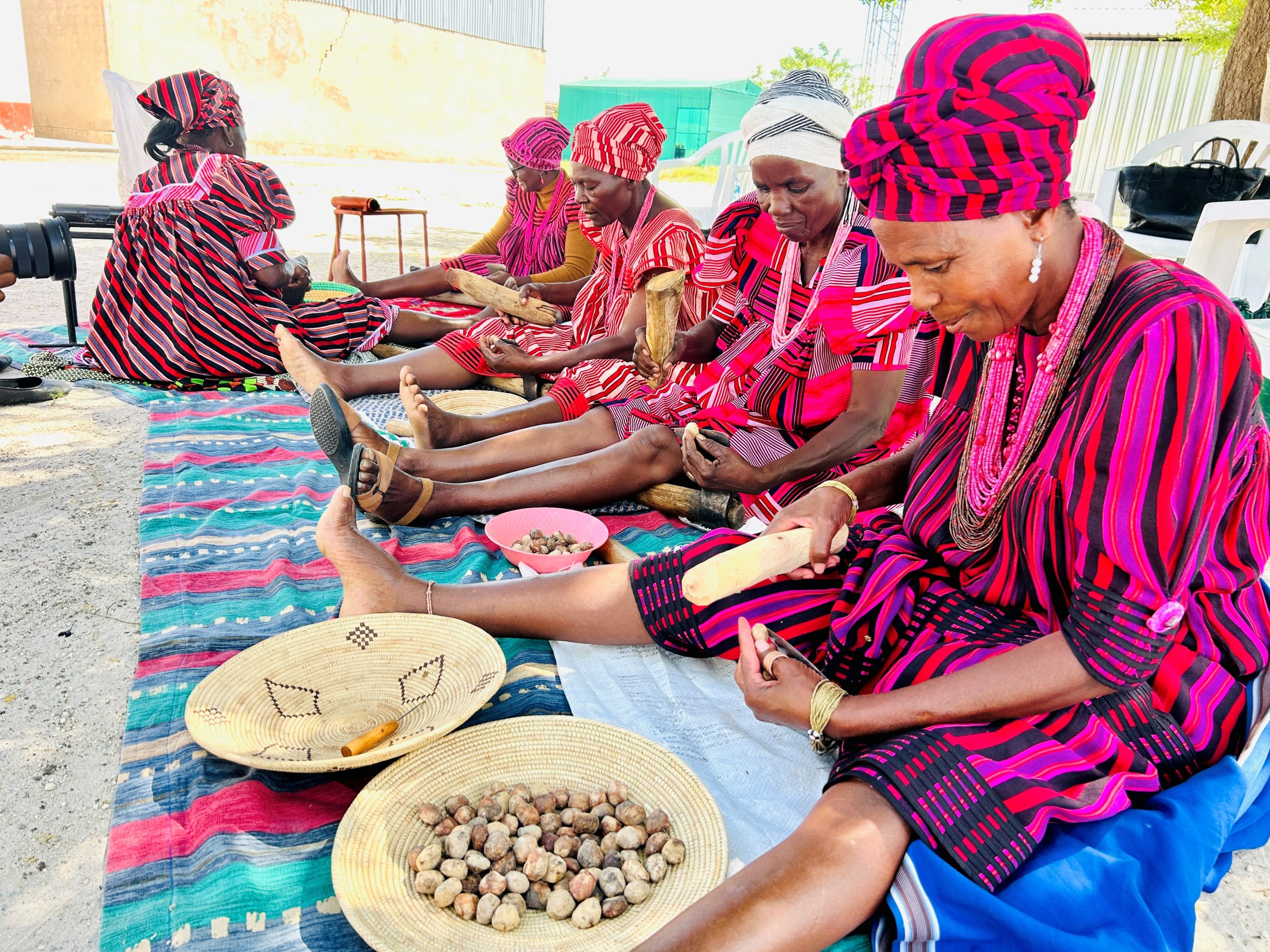

ONDANGWA – Marula oil is reaching international markets and transforming the lives of thousands of rural women in northern Namibia, where traditional knowledge passed down through generations is now creating income and opportunities for local communities.
What was once only used at household level, is today becoming one of Namibia’s growing natural products exported abroad for skincare and cosmetic products.
At the centre of this transformation, is Eudafano Women Marula Manufacturing (Pty) Ltd, a processing facility in Ondangwa specialising in the harvesting and collection of raw materials, oil pressing and refining, manufacturing of marula oil and Kalahari melon seed oil products for local and international markets.
The company works closely with Eudafano Women’s Co-operative, a cooperative made up of 26 associations and more than 2 500 women across northern Namibia.
For generations, women have used marula oil to preserve meat, moisturise skin and prepare food for their families.
Today, the same traditional product is send to the world for financial gain.
Marula oil is rich in antioxidants, linoleic fatty acid and oleic acid, making it one of the most stable natural oils in the world.
Because of its high quality, around 80% of the oil produced by the cooperative is exported to international cosmetic markets.
According to EWMM manager Martha Negumbo, they buy the kernels from women in rural communities who harvest and process marula fruits from their homes, saying that their traditional knowledge keeps their industry alive.
“What started as a traditional activity done by women at home has now become a business connecting our villages to the world,” said Negumbo.
She explained that women in rural areas collects marula fruits by hand before drying the kernels in the sun and preparing them for processing.
The oils are later extracted at the factory in Ondangwa using both traditional knowledge and modern machinery.
“The success of the cooperative has also been strengthened through partnerships with organisations such as PhytoTrade Africa, which helped open international markets and create more opportunities for local communities.
These partnerships helped us grow and allowed women from rural communities to benefit from products they have known all their lives,” she said.
Negumbo further indicated that for many women, the marula project has become more than just work, as it has brought income, confidence and independence to women who previously depended only on farming and livestock for survival.
Sylvia Uugwanga, one of the members said seeing products made from marula oil being used overseas makes her proud because it shows that products from rural Namibia can compete internationally.
“We never imagined that something from our villages would one day be used by people in other countries. It makes us proud because the world now sees the value of our traditional knowledge,” said Uugwanga.
Another beneficiary, Selma Taapopi, said the project has helped many women provide for their families and improve their lives.
“Many women can now buy food, pay school needs for their children and support their households because of the income from marula products,” said Taapopi.
Traditionally, cracking marula nuts was one of the hardest parts of the work.
Women used axes at home, sometimes sharing them with their husbands, making the process slow, difficult and physically painful.
However, this has changed after the Rossing Foundation sponsored newly designed 200 marula nut cracking machines for the cooperative.
According to Rossing Foundation’s Public Relations Officer, Laina Hakweenda, the machines have reduced hard manual labour while improving production and efficiency.
“The machines are making the work easier, faster and safer for women compared to the old method of using axes,” said Hakweenda.
Another beneficiary, Maria Shilongo, added that the machines have brought relief to many women who spent years struggling with the traditional way of cracking marula nuts.
“We used to spend long hours using axes and waiting to share them at home. It was tiring and painful work. These machines are helping us work better and produce more without suffering like before.”