


ARANDIS – Rising fuel prices and global supply shocks are forcing mining companies to rethink efficiency and survival strategies, as highlighted during a media visit to Swakop Uranium on Friday.
The exorbitant fuel price adjustments are a result of continued conflict in the Middle East, specifically around the Strait of Hormuz, that have resulted in increases in international oil prices.
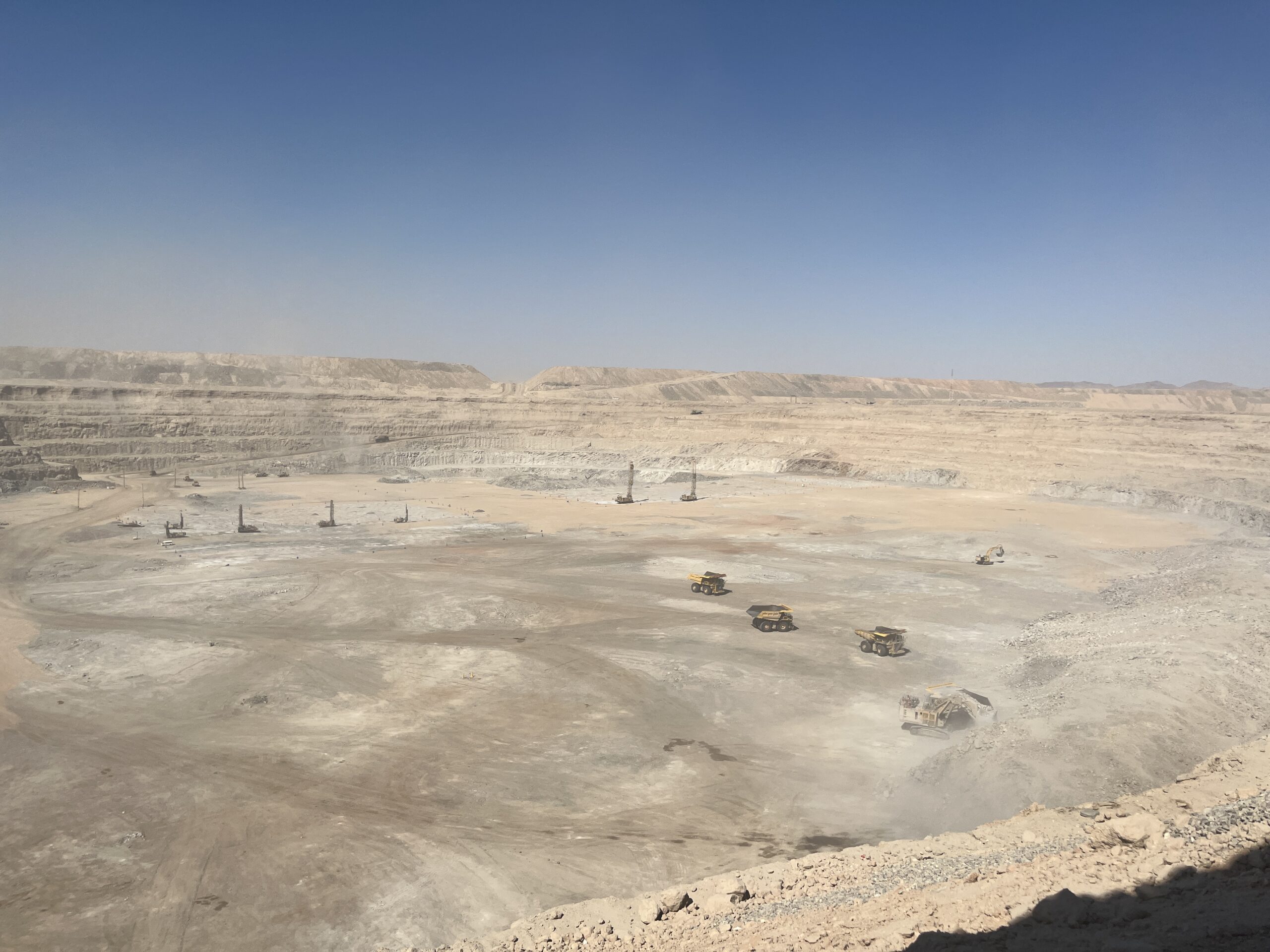
As a result, Husab mine on Friday revealed that they introduced a trolley line system to reduce diesel consumption in its operations. Instead of relying fully on diesel, the system allows large haul trucks to switch to electricity while travelling on steep ramp sections of the mine.
The system works through an overhead power line and a device on the truck called a pantograph. When the truck reaches the electrified section, the pantograph connects to the power line and the truck automatically switches from diesel to electricity. During this time, diesel use drops to almost nothing, similar to when a vehicle is idling.
This approach helps the mine save fuel costs, reduce travel time, and improve efficiency because trucks move faster on electric power than on diesel alone.
Speaking to journalists during the mine’s media day excursion by the line minister, the mine’s Executive Vice-President Irvinne Simataa said the sharp increase in diesel prices is placing heavy pressure on operations that consume fuel on an industrial scale.
“For a business like ours you do know that the fuel impact is more significant due to the amount of fuel we use daily in our operations. You can imagine your fuel tank in your vehicle maybe is about 45 litres. You can drive maybe 130 litres or 240 litres. But we are consuming 79 million litres,” Simaata said.
He said the cost impact is significant and unavoidable, forcing the company to prioritise efficiency and survival planning.
“The impact is not a small feat for us. It is actually a huge impact on the business. So, we have got to get ahead in terms of how we survive,” he added. Simaata said the company is now focusing on operational improvements, technology and better planning to reduce waste and improve fuel use efficiency across its mining activities.
He added that global instability is also driving up input costs, including fuel and chemicals used in mining processes.
According to him, disruptions in international supply chains have led to shortages and price spikes that cannot be controlled locally.
“These are the things that you need to be aware of. Because if costs go up to the extent where we cannot compete, we just stop,” he said.
He explained that the company’s exposure to global oil prices also directly affects operations in Namibia. “As you know, the US dollar barrel is at 120 US dollars at the moment. It is the highest it has been in the last decade. So that obviously transfers exactly into what we do here,” he said.
Despite these pressures, Simaata said the mine is investing in efficiency systems, skilled personnel and technology to improve performance and reduce unnecessary fuel consumption. He said the goal is to ensure that production remains sustainable even under rising costs.
Fuel pressure
Meanwhile Mines and Energy minister Modestus Amutse last week said that Namibia currently maintains an adequate fuel stock and there is no immediate risk of fuel shortages in the country, despite the price increase.
He said the fuel supply chain remains operational and stable, with sufficient stockholding levels maintained by oil marketing companies to meet national demands
According to the minister the country imports all its refined petroleum products and, therefore, remains exposed to international oil market volatility and global supply chain disruptions.
“As a result, following these price adjustments, the government has decided to absorb approximately N$1.3 billion payable to suppliers for petroleum products for the months of April and May 2026 through the National Energy Fund (NEF),” he explained. The move will cushion consumers against the full impact of international oil price shocks while ensuring continuity and security of domestic fuel supply.
Meanwhile, Namibia consumes about 100 million litres per month, with petrol accounting for 30% and diesel accounting for 70%.
The minister yesterday warned that factors like panic buying experienced last month, increase domestic fuel consumption. During this period, the fuel consumption increased to approximately 120 litres, he said.
– edeklerk@nepc.com.na