

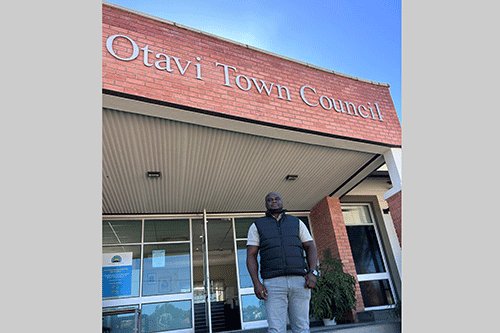

OTAVI – The Namibia University of Science and Technology’s (Nust) decision to relocate its Agricultural Satellite Campus from Rietfontein to Otavi is already sparking private-sector interest and could mark the beginning of a long-awaited economic revival for the Otjozondjupa town, local officials say.
The NUST council approved the move in February this year, endorsing Otavi as the new site as part of the university’s strategy to broaden access to higher education and nurture emerging towns into knowledge and innovation hubs.
The phased relocation, beginning with temporary facilities to support immediate teaching and learning and continuing to a permanent, purpose-built campus, will initially bring an estimated 600 students and accompanying staff to the town of between 7 000 and 8 000 residents within a constituency of roughly 12 000 people.
Acting Otavi Town Council chief executive Heita Shikeenga told New Era that the influx could break a decades-long investment impasse. “Students bring a lot of life to a town or environment.
This injection of life will in turn attract bigger shops, more accommodation and related support services,” he said.
He noted that developers have already floated plans for a shopping complex and a dry port in Otavi. Nust’s relocation answers a wider regional need in Otjozondjupa, which is home to more than 143 000 people and roughly 84 schools serving over 48 000 learners that have limited access to university-level education.
The campus’s position near the Maize Triangle and bordering seven regions of Oshikoto, Omaheke, Kavango East, Kavango West, Kunene, Erongo and Khomas gives it considerable catchment potential for students across a broad geographic area. For the Otavi economy, the immediate effects are tangible.
Council-led initiatives to capitalise on the renewed interest include a business breakfast aimed at aligning private investment with municipal strategy. This is in addition to preliminary talks that have already taken place on developing biomass processing; a recycling plant in partnership with mining firm B2Gold; and expanding the annual Otavi Expo to showcase agri-tech and supporting industries.
This strategy by the Otavi Town Council aims to create an ecosystem of services, including accommodation, retail, entertainment and logistics, which could sustain population growth and diversify revenue streams beyond mining and agriculture.
Shikeenga framed the move as a resolution to a Catch22 that has constrained Otavi’s growth, namely potential residents who refuse to relocate without better services and amenities, yet investors have held back until there is a larger local market.
“This decision removes that barrier,” he said, forecasting that visible student numbers will trigger followon private investment and longerterm residential growth.
NUST spokesperson Nashilongo Gervasius recently emphasised the relocation’s national development rationale. She said the campus will strengthen pathways from secondary and vocational education into tertiary studies and support teaching, research and innovation in agriculture, which is a sector central to regional food security and valuechain development.