

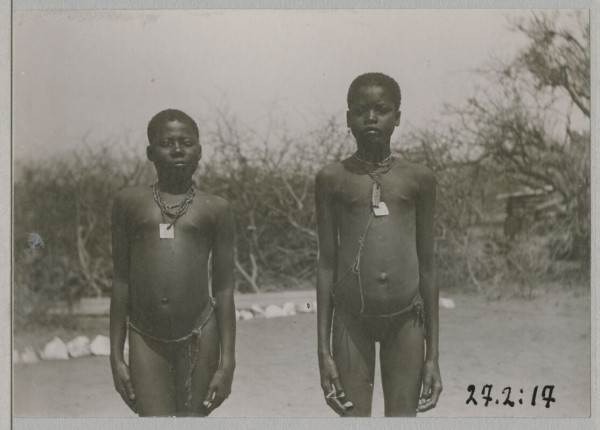

As Namibia continues to reflect on the legacy of the Ovaherero and Nama genocide, young people say the atrocities committed during the German colonial rule remain a painful and deeply personal part of their identity and daily reality.
Speaking on the lasting impact of the genocide, National Unity Democratic Youth Organisation (Nudo) Youth League secretary general Veparura Kandirikirira said the history continues to shape the lives of many descendants today.
“The genocide means a lot to us, because there’s no future without history. It is our pride as Namibians who were once targeted, and an extermination was ordered against us,” he said.
Kandirikirira said he first learned about the genocide through stories shared by his grandparents while growing up.
“I am a Herero. We were told about this while we were kids by our grandparents, and it was very sad. Imagine one had to run from central Namibia to Botswana by foot. It was not so easy,” Kandirikirira said.
He added that the effects of land dispossession and trauma are still visible in many communities.
“We lost land, cattle and our identity. We are still in trauma. The areas that were owned by our ancestors today are owned by whites, who got it for free at the expense of killing our elders,” he said. Kandirikirira criticised government’s handling of genocide negotiations and commemoration efforts, saying more should be done to restore the dignity of affected communities.
Meanwhile, William Minnie, a young councillor serving on the Mariental municipal council, described the genocide as more than a historical event, calling it “a living reality” that continues to influence the social, economic and political conditions of the Nama and Herero communities.
“The genocide represents both unimaginable suffering and extraordinary resistance. Our survival today is itself an act of resistance against colonial attempts at erasure,” Minnie said.
He said learning about the genocide from elders during childhood had a profound emotional impact on him.
“I grew up hearing about extermination orders, concentration camps, starvation, forced marches into the desert, rape, forced labour and the destruction of villages. The trauma continues to live within descendants today,” he said.
Minnie argued that Namibian schools do not adequately teach the brutality and long-term consequences of the genocide.
“Students are rarely taught how genocide shaped modern Namibia’s economic inequalities, land ownership patterns, labour systems and social divisions,” he said.
Both young leaders emphasised the importance of preserving the memory of the genocide, and called on young Namibians to continue advocating for justice, reparations and historical awareness.