


The domestic inflation outlook has taken a sharper turn, with rising fuel prices and transport costs emerging as the biggest threats to household finances and economic stability, prompting analysts to revise forecasts upward despite relatively moderate headline inflation figures. Meanwhile, inflation is increasingly driven by costs that households cannot avoid, such as fuel, transport, housing, and utilities, raising concerns that purchasing power could come under even greater pressure during the remainder of 2026.
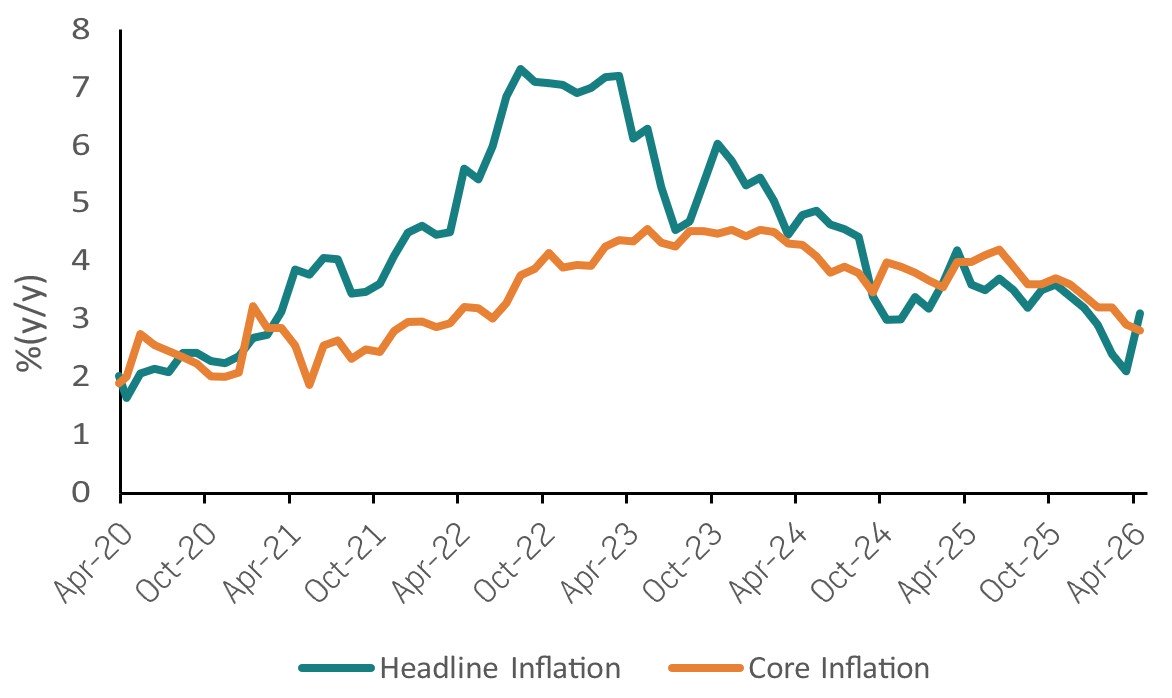
According to economists at First National Bank of Namibia, headline inflation accelerated to 3.1% year-on-year in April 2026 from 2.1% in March, ending a period of subdued price growth and signalling the growing impact of fuel-driven cost pressures across the economy.
FNB has now revised its average inflation forecast for 2026 to 4.7%, up from an earlier projection of 4.2%, citing significantly higher fuel price pressures than initially anticipated.
While inflation remains below the 3.6% recorded in the same period last year, analysts warn that the composition of inflation is increasingly concerning. Core inflation, which excludes volatile items such as food and fuel, and is often viewed as a measure of underlying demand pressures, eased further to 2.8% in April from 2.9% in March.
The decline in core inflation below headline inflation marks a significant shift.
“While core inflation had previously exceeded headline inflation, largely reflecting demand-driven pressures, the current reversal suggests that cost-push factors will meaningfully move headline inflation higher in 2026,” FNB economist Cheryl Emvula and graduate analyst Ndateelela Amukushu noted.
Currently, the primary inflationary culprit is transport. Following fuel increases of N$2.50 per litre for petrol and N$4.00 per litre for diesel, transport inflation surged to 5% in April from a contraction of 1.7% in March. On a monthly basis, the cost of operating vehicles jumped sharply to 9.4%.
The pressure is expected to intensify further. Additional fuel price adjustments that took effect in May saw petrol rise by another N$1.40 per litre and diesel by N$4.63 per litre, while taxi fares increased from N$13 to N$15.
Economists have warned that these developments could trigger widespread second-round inflation effects as businesses pass higher transport and logistics costs on to consumers.
The concerns mirror findings from the Economic Association of Namibia (EAN), which has cautioned that seemingly stable inflation figures mask mounting pressure in essential household expenditure categories.
The EAN’s latest analysis shows headline inflation remained relatively stable at 3.4% during the fourth quarter of 2025, but beneath the surface, transport and housing costs accelerated significantly.
Transport inflation climbed to 2% in the final quarter of 2025 from negative 0.3% in the preceding quarter and negative 2.6% a year earlier, representing a 4.6 percentage-point increase year-on-year. The increase was linked directly to rising fuel costs and higher vehicle operating expenses.
Housing inflation also rose to 4.3%, driven by rental increases and escalating electricity, gas and utility costs.
Meanwhile, services inflation continues to outpace goods inflation.
FNB data show that services inflation remained elevated at 3.6% in April, compared with goods inflation of 2.8%, highlighting persistent price pressures in housing, healthcare, and other service sectors.
Food prices, by contrast, have remained relatively contained. Food and non-alcoholic beverage inflation edged up only moderately to 2% in April from 1.7% in March. Although consumers experienced higher prices for meat, vegetables, coffee, tea and cocoa products, falling fruit prices and declining bread and cereal inflation helped contain overall food inflation.
Similarly, the EAN reported that food inflation slowed significantly to 3.7% in the fourth quarter of 2025, down from 5.5% a year earlier, supported by improved agricultural output and more stable supply chains.
Yet, economists caution that food inflation may not remain benign for long. Growing geopolitical tensions in the Middle East are increasingly viewed as a key inflation risk. Higher global oil prices could not only increase fuel costs but also raise fertiliser and agricultural input costs, eventually filtering through to food prices. The EAN noted that the average Namibian grocery basket increased from N$990.45 in 2024 to N$1 064.70 in 2025, representing a 7.5% increase in annual food expenditure despite slowing food inflation rates.
The association argues that rising transport and housing costs are consuming an increasing share of household income, leaving less money available for education, healthcare, savings, and discretionary spending.
“While slower food inflation provides some relief at the margin, rising transport and housing costs absorb a growing share of income,” the EAN said.
The warning comes as policymakers face increasing pressure to address structural cost drivers rather than focusing solely on headline inflation. Thus, the Economic Association has called for investment in food storage, irrigation and logistics infrastructure to strengthen local food systems and improve long-term price stability. It has also urged measures to improve transport efficiency and reduce dependence on imported fuel.
On housing, the association believes accelerating rental regulation reforms and operationalising the Rent Control Board could help shield tenants from escalating urban living costs.
For now, however, economists believe the balance of risks remains firmly tilted to the upside.
-ebarndt@nepc.com.na