

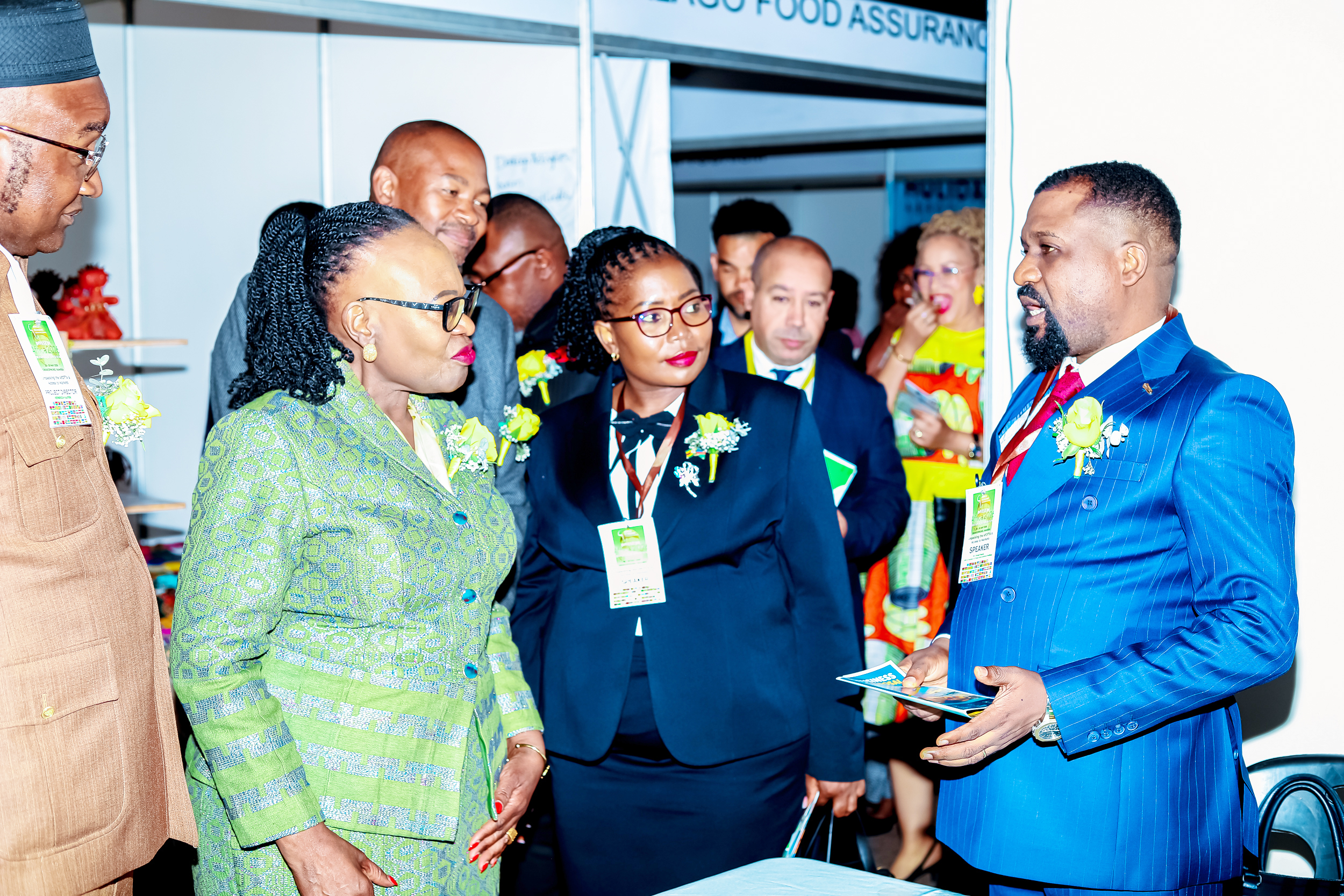

Africa’s push to unlock the full potential of the African Continental Free Trade Area (AfCFTA) gained fresh momentum last week as more than 200 business leaders, investors, policymakers and diplomats converged at Swakopmund to chart a path from policy promises to economic growth.
The three-day Invest in Africa Trade Expo & Business Summit 2026, hosted by the Africa Economic Leadership Council (AELC), placed the spotlight firmly on one of the continent’s most pressing challenges, namely transforming the AfCFTA from a regulatory framework into a vehicle for trade, industrialisation, investment and job creation.
Held under the theme “From Framework to Frontier: Unlocking African Markets”, the event attracted delegates from across Africa and beyond, underscoring growing recognition that Africa’s economic future will increasingly depend on stronger regional integration and intra-African trade.
While the AfCFTA is widely regarded by participating countries as the world’s largest free trade area, implementation challenges continue to limit its impact.
Delegates at the summit repeatedly highlighted the need to dismantle non-tariff barriers, improve logistics networks, increase access to finance and accelerate industrial development if the continent is to fully benefit from a market of more than 1.4 billion people.
The summit’s organisers positioned the event as more than a talking shop, focusing instead on practical investment opportunities and commercial partnerships that can drive tangible economic outcomes.
More than 100 exhibitors participated in the accompanying trade expo, showcasing products, services and investment opportunities spanning mining, energy, agriculture, manufacturing, logistics, tourism, technology, finance and professional services.
The exhibition floor became a hub of deal-making as businesses explored new partnerships, supply chain opportunities, and market expansion prospects across regional borders.
Delivering the keynote address on behalf of President Netumbo Nandi-Ndaitwah, Minister of International Relations and Trade Selma Ashipala-Musavyi reaffirmed Namibia’s commitment to continental economic integration and investment promotion.
Her message aligned with broader efforts by Namibia to position itself as a strategic gateway for trade and investment into Southern Africa, leveraging its stable political environment, modern port infrastructure and expanding logistics network.
The summit also received a significant endorsement f rom AfCFTA Secretary General Wamkele Mene, whose participation highlighted the urgency of translating trade agreements into measurable business opportunities.
His presence reinforced growing calls for African governments to move beyond signing agreements and focus on implementation that delivers real benefits to businesses, particularly small and medium-sized enterprises.
Throughout the conference, discussions centred on strengthening regional value chains, promoting resource beneficiation, increasing manufacturing capacity, and reducing Africa’s dependence on raw-material exports.
Participants argued that the continent’s long-term prosperity depends on its ability to process more of its natural resources domestically and capture greater value from production chains that have historically benefited foreign markets.
Infrastructure development and regional connectivity emerged as another major theme.
Business leaders warned that inadequate transport links, costly logistics systems and border inefficiencies continue to undermine competitiveness and increase the cost of doing business across the continent.
At the same time, delegates stressed that access to affordable capital remains one of the biggest obstacles facing micro, small and medium enterprises seeking to expand beyond their domestic markets.
Funding mechanisms tailored to growth-oriented African businesses were identified as critical to unlocking broader participation in continental trade.
Tourism was also highlighted as an underutilised driver of economic growth, with stakeholders calling for stronger collaboration between governments and the private sector to develop regional tourism corridors that can attract more international and intra-African travellers.
Beyond the conference sessions, the summit facilitated business-to-business matchmaking, strategic investment dialogues, and deal rooms aimed at connecting investors with entrepreneurs and project developers.
Organisers believe these engagements could ultimately translate into new investments, commercial partnerships and employment opportunities across multiple sectors.
The event drew a high-profile mix of government officials, diplomats and industry leaders, including ambassadors and high commissioners from Zimbabwe, Tanzania and Algeria, as well as representatives from development finance institutions, chambers of commerce and state-owned enterprises.
Regional leaders also used the platform to emphasise the importance of creating business-friendly environments that attract investment and support industrial growth.
AELC co-founders Heinrich Hafeni and Percy Morapedi Koji described the summit as evidence that Africa is increasingly ready to seize the opportunities presented by the AfCFTA.
They argued that sustained collaboration between governments, investors and businesses will be essential if the continent is to accelerate economic transformation and create jobs at the scale required to absorb Africa’s rapidly growing population.
For Namibia, the successful hosting of the event represents another step in its ambition to become a regional trade and investment hub.
For Africa, it underscored a broader reality, that the continent’s economic future will depend not on the agreements it signs, but on its ability to convert those agreements into factories, investments, exports and jobs.
– ebrandt@nepc.com.na