


Katrina Nomboga
As the sun rises, the city is already alive with movement. Commuters hurry to work, market vendors set up their stalls, school children rush to classes, and the traffic volume grows steadily with the continuous sounds of horns and engines.
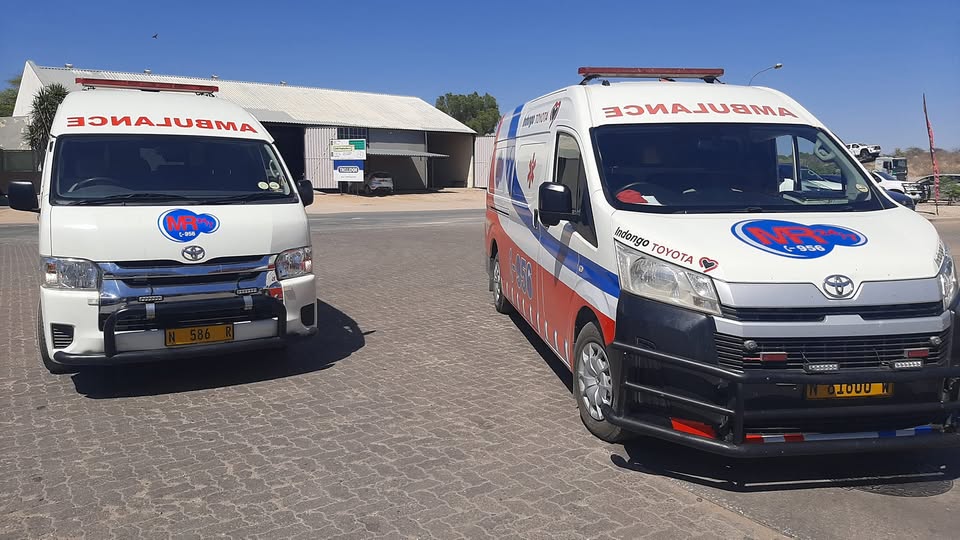
By mid-morning, the roads are packed with vehicles, pedestrians and bicycles, each busy with activities of daily life. Amid this constant activity, emergencies do not wait for convenient hours. Accidents happen, fires break out and medical crises strike without warning. It is in these moments that emergency vehicles, such as ambulances, fire trucks, police vehicles and other rescue service providers become the lifeline of the city, racing against time to reach those in need. Their sirens pierce the air, demanding attention, space and cooperation from every road user.
What then is an emergency vehicle? An emergency vehicle is defined under the Road Traffic and Transport Act, Act 22 of 1999, as a vehicle engaged in urgent public service.
This includes ambulances transporting the sick or injured, fire-fighting vehicles responding to fires, rescue vehicles attending road crashes or disasters, civil defence vehicles, and any other authorized security vehicles operating in emergencies.
Their authority on the roads is marked unmistakably by flashing lights and blaring sirens, signalling the critical nature of their mission.
When these vehicles are in motion, ordinary road rules change.
In fact, the law provides that emergency vehicles may exceed speed limits or pass-through intersections where other drivers are obliged to stop. Yet, even in these circumstances, the law requires emergency drivers to act with care and due regard for other road users.
The responsibility also rests heavily on every other motorists to respond immediately and appropriately by slowing down and moving aside to create a clear path. Hesitation by motorists can cost lives, as every second may be crucial for patients waiting for urgent medical attention or for firefighters arriving at a dangerous fire breakout. The busy streets of the city, particularly during peak hours, amplify the challenge. Drivers stuck in heavy traffic may feel unsure how to yield, while pedestrians about to cross at pedestrian crossings must remain vigilant. Still, the law and common sense converge on one principle: making way safely and swiftly.
Drivers should refrain from entering intersections until the emergency vehicle has passed, particularly at intersections, while in crowded lanes, they should create space to allow for the right of way. Every maneuver must be done with caution and urgency, ensuring that help reaches its destination without causing new accidents.
It is imperative to note that delays can result in tragedy as a life can be lost because an ambulance or police vehicle was delayed, or a fire can spread because a truck could not reach the scene in time.
As critical as it is, therefore, failing to yield to emergency vehicles carries serious consequences. Drivers who fail to yield to emergency vehicles can be fined up to N$1 500.
Hence, the Windhoek City Police Service urges motorists to regard giving way to emergency vehicles as both a legal requirement and a civic duty.
In a city that never truly slows down and where movement and activity continue around the clock, emergency vehicles stand as guardians of life and safety. Every siren heard through our streets is a call for urgency, often signaling that someone’s life is at risk, a fire is threatening property, or a critical situation requires an immediate response.
In those crucial moments, every motorist should be ready to reciprocate as required by law, and in so doing, positively contribute to our quest to make Windhoek the safest city in Africa.
*Katrina Nomboga is Assistant Superintendent, Public Relations and Community Policing at the Windhoek City Police.
For emergencies and crime-related matters, contact the Windhoek City Police Service on 061 302 302 or 061 290 2239.