

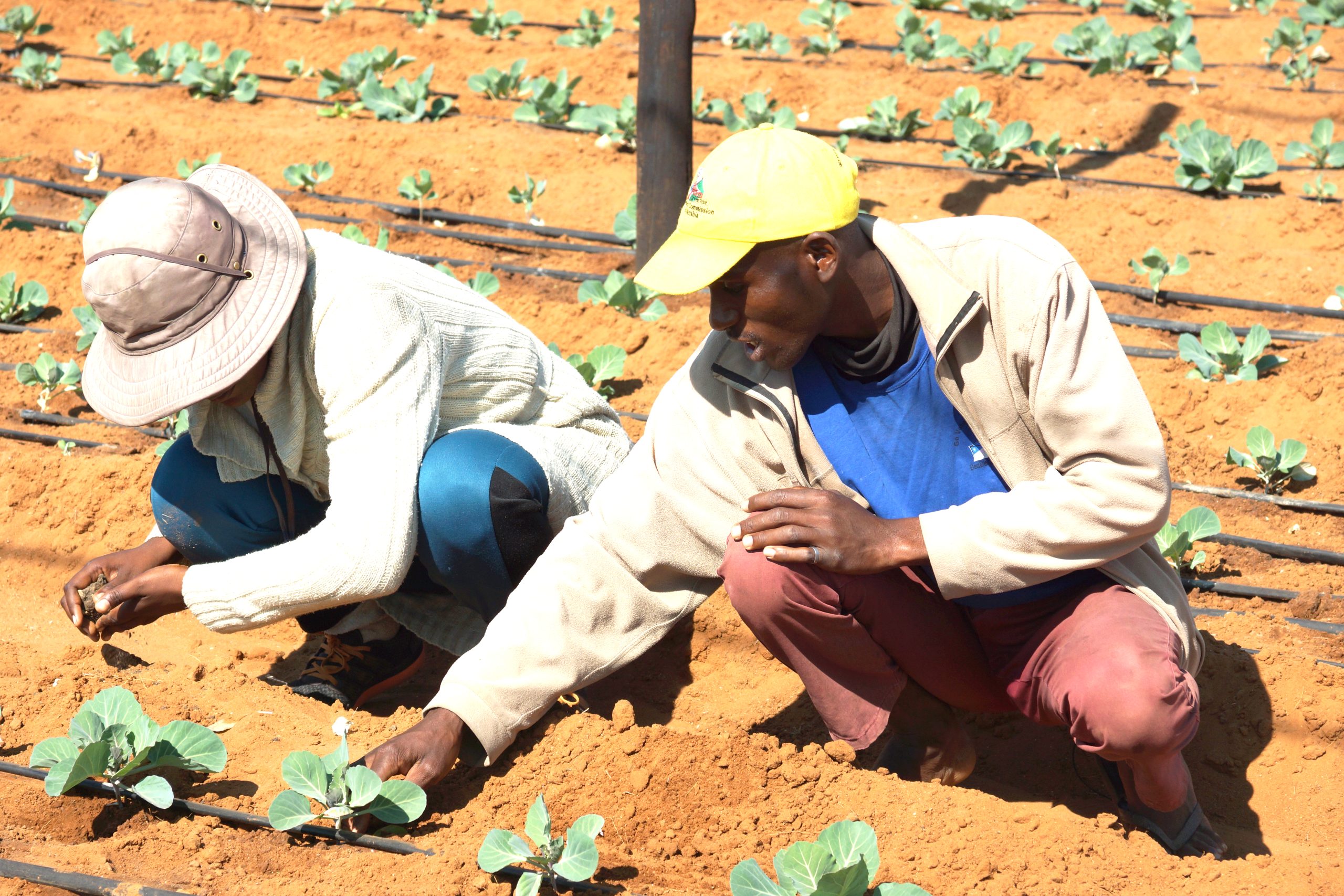

Crop production is a common agricultural undertaking, conducted in Namibia’s seven major production zones, including the Zambezi, Kavango, Karstland (Grootfontein, Otavi & Tsumeb triangle), North-central, South and Orange zones.
A common practice among many farmers in the crop subsector is monoculture, in which a farmer grows the same crop species, such as white maize, on the same piece of land for consecutive seasons.
The practice offers several benefits, such as increasing farming efficiency, reducing labour costs and simplifying crop harvesting. However, monoculture has several adverse effects, which are outlined in this article.
Monoculture can lead to negative environmental impacts. Implements are used to cultivate a specific crop repeatedly, till the land at the same depth and in the same manner.
This practice can damage the soil structure of arable land, leading to soil erosion as soil particles become loose and are easily blown away by the wind or washed away by surface runoff. Additionally, soil structure breakdown reduces the soil’s ability to retain water.
Another negative effect of monoculture is that it depletes soil nutrient reserves, as crops grown repetitively utilise the same major nutrients each season.
For instance, if a farmer grows maize on the same piece of land in consecutive years, the plants will use large quantities of nitrogen, phosphorus and potassium. Furthermore, if no plans are in place to plough back the maize stalks, the soil nutrient reserves are depleted of essential macro-nutrients (Nitrogen, Phosphorus & Potassium).
Therefore, growing maize on this piece of land will require farmers to use synthetic fertilisers to meet the crop’s nutritional requirements.
Monoculture is also associated with a high prevalence of pests and diseases. For instance, if a farmer grows maize, the common pests and diseases associated with maize tend to thrive under ideal conditions, producing eggs that later hatch into pests that chew on the leaves, bore on the cobs and eat the roots.
A common example of such pests is the migratory red locust that has become a common sight in the Zambezi and two Kavango regions. This is a consequence of repeatedly growing the same crop, as it does not break the pests’ life cycle.
If maize is attacked by a disease in one season and the farmer grows maize again in the next season, the pathogen that caused the disease may attack the crops again.
Overall, the above effects have the potential to affect crop yields for many farmers, especially communal farmers who produce cereal grains such as maize and pearl millet (mahangu), which are part of their staple diets.
It is highly recommended that farmers avoid monoculture and adopt Good Agricultural Practices such as crop rotation to prevent environmental damage and reduce the vulnerability of crops to pest and disease outbreaks.
Additionally, by practising crop rotation and incorporating legumes such as beans, cowpeas, and groundnuts, farmers can restore nutrient levels, particularly Nitrogen, in the soil.
*Hanks Saisai is Agribank’s technical advisor on crops and poultry.