


Auleria Wakudumo
President Netumbo Nandi-Ndaitwah announced plans to establish a building materials manufacturing facility in Otjiwarongo to significantly reduce construction costs and improve access to affordable housing.
The president made the announcement while responding to questions from the National Unity Democratic Organisation (Nudo) lawmaker Vetaruhe Kandorozu, in Parliament during the State of the Nation Address.
She said the initiative forms part of broader interventions to tackle the high cost of land and housing across the country.
“We have identified alternative, cost-effective building materials, and land has already been secured in Otjiwarongo for the construction of a factory to produce these materials locally. This will help bring down the cost of building houses for our people,” she said.
Kandorozu informed the president that ordinary Namibians are increasingly priced out of the housing market.
“Our plots and housing are very, very expensive in Namibia. We must ensure that housing becomes accessible and affordable to our citizens,” Kandorozu said.
Nandi-Ndaitwah acknowledged the severity of the situation and revealed that the government is considering setting up a dedicated financing institution to support individuals who wish to build their own homes.
The Otjiwarongo factory is expected to complement these efforts by lowering the cost of materials, particularly those currently sourced from South Africa.
A large portion of construction materials used in Namibia, such as bricks, panels and other components, are either imported or produced at relatively high cost. This drives up the overall price of building a house, which is one of the main reasons why owning a home remains a mirage for most Namibians.
The president is proposing a Namibian factory that will manufacture alternative, cost-effective building materials, likely including prefabricated panels or innovative materials already used in South Africa.
This will reduce reliance on imports, which are affected by transport costs, exchange rates and supplier pricing, and lower construction costs, making it cheaper for individuals to build houses to support mass housing delivery, especially for low- and middle-income earners.
Nandi-Ndaitwah has also revealed that the government is preparing a new policy that would stop local authorities from selling serviced land to private sectors.
“Serviced land should be given individuals who have the financial capacity to build their own homes instead of the business community,” she stressed.
Minister of urban and rural development James Sankwasa has been vocal about the need to allocate serviced land for housing development.
He called on local authorities to release serviced land to development partners, emphasising that this can make housing more affordable for low-income earners.
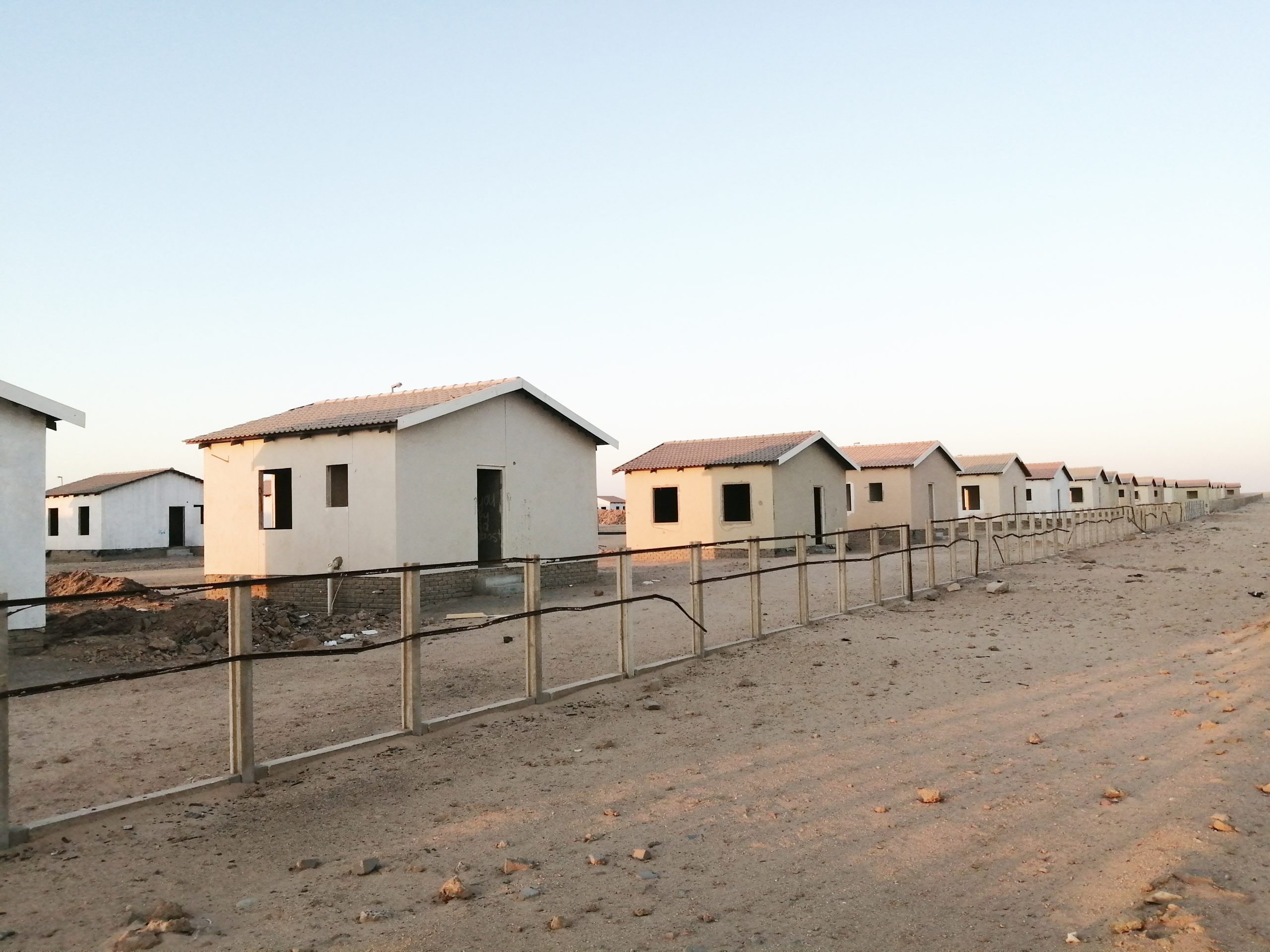
Photo: Heather Erdmann