


Albertina Nakale
Marythar Kambinda
KATIMA MULILO – Safety and security minister Lucia Iipumbu has cautioned officials in the Zambezi region against workplace gossip, laziness and factional behaviour.
She warned that such conduct undermines service delivery and weakens public trust in government institutions.
Addressing staff from the ministry, the Namibian Police Force, the Namibian Correctional Service and immigration during a regional staff engagement in Katima Mulilo on Friday, Iipumbu stressed that professionalism extends beyond interactions with the public and includes how colleagues treat one another in the workplace.
“Departments must not operate as rivals. Supervisors must not humiliate staff. Junior officers must not disregard lawful instructions. Colleagues must not undermine each other through gossip, laziness or factional behaviour,” she said.
The minister noted that internal divisions and poor workplace attitudes negatively affect the ministry’s ability to serve the public effectively.
“A divided office cannot serve the public effectively. The Zambezi region has enough operational pressures. It cannot afford internal disorder,” she stated.
Iipumbu urged supervisors to take responsibility for discipline, conduct and performance within their respective teams, saying leadership at all levels is critical to restoring professionalism and accountability.
She further called for improved communication within the ministry, emphasising that directives and policies issued at the national level must reach frontline staff and be implemented consistently.
“Staff meetings must not be ceremonies. They must be used to solve problems, track performance and improve service,” she said.
The minister said the ministry’s “business unusual” approach requires officials to abandon practices that result in slow, inconsistent and indifferent service delivery.
‘Business unusual’ means we must act with urgency. It means we must be practical. It means we must be accountable. It means we must serve the public better than before,” she said.
Iipumbu acknowledged the commitment of many officials who continue to serve under challenging conditions but said growing complaints from the public regarding poor attitudes, delays and inconsistent service could no longer be ignored.
“When complaints become too many, they stop being rumours. They become a warning,” she remarked.
She encouraged officials to work together as one team, saying the reputation of the ministry is built daily through the conduct of staff at service counters, border posts, police stations, correctional facilities and administrative offices.
“The people of Zambezi deserve a ministry that is present, disciplined, responsive and fair,” she said.
The minister called on all officials to renew their commitment to lawful procedures, disciplined service and teamwork to strengthen public confidence in government institutions.
During engagements, Iipumbu visited Impalila, Kasika, Ngoma and Singalamwe border posts and police stations to assess infrastructure and operational conditions.
Officials raised several concerns, particularly at remote border stations, where personnel continue to work under difficult circumstances.
Among the issues highlighted were staff shortages, a lack of safe drinking water, poor network connectivity, limited detention facilities and inadequate border control infrastructure.
At some stations, officers rely on river water for daily use, while communication challenges make reporting and coordinating operations difficult. Officials also noted that the absence of certain government services at some border points places additional responsibilities on personnel already managing demanding workloads.
Iipumbu praised staff members for their dedication and continued service despite the challenges.
She acknowledged the important role border officials play in facilitating the movement of travellers and tourists while ensuring compliance with Namibia’s immigration laws.
She said the government has taken note of the concerns raised and will continue exploring practical solutions to improve working conditions, strengthen service delivery and enhance border management as resources allow.
The minister also emphasised the need for stronger cooperation among security agencies and relevant government institutions to address operational challenges and improve border security.
The visit forms part of ongoing efforts by the ministry to assess conditions at border posts and security facilities across the region, with the aim of identifying practical interventions that will improve staff welfare and support effective border management.
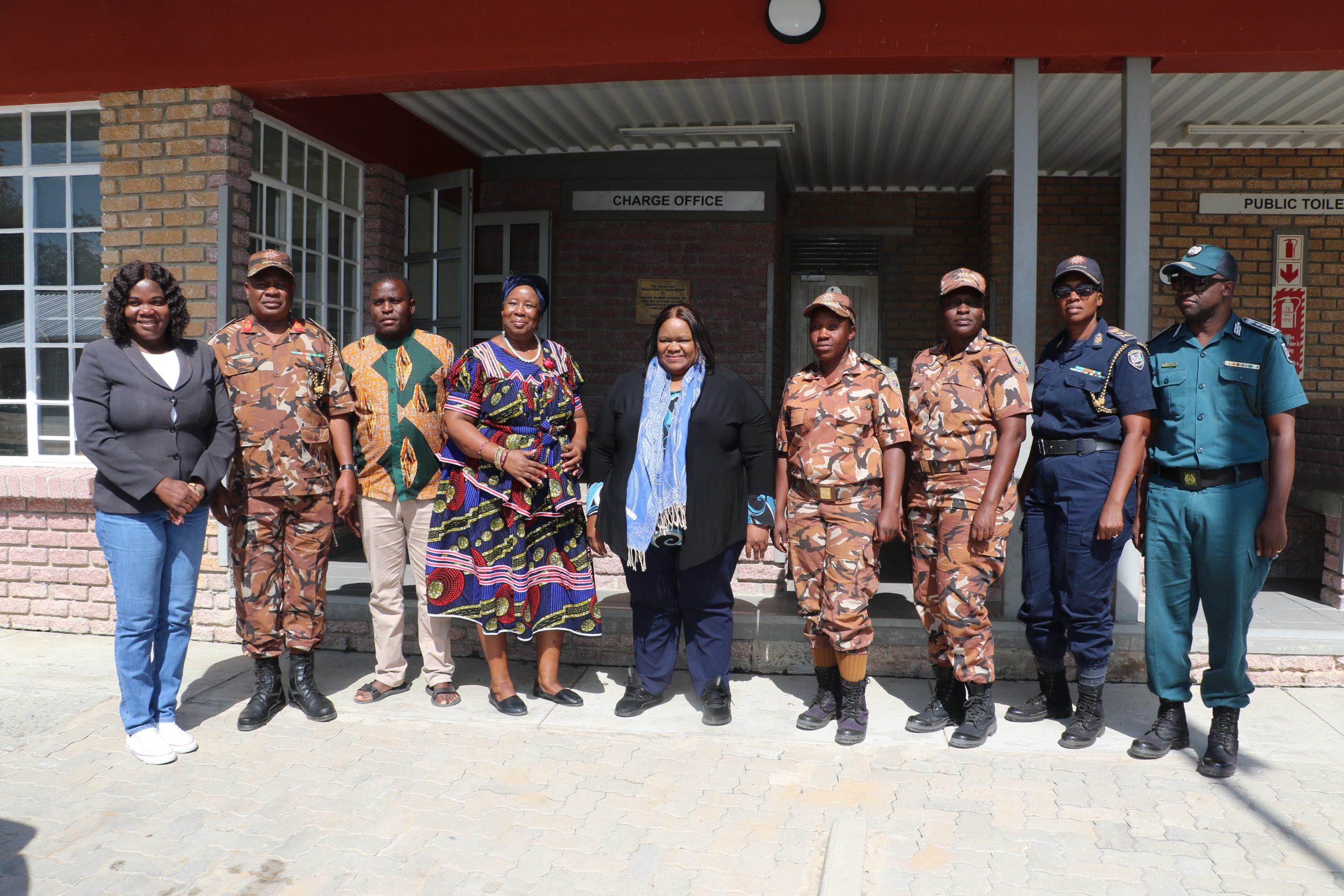
Iipumbu was accompanied by Zambezi governor Dorothy Kabula-Simushi deputy executive director for administration and refugee management at the Ministry of Home Affairs, Immigration, Safety and Security Rachel Nghiilwamo; Zambezi Regional Police Commander Commissioner Julia Sakuwa-Neo; acting deputy inspector general for administration commissioner David Indongo; and deputy commissioner-general Sam Shaalulange from the Namibia Correctional Service.
-anakale@nepc.com.na