


Selma Shiwaya
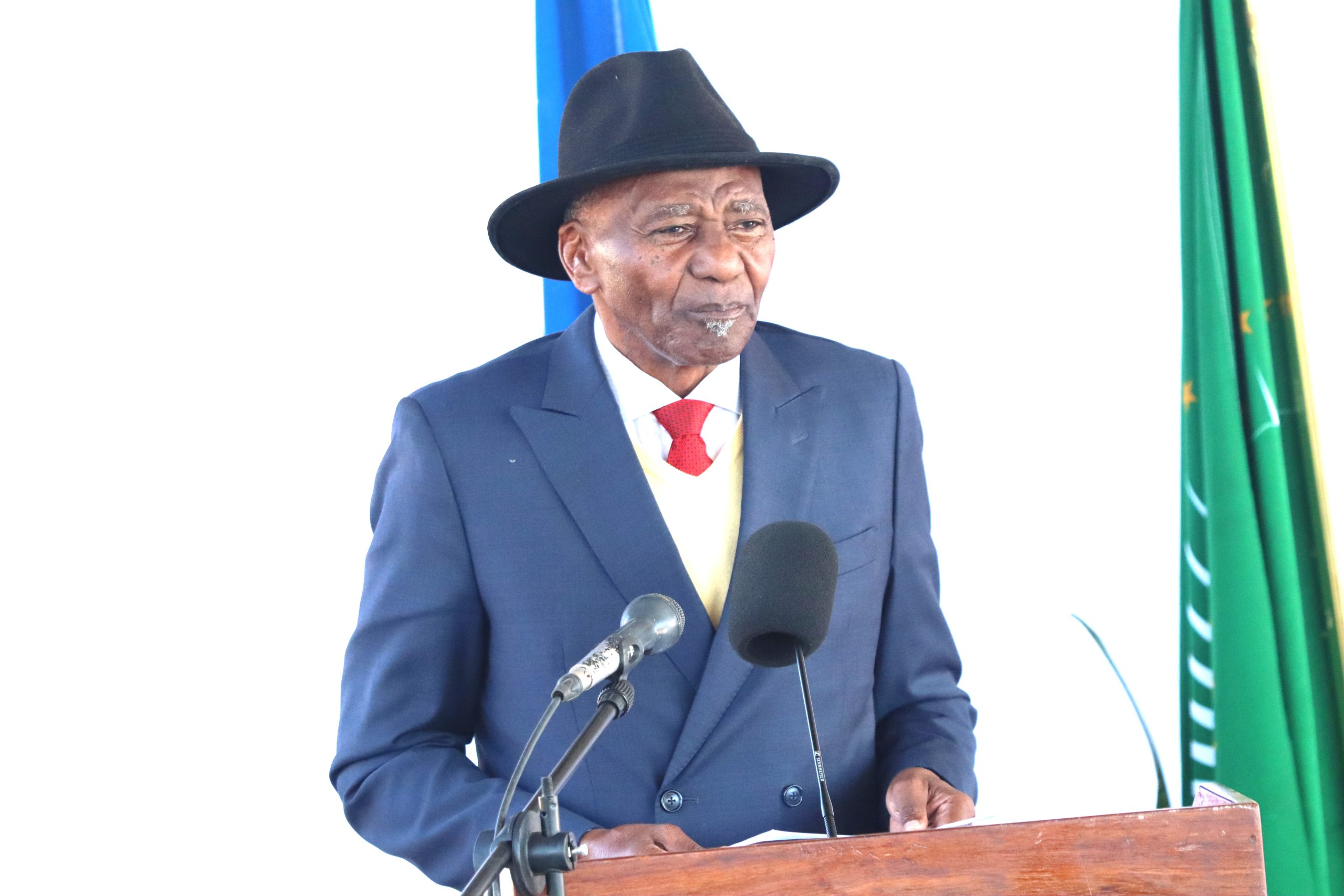
Former Speaker of Parliament, Professor Peter Katjavivi has called for Namibia’s genocide history to be thoroughly documented and incorporated into the country’s education system.
This, Katjavivi said, is to ensure future generations understand the atrocities committed during colonial rule and the sacrifices made by their forefathers in resisting foreign occupation.
Speaking during the Genocide Remembrance Day commemoration at Ohamakari in Otjozondjupa last week, Katjavivi said preserving the history of the Namibian genocide remains critical for national healing, unity and historical awareness. “This history must be properly documented so that it can give us critical lessons that could even be taught in our schools. We should never be complacent. As a society that understands the dynamics of global geopolitics, we should prevent any form of renewed attempt at strategic manipulation. Our society should be guided by wise foresight that serves the interests of Namibia and the African continent at large,” Katjavivi said.
Namibia annually commemorates Genocide Remembrance Day on 28 May in honour of the victims of the genocide committed by German colonial troops between 1904 and 1908, which is widely regarded as the first genocide of the 20th century.
Katjavivi described the day as an important reminder of the injustices suffered by Namibians during colonial occupation and stressed the importance of ensuring that such history is never forgotten.
“If we remember through documented history, then we can learn from the lessons. We can continue to document and teach these facts so that our children and grandchildren learn from those lessons,” he said. Katjavivi further urged the government to continue developing policies aimed at preserving and repositioning genocide history as an important part of Namibia’s national consciousness.
He also added that there is a need for Namibians to protect the country’s natural resources and ensure they benefit citizens.
“Today, Namibia is greatly endowed with natural resources, and we are a small population; therefore, we should jealously guard these resources and maximise their benefits to the nation and our citizens,” said Katjavivi. Meanwhile, the founder of Hitambo Virtual Academy, Mbunga Mbueza, expressed concern over the absence of genocide studies in Namibia’s education curriculum.
Mbueza said this during a panel discussion that took place at Ohamakari last Wednesday, stating that many Namibians still lack adequate knowledge about the genocide because the topic is not formally taught in schools.
“The biggest problem that we have in our community is that in our education system, genocide is not taught,” he said.
He explained that he only began researching the Ovaherero and Nama genocide during parliamentary debates led by politician Arnold Tjihuiko and the late Paramount Chief Kuaima Riruako in the early 2000s.
“I was very surprised when I started with my first research on the genocide topic because it was during the heated time when the Honourable Arnold Tjihuiko and the late paramount chief Kuaima Riruako, were introducing it in Parliament that I started reading about the Herero and Nama genocide,” Mbueza said. Mbueza stressed the importance of educating communities about genocide and its stages to prevent divisions and conflict within society. “One of the things that we need to take note of is that genocide is a process, and genocide has different stages. If we are not careful, our words might create a situation that will be out of hand,” he cautioned.
According to Mbueza, education remains the most effective solution in promoting understanding, unity and respect among Namibians. “The solution to this should be education. We need to start looking into teaching genocide in such a way that it does not discriminate,” he said.
He warned against divisive rhetoric and societal labelling, saying younger generations could easily absorb harmful attitudes and behaviours.
“If we start labelling each other, if we start preparing these seeds, if we start not valuing the value of others, the next generation will easily adapt to this and absorb it,” he said.
Mbueza also revealed plans to develop a genocide curriculum that is factual, educational and historically accurate.
“We want to prepare that genocide curriculum, and we want to create a curriculum that is very accurate, educative and not misleading. We should not insert in that history a history that did not exist,” he said.
*Selma Shiwaya is an information officer at MICT Otjozondjupa.