

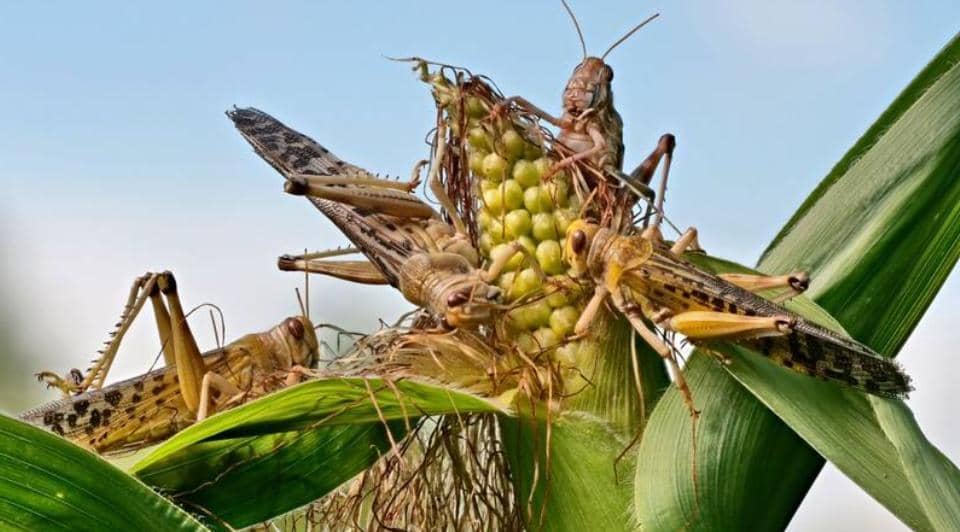

SWAKOPMUND – The agriculture ministry has dispatched spraying teams to the Erongo and Hardap regions following an outbreak of desert locusts in the affected areas.
According to the ministry, desert locust outbreaks were detected in the Homeb, Utuseb area, about 60 kilometers from Walvis Bay, as well as in the Daweb constituency in the Hardap region.
Spokesperson Romeo Muyunda said the locusts are currently in the flying stage, with activity in the Erongo region detected from the Gobabeb Research Centre along the Kuiseb River, extending over more than 50km within the Namib-Naukluft Park across both the Erongo and Hardap regions.
“In the Hardap region, the infestation stretches from the Alt Duwisib area, about 65km from Maltahöhe, southeast towards Helmeringhausen. The outbreak has affected 15 farms covering an estimated area of between 300km and 400km,” he said.
Muyunda indicated that there are between 5 000 and 10 000 locusts.
Generally, he says locusts feed on vegetation, and significant numbers can destroy grazing and natural vegetation in infested areas. If not controlled, they also have the potential to damage crop fields and horticultural production.
The ministry has since deployed spraying teams equipped with vehicle-mounted sprayers to contain the spread of the outbreak and prevent it from spreading to other areas.
Muyunda further explained that surveillance and rapid reporting systems have also been strengthened through cooperation with farmers and local communities.
The ministry is also engaging stakeholders, including the environment ministry, to coordinate control measures, particularly in protected areas where access authorization is required.
Farmers and members of the public have been urged to regularly monitor their areas and immediately report any locust sightings to the nearest Directorate of Agricultural Production, Extension, and Engineering Services office.
“Early detection and rapid response are critical, particularly while locusts remain in the hopper stage, as control becomes significantly more difficult once they are fully airborne,” Muyunda said.
He added that the ministry remains committed to containing the outbreak and minimising damage to grazing resources, horticulture, and crop production.