


Kaino Sheehama
For years, accessing water in the Okanguati settlement in the Epupa constituency was a daily struggle, one that shaped how people lived, worked and survived.
For 38-year-old Angelina Venasiu, it meant walking long distances to fetch water just to keep a few plants alive at her home.
“I used to collect water from very far. Our water point is at least 1.5 kilometres from my home and it was so difficult because even my wheelbarrow ended up breaking because of the stones,” she recalls, vividly.
Despite the challenges, Venasiu continued tending to her small garden, initially growing plants only for household use. However, the lack of reliable water made it nearly impossible to expand or turn her efforts into a source of income. That reality began to change in November 2025, when the Ohamaremba–Okanguati pipeline, which was implemented through the Ministry of Agriculture, Water and Land Reform, was inaugurated, bringing a steady supply of water to the settlement.
Life-changing
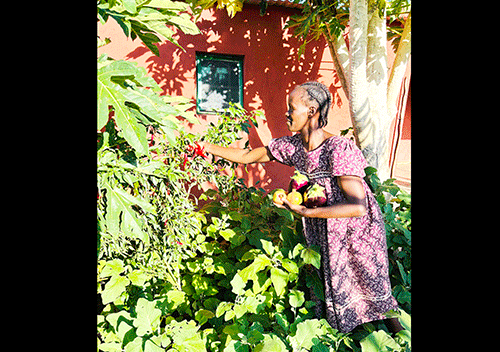
Today, Venasiu’s yard tells a different story.
Lush greenery fills the space, with decorative and fruit plants growing in neatly arranged containers made from half-cut mineral water bottles. What was once a small backyard effort has now become a growing source of income.
“The pipeline has been a lifesaver. You can see how beautiful the plants look now. It gave me strength and encouraged me to work even harder and expand my backyard garden,” she said. She now sells young plants to members of the community, turning her passion into a livelihood. “I have been able to make money from the sale of my plants, all thanks to the pipeline,” she added.
Her success is beginning to influence others.
“I’m also glad because other young people have started small projects after getting plants from me,” she said, encouraging unemployed youth to make use of the opportunities created by reliable water access.
“We should not wait for the government to do everything for us. Now that we have water, we must do something,” she said.
Venasiu’s story is not an isolated case.
According to Epupa constituency councillor Tjimutambo Kuuoko, the settlement previously faced severe water shortages, despite having two boreholes.
“There was not enough underground water to cater for the whole settlement, and the water was also declared not fit for human consumption,” he said.
The shortage had serious consequences for both residents and institutions.
“All institutions, including the school, were affected, and we even experienced cases of cholera, which unfortunately resulted in some deaths,” Kuuoko said.
Since the pipeline was introduced, access to water has improved significantly.
“Okanguati now has enough water for everyone, including homes and institutions. Residents are now able to establish backyard gardens,” he said.
*Kaino Sheehama is an information officer at MICT Kunene.