

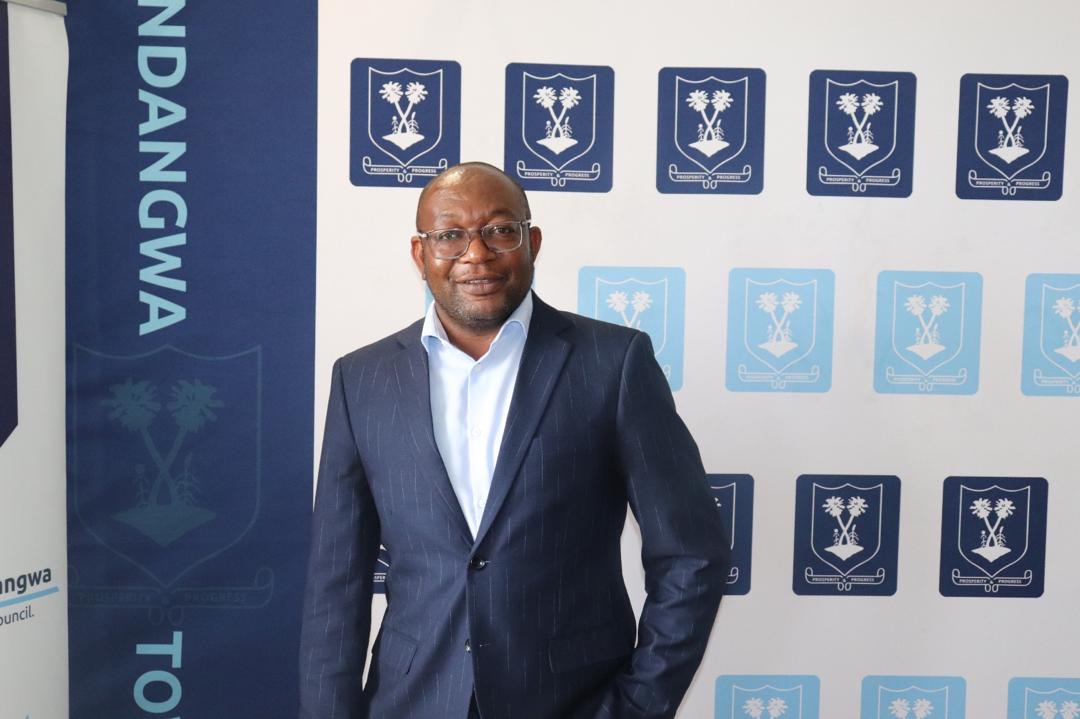

Ondangwa CEO Isamel Namugongo (IN) recently engaged with New Era journalist Auleria Wakudumo (AW) to share the town’s ongoing projects.
He highlighted progress, success stories and the challenges facing the town.
Additionally, he revealed ambitious plans to uplift the town of Ondangwa.
AW: You have mentioned plans to construct the Ondangwa State Hospital. Kindly update us on this project and its expected impact on service delivery in the region.
IN: The plan for the development of the Ondangwa District Hospital has been revived and is now on track. We have received confirmation from the central government that plans are underway to begin construction of this vital hospital for the people of this area.
This plan began in 2014/2015, with Ondangwa Town Council supporting it and allocating sites for the Ministry of Health and Social Services to select land. The land is now cleared for construction, and the ministry has started environmental impact studies and soft preparations.
Currently, the huge population of Ondangwa depends on the private health sector and the small Oluno state clinic. However, the completion of this hospital will relieve the pressure on the clinic and ensure quality health services for the residents.
AW: Elaborate on the measures being implemented to improve sanitation, including public awareness campaigns and infrastructure development.
IN: Cleanliness of this town is something we have taken seriously over the years. Council has invested heavily in cleaning the town, with about 110 active casual employees from our residential areas participating in cleaning, from litter picking to de-bushing overgrown bushes to house-to-house garbage and garden refuse collection from the freely given house waste bins. In total, we have contracted 10 companies and contractors, all dedicated to keeping Ondangwa clean.
The council spends about N$5 million monthly on staff salaries, including casual workers, a strategic move to involve residents and promote community cleanliness. It also runs cleaning campaigns and educates children in schools about maintaining a clean town.
AW: Could you also provide an update on the Ondangwa Sports Stadium project? What phases have been completed, and the anticipated completion date?
IN: This is the council’s flagship project, a project that the council initiated way back in 2016/17. This project was borne from the fact that this town is ideally located in the centre of the entire north-central region, with vital infrastructure such as the airport and proximity to Angola.
We believe that once completed, this project will greatly benefit the north central area. Construction is at an early stage due to funding and the council’s financial capacity. We balance community needs, as we see its potential to transform the region’s economic outlook. Currently, we are targeting to complete the bulk earthworks, including excessive water channels from the field, the irrigation system, the grass on the field, the water and electricity reticulation, the boundary wall including the stadium gate, the plant area where we have a water tank for water storage, the running track and toilet facilities.
Once we have the above, some events can start while other amenities are built. We’ve received positive support from partners and stakeholders, including the Roads Fund Administration, Nampower, Namibia Fish Consumption and Promotion Trust fund and New Era, with more expected to join, including Central Government.
AW: Can you update residents on road projects within the town?
IN: The situation of our roads is not that good, mainly because of the development history of the town. There have been a number of gravel roads constructed and a few tar roads in Ondangwa. Of late, we have been gradually upgrading these gravel roads to tar and ensuring that new areas we are developing have tar roads.
We’ve seen tar road upgrades in Extensions 1 and 4 (Oluno and Ondangwa), and new roads in areas like Extensions 24, 25, 26 and 28. Other upgrades include roads linking major areas, such as the new Extension 7 connecting two shopping centres. A new road now connects Oniipa Town to Omwandi bypassing the B1 main road, aiming to reduce congestion.
AW: What progress has been made in addressing the demand for serviced land and affordable housing?
IN: Over the past few years, we have managed to more than double the residential areas we have. Some are fully serviced, and some are half-serviced, with basic services such as water, electricity and roads avaailable. Council has successfully created formal residential areas such as extensions 16, 17, 20, 24, 25, 26 and 28. These areas are fully formalised, and 80% of them have municipal infrastructure, including streetlights and tar roads. Council has also managed to decongest areas such as Onguta, Uupopo and Okangwena locations. They are now fully formalised.
People in these old locations can now enjoy the same benefits as everyone else in the rest of the town and obtain title deeds for their properties. Council has also developed a new area called Onatsi, where the majority of ultra-low-income earners live. This is an addition to the expansion of Omashaka, where the majority of our people are accommodated. Programs such as the Build Together have been reactivated, and houses are being constructed. Partnerships with the Shack Dwellers Federation have resulted in many houses for low-income earners in our population.
Modern houses are being constructed in the Onguta area, which many believe would remain informal. It is now being formalised, and proper roads are being built there. We are looking forward to the new partnership that we have forged with the Development Workshop Namibia to construct more houses for our people at Omashaka (people can register for this housing scheme). Another housing programne is coming up in extensions 11 and 37, which are new residential areas we are targeting this year.
AW: There have also been concerns raised regarding sewerage and sanitation infrastructure challenges in many towns. Is Ondangwa also experiencing such challenges?
IN: This town is one of the oldest settlements, with only a few houses before independence. After the proclamation of Ondangwa as a modern town following independence, the focus was on housing development, and little attention was given to the sewer discharge infrastructure.
We have open ponds where sewers are discharged. These ponds were designed for only a few houses and a few infrastructures, such as the army base and the Airport. This situation created a problem for the town as the population continued to grow. We had several sewer incidents in which sewer water pooled, banks burst and overflowed, mainly during rainy seasons.
AW: What interventions are being implemented to resolve them sustainably?
IN: Council made studies and designs to modernise the sewer infrastructure and upgrade it to a modern sewer water treatment plant. Preparation for the construction of this plant has already begun. The entire area has been secured to prevent water overflow. Construction will start as soon as possible. This project is under the central government budgeting system.
AW: Highlight success stories from Ondangwa Town Council’s projects and achievements.
IN: The success story about Ondangwa is the development and transformation of this town from a town that was too reliant on government investment when the town was the centre of government administration, into a now very self-reliant town that is able to attract private investments and survive on its own without too much dependence on government investment.
AW: Could you share insights into the key challenges currently faced by the council.
IN: The challenge we are facing is the impact of the high and rising nationwide unemployment rate.
Unemployment rate in this town is so high, and those who are lucky to get employed are mainly employed in retail shops with very low-level incomes. This, in the end, is reflected in most of our residents’ ability to pay/honour their municipal bills, which affects most of our plans. People need different kinds of services, but at times the council’s resources cannot cater for all, especially for old infrastructure that requires replacement or a completely new one.
Most of our old areas still have gravel roads that need to be upgraded, as well as infrastructure that was mainly constructed to serve a smaller population, such as our waste dump sites and wastewater discharge ponds.
-awakudumo@nepc.com.na