


In Namibia, a quiet crisis is denying our most vulnerable children the fundamental human right to education. While we celebrate achievements in education access, thousands of learners with special needs remain locked out, languishing on waiting lists that stretch for years.
Our special schools are at capacity. Classrooms designed for 15 learners now accommodate 25. Dormitories built for 50 children house 80, with learners sleeping on floors. Parents from rural areas face heart-wrenching decisions: keep their deaf, visually impaired or intellectually disabled child at home, or surrender them to overcrowded facilities hundreds of kilometres away where they cannot even secure a place.
Numbers don’t lie
At Dagbreek School in Windhoek for learners with intellectual disabilities, the waiting list exceeds 200 children. Some have been waiting since 2022. At Eluwa School for the Deaf in Ongwediva, families queue desperately for placement. These are not abstract statistics; these are Namibian children whose constitutional right to education is being denied.
Consequences
When we fail learners with special needs, we compound their disadvantage. A deaf child who misses crucial language acquisition years between ages 3 and 7 may never recover lost ground. Families suffer immensely, mothers abandon careers, rural families separate, and psychological tolls are devastating. Communities lose too, perpetuating cycles of poverty and marginalisation.
Beautiful words, empty promises
Namibia has ratified the UN Convention on the Rights of Persons with Disabilities. Our Education Act proclaims every child’s right to education. Our National Policy on Inclusive Education (2013) articulates a vision of schools welcoming all learners. Yet there is a chasm between what we promise on paper and what we deliver. This policy-implementation gap is costing our children their futures.
Urgent action needed
The time for meetings and studies is over. We need:Immediate capacity expansion:Construct additional classroom blocks and hostel facilities at existing special schools to eliminate waiting lists within 24 months.New special schools in underserved regions:Establish schools for the deaf in the Zambezi region, schools for learners with intellectual disabilities in the Omaheke, and schools for visual impairment in the south.
Specialised centres for complex needs:Create facilities for learners with multiple disabilities and autism spectrum disorders who cannot access appropriate education anywhere in Namibia.Resource schools’ programme:Transform selected mainstream schools into resource centres with specialised staff and equipment for learners who can succeed in mainstream with proper support.
National special education infrastructure fund:Establish a dedicated, ring-fenced fund with clear targets eliminate waiting lists by 2027 and achieve full regional coverage by 2030.
We cannot afford not to act
Every year we delay, the costs accumulate. Uneducated citizens with disabilities become dependent on social grants, requiring lifelong support. The costs of exclusion far exceed the costs of inclusion. A nation that can spend millions on luxury vehicles can find resources for schools. It is a matter of political will and moral priority.
A call to leadership
To the Minister of Education, to Regional Councils, to all in positions of power: History will judge how you responded when children with disabilities were systematically denied education. You have the power to change this. Authorise emergency expansions. Reprioritise budgets. Declare this a crisis deserving urgent response.
I do not ask you to do the impossible. I ask you to do what is right, what is required by law, what is demanded by human dignity.
Children are waiting
Education is not a privilege, it is a fundamental, non-negotiable human right. The UNCRPD does not say ‘education for persons with disabilities if resources allow.’ It states that education is a right and that State Parties shall ensure its realisation.
The children are waiting. They have waited long enough. It is time to build. It is time to expand. It is time to invest. It is time to act.
Our humanity is measured by how we treat our most vulnerable. We are currently failing that test. But we can change course. We must change course.
To my fellow Namibians: Demand better. Advocate louder. Support organisations doing this work. Refuse to accept that children with disabilities should wait indefinitely for their constitutional right.
To the Ministry: Build the classrooms. Construct the hostels. Establish the specialised centres. Eliminate the waiting lists. Do it not as a favour, but as a duty. Do it not when convenient, but urgently. Do it not minimally, but comprehensively.
The children of Namibia deserve no less.
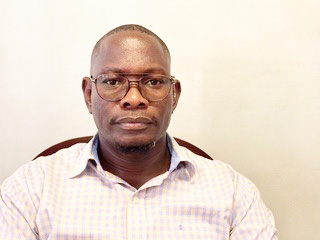
*Linekela Paul Nanyeni holds a master’s degree in education (Deaf Studies) from the University of the Witwatersrand. He serves as National Executive Director of the Namibian National Association of the Deaf (NNAD) and Project Director of NAMSLAP (Namibian Sign Language App). He writes as a leader of the Namibian Deaf community and as an advocate for inclusive, equitable, and quality education for all learners with special educational needs.