


Dalene Kooper
One of the lasting legacies of the 1904 to 1908 Nama and Herero genocide is the significant Ovaherero population in present-day Botswana.
The genocide, widely regarded as the first of the 20th century, forced many Ovaherero to flee what is now Namibia.
During the extermination order declared by General Lothar von Trotha, any Herero found on sight, regardless of age or gender, was to be executed or driven out of the territory of Okahandja.
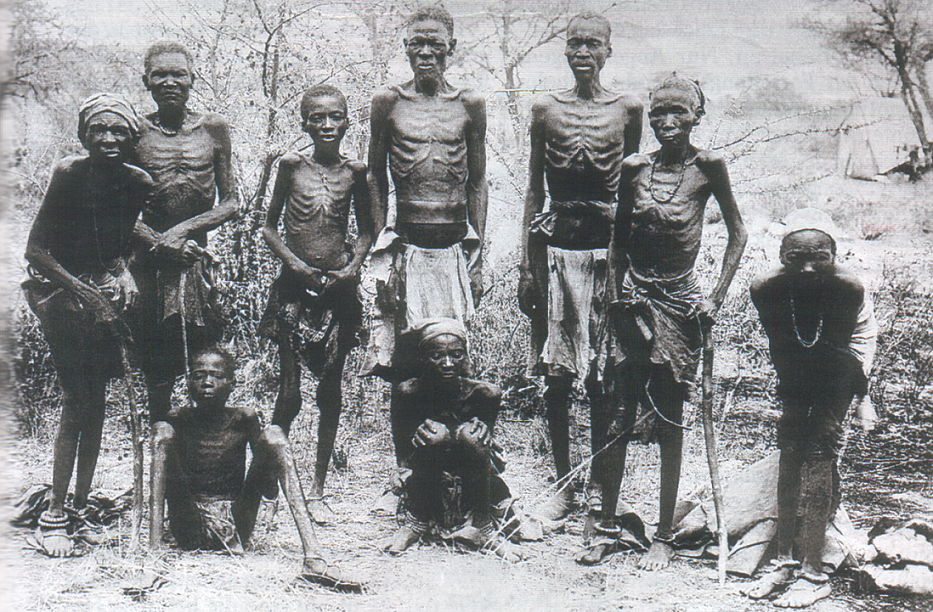
The Herero and Nama uprising was sparked by increasing German land dispossession and livestock snatching. German troops occupied and poisoned water wells in the Omaheke region, forcing thousands of Ovaherero men, women and children to flee into the harsh Kalahari Desert.
Many died of dehydration and starvation before reaching the then British colony, the Bechuanaland Protectorate (now Botswana).
Those who were captured were sent to brutal concentration camps at Shark Island.
In an interview with New Era, Botswana-based historian and university lecturer Jeffress Ramsay said the Ovaherero began fleeing into Botswana as early as the late 1800s.
“Ovaherero began migrating into Botswana, fleeing the Germans, starting in 1896, with the largest surge in 1905, coinciding with Von Trotha’s order. There was also a movement of refugees from Namibia into Botswana during the liberation struggle against the apartheid regime occupation,” Ramsay said.
Although British colonial authorities in Botswana were reluctant to admit the Ovaherero, indigenous chiefs of the Batawana and Bangwato welcomed and supported them.
“The Ovaherero were, however, welcomed and supported by indigenous Batawana, notably the dikgosi (chiefs) of the Batawana and Bangwato,” the historian said.
“The threat of being literally wiped out as a people ultimately drove the rest of the Ovaherero into a desperate rebellion. In other words, genocidal occupation was the very cause, rather than an extreme by-product, of the rebellion,” Ramsay stated.
Today, the Ovaherero in Botswana, known locally as ‘Baherero’, are estimated to number about 20 000.
They are a minority group residing mainly in the western and northern parts of the country.
“The number of Ovaherero and Ovambanderu in Botswana is uncertain – but it is generally put at about 20 000. Over the years, there has been a remigration of Ovaherero back to Namibia. There is also intermarriage, etc. The Botswana census does not count by ethnicity, though it does look into so-called mother tongue use,” Ramsay said.
The descendants of Ovaherero in Botswana have preserved their identity and culture by hosting cultural events and commemorating the 1904 to 1908 genocide.
“The Ovaherero, Ovambanderu and Nama communities in Botswana are quite proactive in preserving and celebrating their cultural identity,” he said.
During one of his remarks at a Herero festival, Ramsay said that “no community suffered more during the last century from racist pseudo- science as well as racial imperialism than the Ovaherero, along with their Ovambanderu and Nama neighbours”.
The story of Ovaherero is part of Botswana and Namibia’s unity in diversity. Ovaherero, along with some Nama communities, have integrated well into Botswana, and form part of the country’s heritage.
Ramsay said that, in the past year, Otjiherero and Nama newscasts were introduced on the national television, Botswana Television.