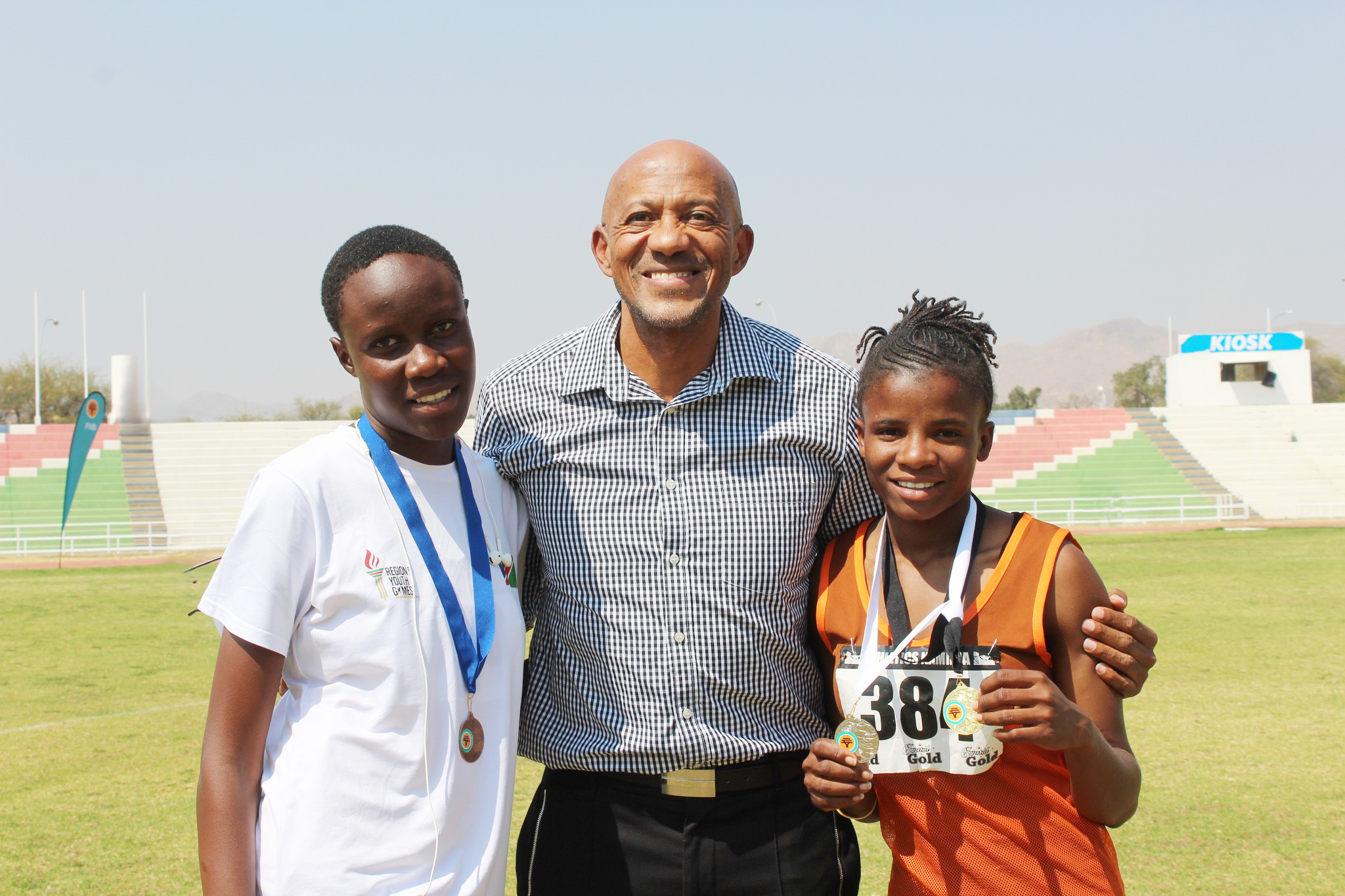

As the World Athletics Championships unfold in Tokyo, the legacy of Frank Fredericks continues to loom large over the global stage, reminding many of the heights once reached by Namibia’s most decorated sprinter.
Fredericks, whose name is forever etched in Namibian sports history, rose to international prominence with a string of outstanding performances that not only shattered records but also redefined what is possible for athletes from smaller countries.
Known for his unparalleled speed and unshakeable determination, Fredericks remains the only Namibian ever to win a world title in track and field.
Fredericks’ path to success started against all odds. Born on 2 October 1967, in Windhoek, during the apartheid era in South West Africa, he overcame significant social and economic obstacles to pursue both education and athletics.
A scholarship to Brigham Young University in the US paved the way for elite competition, where he earned degrees in computer science and business while leaving his mark on the track.
Fredericks’ international breakthrough came in 1991 at the World Championships in Tokyo, the same city where this year’s event is taking place. He won a silver medal in the 200 metres, marking the debut of a world-class talent from newly independent Namibia. Two years later, he captured gold in the 200 m at the 1993 World Championships in Stuttgart, cementing his status among the elite. He would go on to win silver medals at the 1995 Championships in Gothenburg and again in 1997 in Athens, maintaining remarkable consistency over nearly a decade of global competition. His Olympic performances were equally historic. At the 1992 Barcelona Games, just two years after Namibian independence, Fredericks made history with silver medals in both the 100m and 200m sprints.
He repeated the feat at the 1996 Atlanta Olympics, where his 200m time of 19.68 seconds remains one of the fastest ever recorded. In addition to his world and Olympic honours, Fredericks collected gold medals at the Commonwealth Games and multiple African titles throughout the 1990s.
What set Fredericks apart was not only his medal haul, but also his extraordinary longevity. He ran under 20 seconds in the 200m more than 20 times, a record at the time, and broke the 10-second barrier in the 100m on 27 occasions.
At age 34, he clocked 19.99 seconds in the 200m in Rome, becoming the oldest sprinter to achieve a sub-20 performance.
Beyond the accolades, Fredericks has played a significant role off the track. A respected figure in global sports administration, he served on the International Olympic Committee and helped shape sports development across Africa. In 1999, he launched the Frank Fredericks Foundation to support young Namibian athletes with educational and athletic opportunities.
One of the athletes impacted by his foundation, Ndawana Itembu, described him as a national treasure.
“On the track, he was a trailblazer who put Namibia on the global map. His achievements inspired generations, proving that excellence could come from our soil and compete at the highest level. Off the track, his impact is just as heroic,” she said. “Through his foundation and personal efforts, he has supported countless athletes with educational and athletic scholarships, me included. At a time when I needed it most, his support came through and helped shape both my academic and athletic journey. Fredericks isn’t just a hero because of his medals. He’s a hero because he continues to invest in the future of Namibian sport and the lives of young athletes. I would say that kind of legacy is priceless.”
-lmupetami@nepc.com.na