

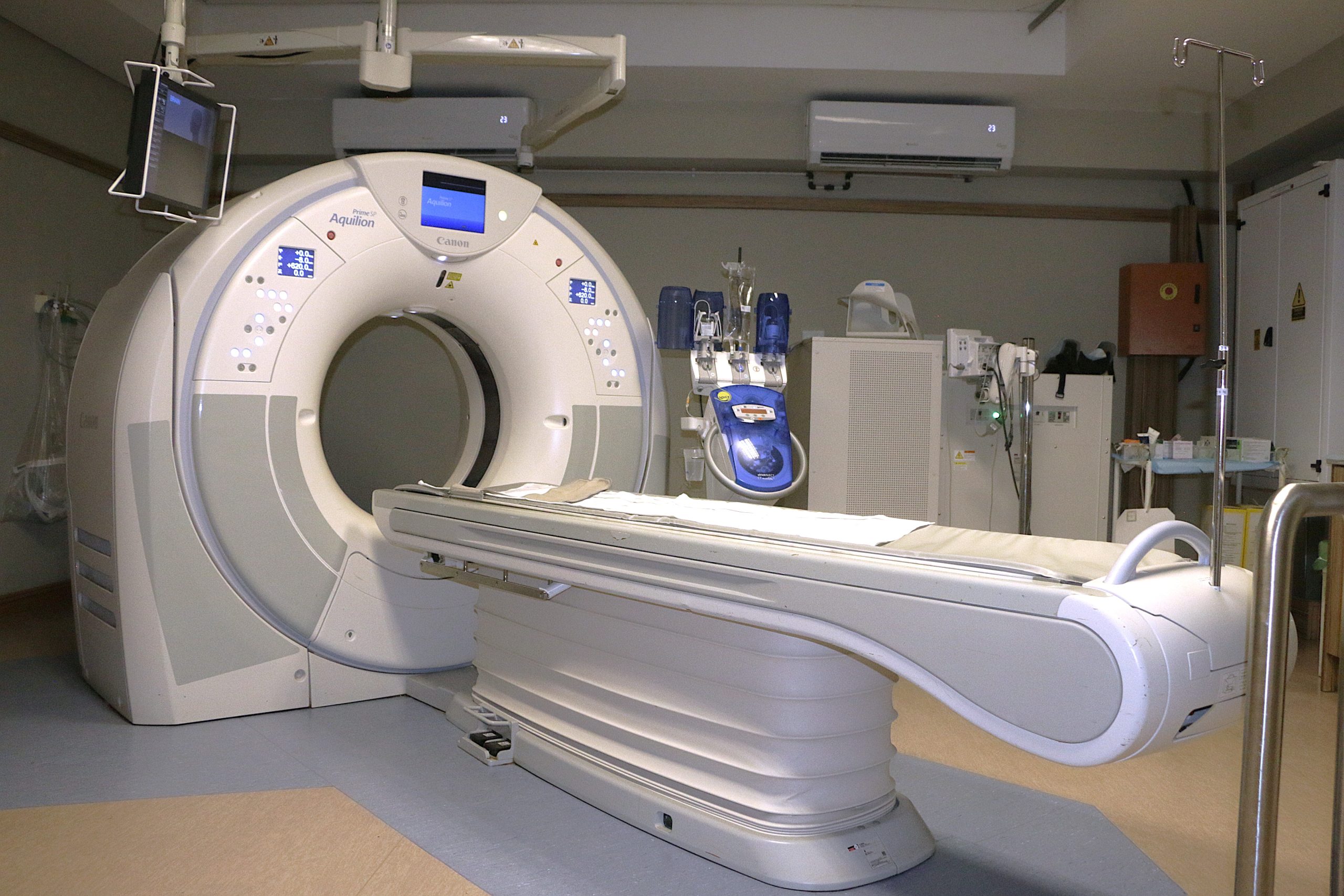

Efforts to strengthen Namibia’s public healthcare system ahead of the ‘Vision April 2026’ initiative have received a major boost, with state hospitals acquiring advanced diagnostic equipment worth millions of dollars, including high-tech CT scanners.
Earlier this year, government directed civil servants, including senior officials and politicians, to use public healthcare facilities instead of private hospitals. The move aims to reduce costs, improve public facilities, and ensure officials experience the same level of care as ordinary citizens. Yesterday, Prime Minister Elijah Ngurare assessed the readiness of public health facilities as part of preparations for the directive, which is set to take effect next month.
A key highlight of the visit was the installation of a Philips 16-slice CT scanner — a modern computed tomography imaging machine capable of producing 16 high-resolution 3D images per rotation. The equipment significantly enhances diagnostic capacity for routine scans, vascular studies and oncology cases.
Senior radiographer Roshita Cloete said the machine was procured in 2023 at a cost of N$25 million. “These machines are very expensive, but highly efficient. They can detect fractures in less than 15 seconds and scan up to 50 patients per day,” she said.
Cloete added that the machine currently serves patients from southern and other parts of the country, noting that similar equipment is only available in Rundu, Oshakati and Windhoek. She described the acquisition as a “game changer” for Namibia’s public health sector.
“This is modern equipment, and having more of these machines will significantly improve our services,” she said. Although fewer than five such machines are currently available nationwide, Minister of Health and Social Services Dr Esperance Luvindao said there are plans to roll them out across all 14 regions.
“The machine took about a year to arrive in Namibia. However, we want each region to have its own. We have engaged the Ministry of Finance to make an exception so we can procure and deliver these machines before June this year,” she said. Ngurare said fast-tracking the procurement process is critical to building confidence in the public healthcare system.
“This is good progress. We want our people to have confidence in public hospitals. If it takes up to a year to procure such equipment, it defeats the purpose, so we must expedite the process,” he said. -mkambukwe@nepc.com.na
Photo: Heather Erdmann