

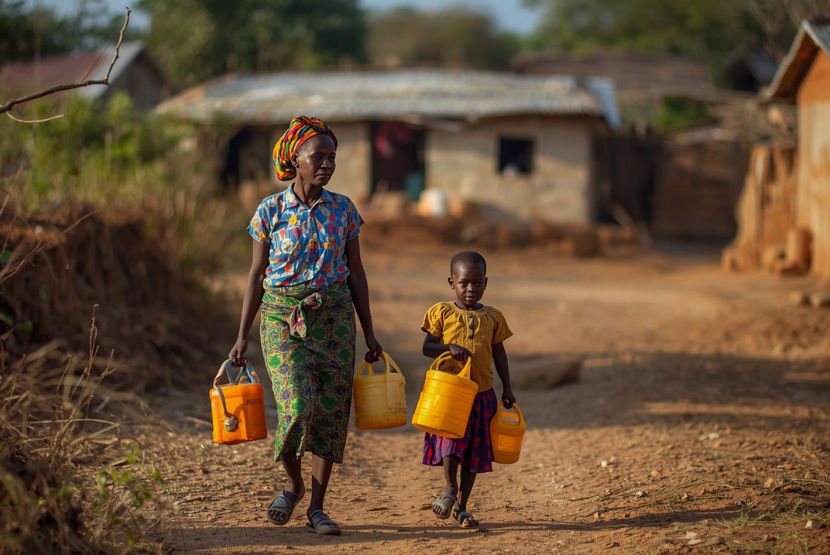

Millions of households in rural Africa face the relentless task of collecting water each day. Women and children spend hours walking to rivers or communal wells to fetch water.
These journeys, often covering several kilometres, place a heavy physical burden on families and limit the time available for education or business growth.
The strain is not only physical but also emotional, as the uncertainty of water access weighs heavily on households.
The Role of Storage Tanks
Water storage tanks provide a practical and sustainable solution to these challenges. By harvesting and storing rainwater or serving as reservoirs for water delivered from boreholes or municipal systems, they bring water closer to households.
This convenience drastically reduces the time and physical effort required to collect water, while also creating a sense of reliability. With a storage tank, families know that water is available when they need it, easing both physical and mental stress.
Strengthening Water Security
Beyond convenience, water storage tanks play a vital role in improving water security. Rural communities often face unpredictable rainfall patterns and seasonal shortages. Without storage, households remain vulnerable to dry spells and must rely on distant, sometimes unsafe sources.
Tanks help secure water supplies by capturing excess rainfall during the wet season for use in drier months. This not only results in the continuity of daily needs but also acts as a buffer during droughts, reducing the risks of scarcity and conflict over limited water resources.
Improving Household Efficiency
With access to secure, nearby water, families can manage their routines more effectively. Instead of walking long distances daily, children can attend school regularly, while adults can focus on farming, household care, or business ventures.
The time and energy saved from reduced water collection translate directly into better productivity and improved quality of life.
Supporting Health and Hygiene
Storage tanks also improve public health. When water is readily available, families can prioritise hygiene practices such as handwashing, safe food preparation, and regular cleaning. This reduces the spread of waterborne diseases that are common in areas where water is scarce or must be rationed.
Secure storage means water can be kept safe from contamination, offering households greater peace of mind about the quality of what they consume.
Reducing Environmental Strain
The presence of tanks allows communities to better adapt to climate variability. By capturing rainwater, households decrease their dependence on rivers and groundwater, helping preserve these fragile ecosystems.
Over time, this contributes to regional resilience against climate change as natural water sources are not depleted.
Empowering Women and Children
Because women and children shoulder much of the water collection burden, tanks directly improve their lives.
Girls freed from daily water trips can remain in school, while women gain opportunities to participate in farming, business, or leadership roles.
In this way, storage tanks not only secure water but also empower communities socially and economically.
A Step Toward Sustainable Development
Water tanks support the broader goals of sustainable development. They provide water security, reduce inequality, and strengthen resilience to climate chang – all while addressing immediate household needs.
Final Thoughts
Storage tanks are catalysts for water security and human development in rural Africa. By reducing the physical burden of water collection to provide reliable supplies and empower families, they lay the foundation for healthier and more sustainable communities.
//…ENDS.
ISSUED BY:
Loyola Nyangon