


Parents raising children with disabilities walk a path that is often invisible to the world. While much attention is (rightfully) given to the child’s needs, the parents’ emotional journey is frequently overlooked. Yet these parents also need support, understanding and sometimes simply a shoulder to cry on.
For many parents, the journey begins with shock and denial. Dreams they once held for their child suddenly feel uncertain, and some struggle to accept the diagnosis, not because they love their child any less, but because they are grieving the future they imagined.
This denial is not a weakness; it is a natural human response to unexpected change. Unfortunately, denial and fear often make parents withdraw. Many find it difficult to open up to family, friends or even professionals.
They worry about being judged, misunderstood or pitied. Some feel guilt, wondering if they somehow caused their child’s conditions, while others feel pressure to appear “strong” at all times, even when they are breaking inside.
But parents cannot pour from an empty cup. To truly help children with disabilities grow and thrive, we must first acknowledge the emotional needs of those raising them.
Parents need safe spaces where they can speak honestly without shame about their struggles, fears and frustrations.
They need to be heard, not corrected, supported, not rushed and also be reminded that it is okay to feel overwhelmed.
Advice and motivation also play a crucial role. When parents are gently guided toward acceptance, they begin to see their child not through the lens of limitation, but through the lens of possibility.
With the right encouragement, they can move from asking, “Why my child?” to “How can I best support my child?” Support does not always require grand gestures.
Sometimes it is a listening ear, sometimes it is connecting parents with others who have walked a similar path, and sometimes it is reminding them that progress may be slow, but it is still progress and that their love and effort truly matter.
When parents feel emotionally supported, they become stronger advocates, caregivers and teachers for their children.
Their confidence grows and so does their ability to nurture their child’s independence, self-worth and potential. As a society, we must remember that supporting a child with a disability also means supporting the parents. When we hold the parents, we help hold the child. And when parents are given understanding, motivation and hope, they are better equipped to help their children grow not just to survive, but to thrive.
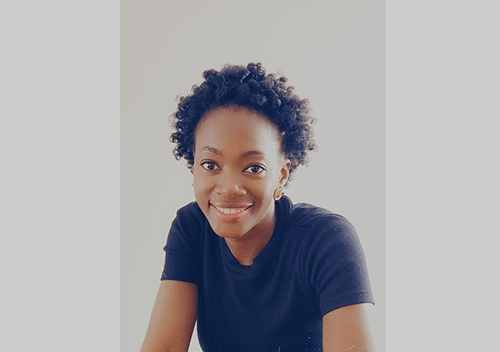
* Wilhelmina Ndahambelela Nameya is a teacher at Moreson Special School for intellectually impaired learners in Windhoek, Namibia.