

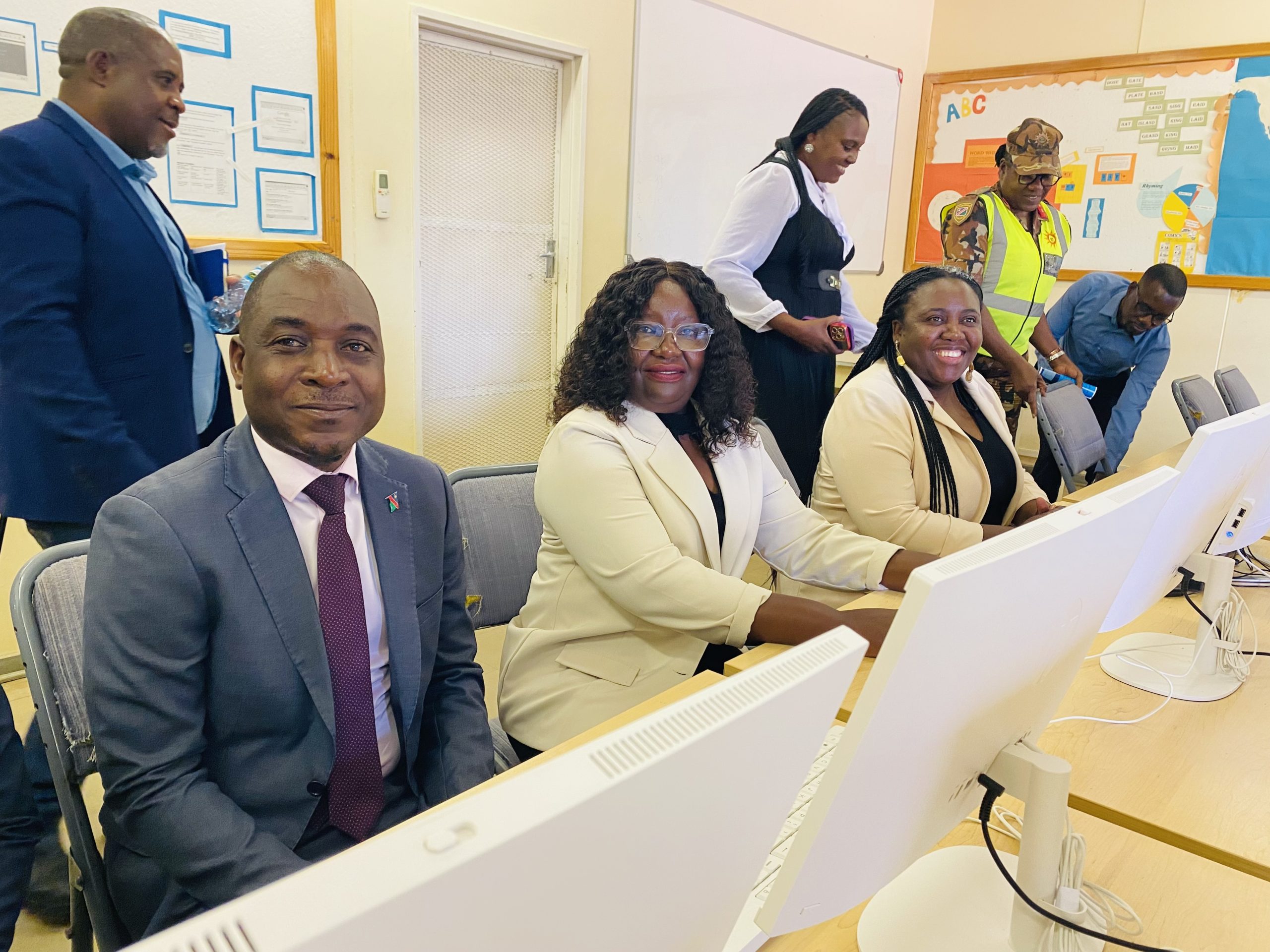

OMUTHIYA – SOS Children’s Villages, in collaboration with the Tsumeb Teacher’s Resource Centre under the Oshikoto Education Directorate, on Thursday officially launched the Digital Divide Project at Tsumeb.
The initiative, unveiled under the theme ‘Utilising Technology to Empower Communities’, saw SOS hand over 10 computers valued at N$140 000 as part of efforts to strengthen digital access in the region. Speaking at the launch, SOS acting national programme director Ndailikana Paulus said the project seeks to bridge disparities in access to technology and digital literacy.
“The initiative will target vulnerable and marginalised populations, including children, youth and caregivers, equipping them with the skills and resources necessary to thrive in the digital age, as they often face significant barriers to economic and social opportunities,” he said.
Paulus noted that the project aims to train 180 individuals in basic digital literacy and a further 180 in digital skills.
It is also expected to provide access to digital resources to approximately 9 500 community members over a two-year period.
Oshikoto education director Hilma Nuunyango-George described the project as a gateway to opportunity for the community.
“This marks the opening of doors, the unlocking of potential and the bridging of opportunities. Technology shapes how we learn, work, communicate and innovate. The digital space is no longer a luxury but a necessity. The future is undeniably digital,” she said.
Nuunyango-George cautioned that, while global technological advancement continues at a pace, many informal settlements and rural areas remain excluded from this transformation.
“The digital divide separates those with access to information, skills and opportunities from those without. If we do not act collectively, the gap will continue to widen,” she said.
The information and communication technology coach at SOS, Sevelen Simon, said the project will be implemented across three training tiers: basic digital literacy modules, intermediate digital skills and advanced digital skills.
“The training duration for each category is estimated at between one and three months. The project is open to everyone, regardless of education, experience or background,” he said.
-Nampa